I don’t want to sound dramatic, but this recipe literally saved my weeknight sanity. Last Tuesday, I was exhausted. You know that kind of tired where your brain feels like static and the only thing keeping you upright is caffeine and sheer will? I had a takeout menu open on my phone, fingers hovering over the “Order” button for the usual Korean fried chicken spot. But then I looked at the delivery time: 45 minutes. Forty-five minutes of sitting on the couch staring at the ceiling while my stomach growled.
So I did something reckless. I opened the fridge, found a package of chicken thighs, a jar of gochujang I’d been meaning to use for three months, and a bottle of soy sauce. I threw together a glaze without a recipe, just guessing ratios like a mad scientist. I expected mediocrity. Maybe even something inedible.
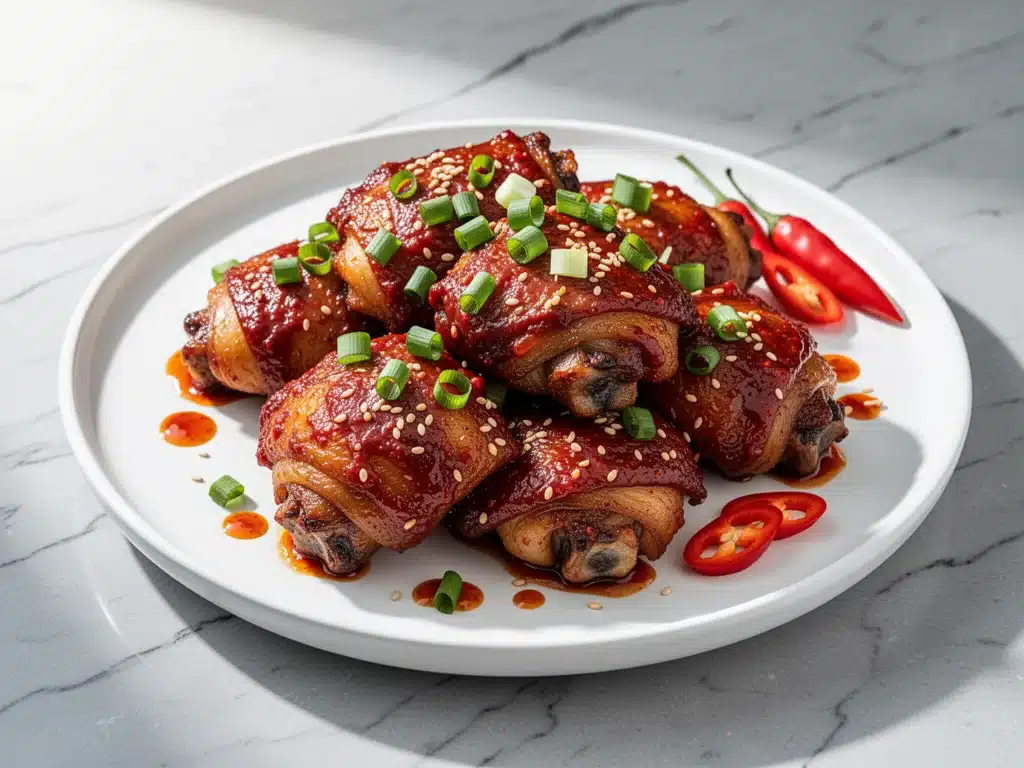
What I got instead was sticky, sweet, spicy, savory perfection. The kind of chicken that makes you close your eyes when you take the first bite. It was better than the takeout. Actually, it was leagues better. The skin was crispier, the sauce clung to every nook and cranny, and the flavor was so complex I had to pause mid-chew to figure out what I was tasting. (It’s the brown sugar and rice vinegar working together—magic.)
That night, I made Sticky Korean Gochujang Glazed Chicken Thighs again. And again. Within two weeks, I’d made it six times. I’ve tested the timing, tweaked the sauce balance, and figured out exactly how to get that restaurant-quality sticky glaze without deep-frying. This is the version I’m sharing with you. It’s easier than you think, smells incredible, and will have your neighbors wondering if you ordered delivery.
Why You’ll Love This Recipe
Look, I get it. You’re tired. You want dinner to be easy. You don’t want to spend an hour chopping vegetables or hunting down obscure ingredients. This recipe respects your time and your hunger. Here’s why this Sticky Korean Gochujang Glazed Chicken Thighs has taken over our dinner rotation:
- Zero Deep Frying — We’re pan-searing the thighs in a skillet. Yes, really. You get that crispy skin texture without the mess of hot oil or the health guilt. It’s crisp on the outside, juicy on the inside, and requires only one pan to clean.
- The Sauce is 5 Minutes — The glaze comes together in the same skillet while the chicken rests. It’s a simple mix of gochujang, soy sauce, brown sugar, garlic, and ginger. You whisk it, simmer it, and boom—restaurant sauce in your kitchen.
- Chicken Thighs Are Non-Negotiable — I know breast meat is “leaner,” but thighs are forgiving. They stay juicy even if you overcook them by a minute. Plus, the higher fat content renders out and helps crisp the skin. Don’t substitute unless you want dry chicken.
- Better Than Takeout — Seriously. Takeout sauce is often too sweet and lacks depth. This glaze has heat, umami, acidity, and sweetness balanced perfectly. It clings to the meat instead of sliding off.
- Meal Prep Friendly — These reheat beautifully. I make a double batch on Sunday, store them in the fridge, and grab one for lunch with a side of rice. It’s still sticky and delicious on day three.
This is my answer to “what’s for dinner” when I want something bold and flavorful but don’t want to leave the house. It’s comfort food with a kick.
Ingredients You’ll Need
Here’s the good news: you probably have half of this already. The sauce is pantry-stable, and the chicken is basic. But quality matters here, especially with the gochujang.
For the Chicken
Chicken thighs (2 pounds / 900g) — Boneless, skin-on. This is crucial. Skin-on thighs crisp up in the pan. Boneless skinless works but won’t get that golden crunch. Pat them dry! Wet chicken steams instead of sears.
Neutral oil (2 tablespoons) — Avocado or vegetable oil. We need a high smoke point. Olive oil might burn.
Salt and black pepper — Generous amounts. Season the chicken before it hits the pan.
For the Sticky Gochujang Glaze
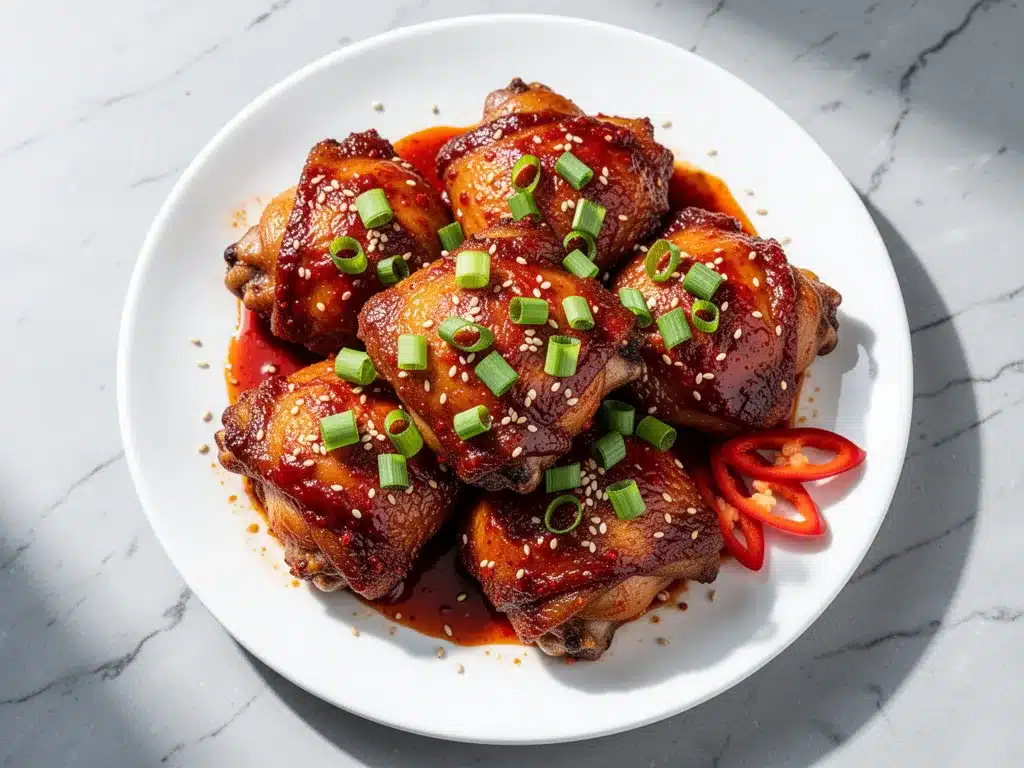
Gochujang paste (3 tablespoons) — This is fermented red chili paste. Buy the real deal, not a “spicy sauce” mix. I like the CJ Brand. It’s spicy, savory, and funky. If you can’t find it, look in the Asian aisle of most grocery stores.
Soy sauce (3 tablespoons) — Low-sodium is best so you control the saltiness. Regular works if you taste before adding more.
Brown sugar (2 tablespoons) — Packed. This gives the sticky, caramelized texture. White sugar works but lacks the molasses depth.
Rice vinegar (1 tablespoon) — Cuts the sweetness and heat. Essential for balance. Do not skip this or use apple cider vinegar—it tastes wrong.
Garlic (4 cloves, minced) — Fresh garlic. Jarred garlic has a metallic aftertaste that clashes with the gochujang.
Fresh ginger (1 teaspoon, grated) — Adds warmth and brightness. Pre-minced ginger in a tube works in a pinch, but fresh is better.
Water (2 tablespoons) — Thinns the sauce slightly so it coats the chicken without being too thick.
Cornstarch (1 teaspoon) — Mixed with the water. This is the secret to the “sticky” part. It thickens the sauce instantly.
For Serving
Sesame seeds (1 tablespoon) — Toasted, if you have time. Adds nuttiness and visual appeal.
Green onions (2 stalks, sliced) — For color and a fresh bite.
Steamed rice or cauliflower rice — To soak up that extra sauce.
Equipment Needed
You don’t need a fancy kitchen for this. Here’s what I use:
Large skillet — 12-inch cast iron or stainless steel works best. It holds heat well for searing. Non-stick is fine if you’re careful, but you won’t get the same fond (browned bits) for the sauce.
Tongs — For flipping the chicken. Forks pierce the meat and let juices escape. Tongs are gentler.
Bowl and whisk — For mixing the sauce. A small bowl is perfect.
Cutting board and knife — For mincing garlic and slicing green onions.
Spatula — Silicone is best for scraping the bottom of the pan and stirring the sauce.
How to Make It: Step-by-Step
Alright, let’s cook. This takes about 25 minutes total. I’ll walk you through exactly how I do it, including the little tricks that make the difference between “okay” and “addictive.”
Step 1: Prep the Chicken (5 minutes)
Take your chicken thighs out of the fridge. Pat them extremely dry with paper towels. I mean, really dry. Moisture is the enemy of crispy skin. Season both sides generously with salt and black pepper. If the thighs are very large, you can cut them in half, but whole thighs cook more evenly. Set them aside while you make the sauce.
Step 2: Make the Glaze (2 minutes)
In a small bowl, whisk together the gochujang, soy sauce, brown sugar, rice vinegar, minced garlic, and grated ginger. Add the cornstarch and a splash of water, and whisk until smooth. No lumps. Set this aside. It’s going to thicken quickly, so don’t worry if it looks thick now.
Step 3: Sear the Chicken (10-12 minutes)
Heat the neutral oil in your large skillet over medium-high heat. Once the oil shimmers, lay the chicken thighs in the pan, skin-side down. Don’t crowd the pan—if you have a small skillet, do this in two batches. Press them down gently with a spatula to ensure even contact with the pan. You want golden brown, not burnt.
Cook for 5-6 minutes without moving them. Listen for the sizzle. If it’s silent, the pan isn’t hot enough. If it’s roaring, lower the heat. Flip the chicken when the skin is deep golden and releases easily from the pan. Cook the other side for 4-5 minutes. The chicken is done when the internal temperature reaches 165°F (74°C). Remove the chicken to a plate. Don’t wipe out the pan—that browned stuff is flavor gold.
Step 4: Build the Sticky Sauce (3 minutes)
Reduce the heat to medium. Pour the gochujang mixture into the hot skillet. It will bubble and splatter—stand back slightly. Stir constantly, scraping up those browned bits from the bottom of the pan. The sauce will thicken rapidly. After about 1-2 minutes, it should coat the back of a spoon and look glossy and sticky.
If it gets too thick too fast, add a teaspoon of water. If it’s too thin, let it simmer for another minute. You want it to be like a thin syrup, not a thin soup.
Step 5: Glaze and Finish (2 minutes)
Return the chicken thighs to the skillet, skin-side up. Toss them in the sauce, turning to coat every side. Let them simmer in the glaze for 1 minute. This helps the sauce adhere and finish cooking the chicken through if it’s close to done.
Remove from heat. Sprinkle with toasted sesame seeds and sliced green onions. Serve immediately while the sauce is still warm and sticky.
Expert Tips & Tricks
I’ve made this recipe dozens of times, and I’ve learned a few things the hard way. Here’s how to avoid my mistakes:
Pat Dry Like Your Life Depends On It
I cannot stress this enough. If the chicken skin is wet, it steams. Steamed skin is rubbery. Dry skin is crispy. Use paper towels, then use more paper towels. I’ve ruined batches by rushing this step.
Don’t Crowd the Pan
If you put too many thighs in the skillet, the temperature drops, and they steam instead of sear. Give them space. If your pan is small, cook in batches. It’s worth the extra 5 minutes.
Watch the Heat When Adding the Sauce
The gochujang contains sugar, which burns easily. When you add the sauce to the pan, keep the heat at medium, not high. You want to simmer and thicken, not char. If it starts to smell acrid, take the pan off the heat immediately.
Toast Your Sesame Seeds
Raw sesame seeds are fine, but toasted ones add a nutty depth that elevates the dish. Just pop them in a dry pan for 1-2 minutes until they smell fragrant. It takes 10 seconds and makes a huge difference.
Adjust the Heat
Gochujang varies in spiciness by brand. If you’re sensitive to heat, start with 2 tablespoons and add more to taste. You can also add a pinch of red pepper flakes if you want extra kick, but the gochujang should provide plenty.
Variations & Substitutions
Once you nail the base version, here’s how you can mix it up. I’ve tried all of these:
Spicy Chicken Wings
Use chicken wings instead of thighs. The smaller pieces cook faster (about 15 minutes total). The sauce clings beautifully to the wing skin. Great for game day.
Baking Sheet Version
For hands-off cooking, bake the seasoned thighs at 400°F (200°C) for 35-40 minutes until crispy. Then toss in the sauce on the stove. Less crispy skin, but easier cleanup.
Vegetarian Option
Use firm tofu or seitan. Press the tofu, cube it, and pan-fry until crispy. Then toss in the glaze. The sauce works just as well on tofu.
Lower Sodium
Use low-sodium soy sauce and reduce the amount by half. The gochujang is salty enough. Taste before adding more salt to the chicken.
Dairy-Free & Gluten-Free
This recipe is naturally dairy-free. For gluten-free, use tamari instead of soy sauce. Everything else is gluten-free.
Serving & Storage
How to Serve
I serve this over fluffy jasmine rice, letting the sauce pool at the bottom. It’s also amazing with cauliflower rice for a low-carb version. A side of steamed broccoli or edamame balances the meal. Drizzle with a little extra sesame oil if you’re feeling fancy.
Storage
Store leftovers in an airtight container in the fridge for up to 4 days. The sauce will thicken in the fridge—this is normal. The chicken stays juicy for days because of the skin.
Reheating
Best method: Microwave with a splash of water or broth to loosen the sauce. Heat in 30-second intervals, stirring in between. Or reheat in a skillet over low heat with a splash of water. Don’t reheat in the oven—it dries out the chicken.
Freezing
I don’t recommend freezing the sauced chicken. The texture of the skin changes, and the sauce can separate. Freeze the cooked chicken and sauce separately if you must, but it’s best fresh.
Nutrition Information
I’m not a nutritionist, but here’s the breakdown if you’re tracking. This is per serving (based on 4 servings with rice):
Calories: 450
Protein: 35g
Carbs: 28g
Fat: 22g
Sugar: 14g
Sodium: 680mg
This is richer than a salad, but it’s packed with protein. The gochujang has some fiber and probiotics. It’s a treat meal, not a daily diet staple. Enjoy it responsibly.
Final Thoughts
That’s my Sticky Korean Gochujang Glazed Chicken Thighs! I know I’ve talked a lot about it, but when you make a recipe this often, you have a lot to say. This has saved me from takeout more times than I can count. It’s flavorful, easy, and makes me feel like a gourmet chef without the stress.
Make it yours! Add more garlic if you love it. Use less sugar if you prefer tangy. The best recipes are the ones you adapt. If you make this, drop a comment and let me know what you think. I love hearing how it turns out in your kitchen.
Happy cooking! And I hope your kitchen smells amazing.
Frequently Asked Questions
Can I use chicken breasts instead of thighs?
You can, but I don’t recommend it. Chicken breasts dry out easily and don’t have the fat content to keep them juicy with a heavy glaze. If you must use breasts, cook them for less time (3-4 minutes per side) and watch closely. Thighs are just more forgiving.
What is gochujang? Can I substitute it?
Gochujang is a Korean fermented red chili paste. It’s spicy, sweet, and savory. You can’t perfectly substitute it, but if you’re in a pinch, mix sriracha with a little soy sauce and brown sugar. It won’t be the same depth, but it’s spicy and savory. Don’t use ketchup or hot sauce alone.
Why did my sauce burn?
The brown sugar and gochujang burn easily. If your sauce turned black or bitter, the heat was too high. Next time, keep the heat at medium and watch it closely. If it’s already burned, start over—burnt sugar tastes awful.
Can I make this ahead of time?
Prep the sauce and season the chicken ahead of time. Store them separately in the fridge. Cook the chicken and make the sauce right before serving. The sauce thickens as it sits, so you might need to add a splash of water when reheating.
Is this recipe very spicy?
It’s medium heat. Gochujang is spicy but not like habanero heat. It’s a warm, lingering spice. If you’re sensitive to heat, use 2 tablespoons of gochujang and add more to taste. You can also add a pinch of sugar to balance the heat.
How do I get the skin extra crispy?
Pat the skin dry, season with salt, and let it sit in the fridge uncovered for 30 minutes before cooking. This dries the skin further. Then sear skin-side down in hot oil without moving it. Patience is key.
Pin This Recipe!
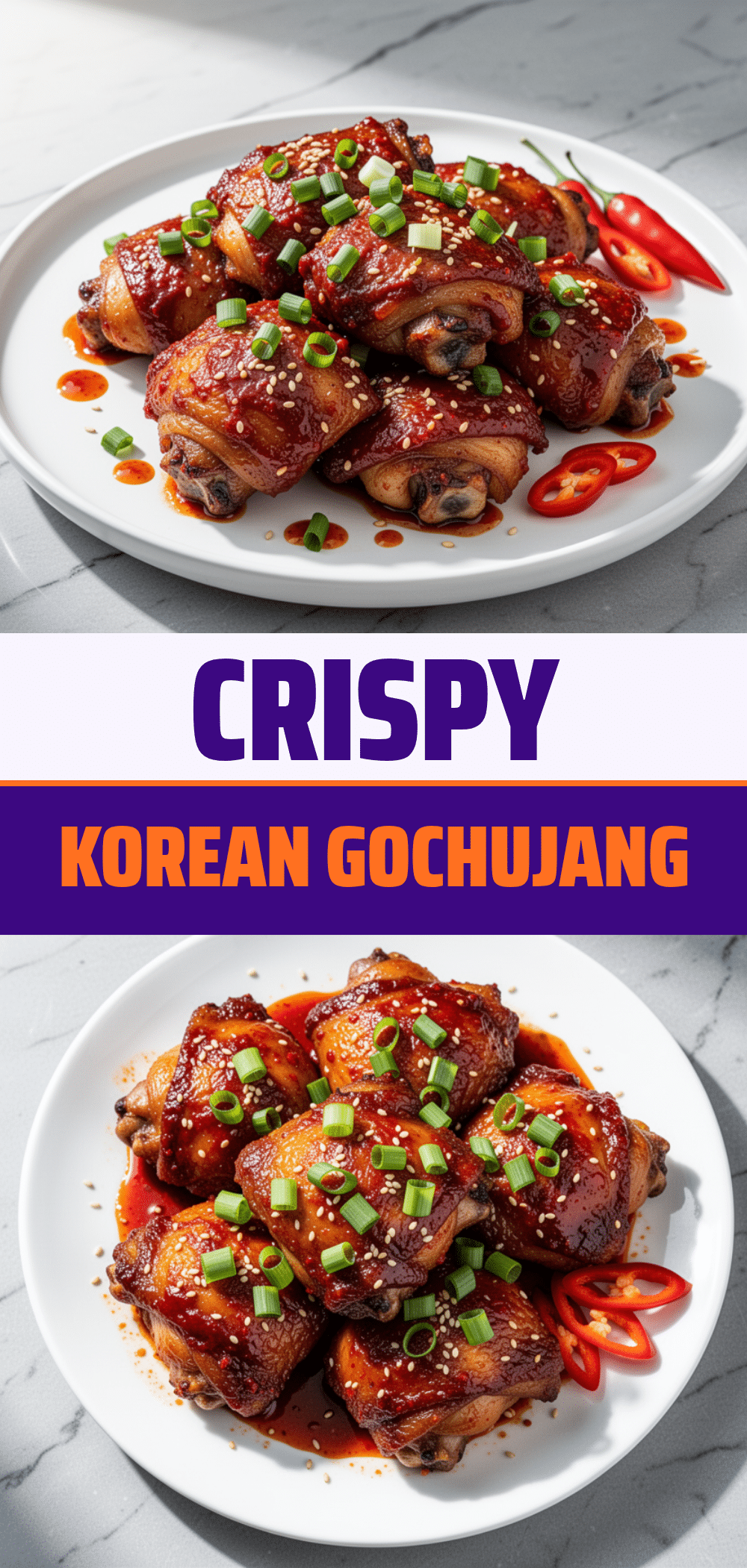
Sticky Korean Gochujang Glazed Chicken Thighs
- Total Time: 25 minutes
- Yield: 4 servings 1x
Description
A quick and flavorful weeknight dinner featuring pan-seared chicken thighs with a sticky, sweet, and spicy gochujang glaze. This recipe delivers restaurant-quality results without deep-frying.
Ingredients
- 2 pounds boneless, skin-on chicken thighs
- 2 tablespoons neutral oil (avocado or vegetable)
- Salt and black pepper
- 3 tablespoons gochujang paste
- 3 tablespoons soy sauce (low-sodium recommended)
- 2 tablespoons packed brown sugar
- 1 tablespoon rice vinegar
- 4 cloves garlic, minced
- 1 teaspoon fresh ginger, grated
- 2 tablespoons water
- 1 teaspoon cornstarch
- 1 tablespoon toasted sesame seeds
- 2 stalks green onions, sliced
- Steamed rice or cauliflower rice for serving
Instructions
- Pat chicken thighs extremely dry with paper towels and season generously with salt and black pepper.
- In a small bowl, whisk together gochujang, soy sauce, brown sugar, rice vinegar, garlic, and ginger. Whisk in cornstarch and 2 tablespoons water until smooth.
- Heat neutral oil in a large skillet over medium-high heat. Place chicken thighs skin-side down in the pan, ensuring they are not crowded. Cook for 5-6 minutes until skin is deep golden and releases easily.
- Flip chicken and cook for another 4-5 minutes until internal temperature reaches 165°F (74°C). Remove chicken to a plate, leaving browned bits in the pan.
- Reduce heat to medium. Pour the gochujang mixture into the hot skillet. Stir constantly, scraping up browned bits, until the sauce thickens and coats the back of a spoon (1-2 minutes).
- Return chicken to the skillet, skin-side up. Toss to coat in the sauce and simmer for 1 minute.
- Remove from heat, sprinkle with sesame seeds and green onions, and serve immediately over rice or cauliflower rice.
Notes
Patting the chicken dry is crucial for crispy skin. Do not crowd the pan to ensure proper searing. Gochujang burns easily, so keep heat at medium when making the sauce. For gluten-free, substitute soy sauce with tamari.
- Prep Time: 5 minutes
- Cook Time: 20 minutes
- Category: Main Course
- Cuisine: Korean
Nutrition
- Serving Size: 1 chicken thigh with
- Calories: 450
- Sugar: 14
- Sodium: 680
- Fat: 22
- Saturated Fat: 6
- Carbohydrates: 28
- Fiber: 1
- Protein: 35
Keywords: Korean chicken, gochujang, glazed chicken, weeknight dinner, pan-seared chicken, sticky chicken, easy dinner, gluten-free option