It was 6:45 PM on a Tuesday. I was standing in my kitchen, staring into the open fridge like it might magically produce a meal I hadn’t already cooked three times this week. My phone was in one hand, the Uber Eats app open, my thumb hovering over the “Order” button. The other hand was holding a limp, sad-looking bunch of asparagus that had been hiding in the crisper drawer for four days.
I was exhausted. Not just “tired” tired, but “my soul feels heavy from decision fatigue” tired. I didn’t want to chop. I didn’t want to stir. I definitely didn’t want to clean up a complicated mess. I just wanted something that tasted amazing, looked impressive enough to post on Instagram (okay, fine, I wanted validation), and didn’t require me to leave the house.
Then I remembered the honey garlic glazed salmon recipe I’d saved months ago. I’d never actually made it because salmon seemed intimidating and I was convinced I’d overcook it into leather again. But looking at that asparagus, I thought, “Why not? It’s just fish and veggies. How hard can it be?”
Turns out, it’s incredibly easy. And it’s changed my weeknight life.
Last week, I made this honey garlic glazed salmon again. And again. And honestly? I’m not even embarrassed about it anymore. In fact, my husband asked if we could have it every Tuesday now. He didn’t even notice the asparagus was slightly wilted from my second batch. He just ate the salmon and asked for seconds.
This isn’t one of those complicated recipes that requires you to be a chef or own a sous vide machine. It’s honey garlic glazed salmon with roasted asparagus, cooked in one pan (well, technically two, but who’s counting?), ready in 15 minutes, and tastes like something you’d pay $24 for at a fancy bistro. But here’s the best part: it costs less than half that, and you don’t have to wait for a delivery driver who lost your order.
After testing this recipe about ten times (I like to get it right, okay?), I’ve figured out the exact balance of sweet, savory, and salty that makes this honey garlic glazed salmon stick to the fish without burning, and the perfect roasting time for asparagus that stays crisp-tender instead of turning into mush. If you’re a busy parent, a working professional, or just someone who wants dinner on the table before the sun goes down, this is your new best friend.
Why You’ll Love This Honey Garlic Glazed Salmon
Look, I get it. Weeknights are chaos. You’re juggling emails, kids’ homework, and trying to remember if you bought milk. So why would you choose to cook salmon when you could just microwave a frozen dinner? Because this honey garlic glazed salmon is actually easier than most frozen meals, and it tastes 100 times better.
Here’s why this recipe has completely replaced my takeout habit:
- Stupid Simple Prep — Seriously, if you can whisk sauce ingredients in a bowl, you can make this. I’ve walked my teenage son through the sauce mixing process while he scrolled TikTok. He got it right the first time.
- Lightning Fast — 15 minutes from start to finish. That’s it. I’m not exaggerating. I timed it. The salmon cooks in about 10-12 minutes, and the asparagus roasts in the same timeframe. I make this on nights when I get home at 7 PM and want to eat by 7:30.
- One Pan Wonder (Mostly) — You’ll need a baking sheet for the asparagus and a skillet for the salmon, but cleanup is minimal. No pots to scrub, no complicated stovetop splatters. Just two dishes. That’s it.
- Impressive but Humble — The glaze is glossy, caramelized, and smells like heaven. It looks like you spent hours in the kitchen. It didn’t. This is my go-to when I need to impress a date or just want to treat myself without the effort.
- Pantry-Friendly Sauce — You probably already have everything for the glaze. Honey, garlic, soy sauce, maybe some ginger. I keep these stocked specifically so I can throw together this honey garlic glazed salmon on a whim when I have salmon in the freezer.
- Healthy Without Being Boring — It’s packed with protein and omega-3s, and the asparagus adds fiber and vitamins. It’s not “diet food”—it’s just good, honest food that makes you feel energized instead of sluggish after eating.
This is my answer to “what’s for dinner” when I’m tired, don’t want takeout, and still want something that tastes really good. My family is happy, my husband’s happy, and I’m happy because I’m not stressed about cooking.
Ingredients You’ll Need
Here’s the thing about this honey garlic glazed salmon: the magic is in the sauce. It’s simple, but the quality of your ingredients matters more than you’d think. I’m particular about a few things here, and I’ll tell you exactly why.
For the Salmon
Salmon fillets (4 pieces, about 6oz each / 680g total) — I prefer center-cut fillets because they cook evenly. Wild-caught is better for flavor and omega-3s, but farmed works fine too. Make sure they’re about the same thickness so they cook at the same rate. If one is huge and another is tiny, you’ll end up with one dry and one raw. Ask your fishmonger to trim them if needed.
Neutral oil (2 tablespoons / 30ml) — I use avocado oil or vegetable oil. Olive oil works but has a lower smoke point, so keep the heat medium, not high. I don’t want my salmon to burn before it’s cooked.
Salt and black pepper — To taste. I usually use about ½ teaspoon kosher salt per fillet. Freshly cracked pepper adds a nice bite.
For the Honey Garlic Glaze
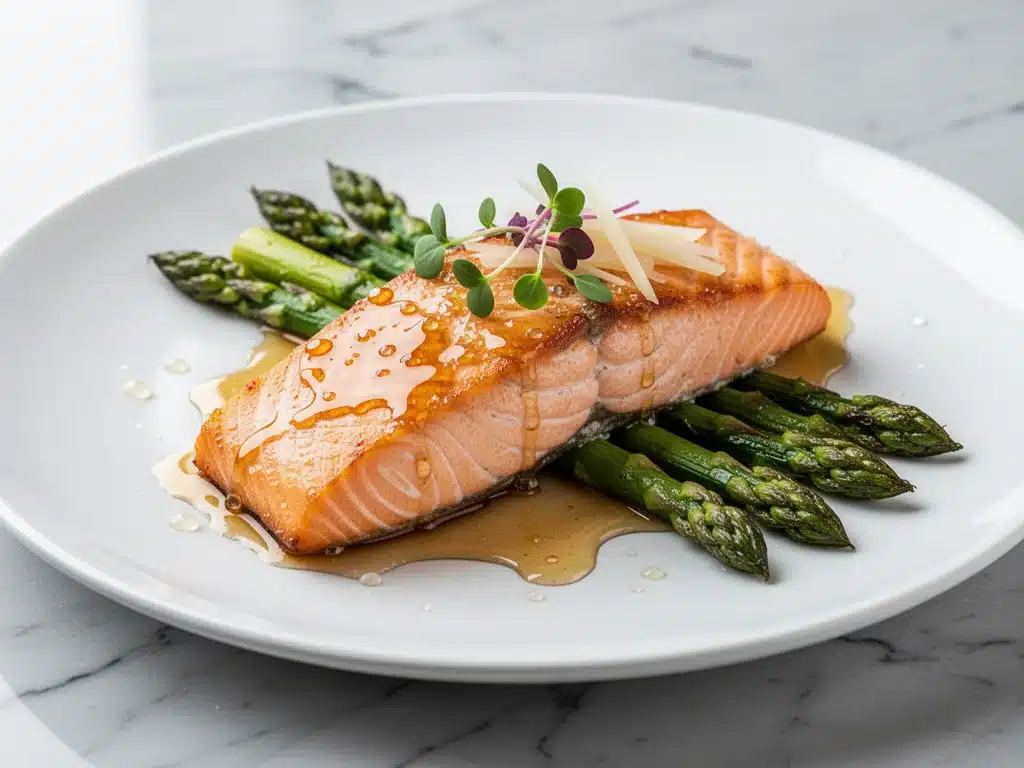
Honey (½ cup / 170g) — This is the star. Use real honey, not corn syrup blends. I love using clover honey for its mild flavor, but wildflower or even maple syrup (if you’re swapping) works too. The honey gives that sticky, caramelized finish that makes you want to lick the plate.
Soy sauce (3 tablespoons / 45ml) — This provides the salty, umami backbone. I use low-sodium soy sauce so I can control the saltiness. Regular soy sauce works, but you might need to reduce the added salt. Tamari is great for a gluten-free version.
Garlic (4 cloves, minced / about 2 tablespoons) — Yes, four cloves. Don’t skimp. Fresh garlic is non-negotiable here. Jarred garlic has a weird metallic taste that ruins the delicate balance of this sauce. I mince it fine so it distributes evenly and doesn’t burn.
Fresh ginger (1 teaspoon, grated / about 5g) — This adds a bright, zesty kick that cuts through the sweetness. I grate it fresh because ground ginger tastes dusty and weak. If you absolutely can’t find fresh, use ¼ teaspoon ground ginger, but it won’t be the same.
Rice vinegar (1 tablespoon / 15ml) — This adds acidity to balance the sweet honey. It’s subtle but important. If you don’t have rice vinegar, apple cider vinegar works in a pinch, but it will change the flavor profile slightly.
Sriracha or chili flakes (1 teaspoon / optional) — I like a little heat to contrast the sweetness. Sriracha adds a garlicky heat, while chili flakes are more straightforward. Skip this if you’re serving kids or spice-averse guests.
For the Asparagus
Asparagus spears (1 bunch / about 300g) — Look for spears that are firm and straight, not limp or woody. Medium thickness is ideal—too thin and they’ll burn, too thick and they’ll be undercooked. I usually buy the bunch that’s about the width of my hand.
Olive oil (1 tablespoon / 15ml) — Just enough to coat the asparagus so it roasts nicely.
Salt — A pinch to season the asparagus.
Equipment Needed
You don’t need fancy equipment for this. Here’s what I actually use:
Baking sheet — I use a standard half-sheet pan. Line it with parchment paper for easy cleanup. I like parchment because the asparagus doesn’t stick, and I don’t have to scrub the pan afterward. Foil works too, but parchment is nicer.
Skillet — A 10-inch non-stick or cast iron skillet works best for the salmon. I prefer non-stick because it’s forgiving if you’re a beginner. Cast iron gives a nice sear but requires more attention to prevent sticking.
Small bowl — For whisking the glaze. Any small mixing bowl works.
Whisk — To combine the sauce ingredients smoothly. A fork works in a pinch.
Tongs — For flipping the salmon and tossing the asparagus. Tongs are easier than a spatula for flipping delicate fish.
Sharp knife — For trimming the asparagus ends. I just snap off the woody bottoms—they break where the tender part starts. It’s easier than cutting.
How to Make It: Step-by-Step
Alright, let’s make this! I’m walking you through exactly how I do it, including the little tricks I’ve picked up over time.
Step 1: Prep the Asparagus (5 minutes)
Preheat your oven to 400°F (200°C). This is crucial—make sure it’s fully hot before the asparagus goes in. Take your asparagus bunch and snap off the woody ends. I just hold each spear near the middle and bend it; it breaks naturally where the tough part ends. Discard the tough ends and toss the tender spears onto your parchment-lined baking sheet. Drizzle with olive oil and sprinkle with a pinch of salt. Toss to coat. Set aside while you prep the salmon.
Step 2: Make the Glaze (2 minutes)
In a small bowl, whisk together the honey, soy sauce, minced garlic, grated ginger, rice vinegar, and sriracha (if using). Whisk until the honey is fully dissolved and the mixture is smooth. It should look glossy and fragrant. Taste it—it should be sweet, salty, and a little tangy. Adjust to your preference. If it’s too sweet, add a splash more vinegar. If it’s too salty, add a bit more honey.
Step 3: Season the Salmon (2 minutes)
Pat the salmon fillets dry with paper towels. This step is important—dry fish sears better and doesn’t steam. Season both sides with salt and pepper. If your fillets have skin, you can leave it on or remove it. I usually leave it on for easier handling, but it’s your call.
Step 4: Sear the Salmon (6-8 minutes)
Heat the oil in your skillet over medium-high heat. Once the oil shimmers (but isn’t smoking), place the salmon fillets skin-side down (if skin-on). Don’t touch them! Let them sear for 4-5 minutes. You’ll see the color change from translucent pink to opaque orange about halfway up the sides. This is your cue that the bottom is cooked and ready to flip.
Flip the salmon carefully. Pour the honey garlic glaze over the top of the fillets. Reduce heat to medium-low. Let it cook for another 3-4 minutes, spooning the glaze over the salmon every minute or so. The glaze will bubble and caramelize. The salmon is done when it flakes easily with a fork and reaches an internal temperature of 145°F (63°C). Don’t overcook it! It should be slightly translucent in the very center if you like it moist.
Step 5: Roast the Asparagus (12-15 minutes)
While the salmon cooks, put the baking sheet with asparagus in the oven. Roast for 12-15 minutes, flipping halfway through. The asparagus is done when it’s tender but still has a slight crunch, and the tips are slightly charred. Don’t let it get mushy—that’s the enemy of good asparagus.
Step 6: Serve
Remove the salmon from the skillet and let it rest for 1 minute. Spoon any remaining glaze from the pan over the top. Serve the salmon alongside the roasted asparagus. Garnish with sesame seeds or fresh parsley if you have them. Drizzle with a little extra honey if you’re feeling fancy.
Total Time: About 15 minutes (5 minutes prep, 10 minutes cooking)
Expert Tips & Tricks
Here’s everything I’ve learned from making this dozens of times. These tips will save you from my mistakes.
Don’t Overcook the Salmon
This is the #1 mistake people make. Salmon continues to cook even after you remove it from the heat. I take it off at 140°F (60°C) internal temperature, and it finishes at 145°F (63°C) while resting. Overcooked salmon is dry and boring. Undercooked is safe (if you like it rare) but this recipe is designed for medium. Trust the flake test.
Pat the Fish Dry
I know it seems like a small thing, but wet salmon steams instead of sears. Paper towels are your friend. Dry fish gets that beautiful caramelization from the honey glaze instead of turning soggy.
Watch the Heat
When you add the glaze, reduce the heat to medium-low. Honey burns quickly. If you keep it on high, you’ll have burnt sugar and raw fish. Low and slow is the way to go for the glaze to thicken and stick.
Thin Asparagus vs. Thick
If your asparagus is very thick, roast it for 15-18 minutes. If it’s thin (like pencil asparagus), check it at 10 minutes. Thin asparagus cooks fast and can turn to mush if you’re not paying attention.
Make Ahead Strategy
You can mix the glaze up to 3 days ahead and store it in the fridge. It actually tastes better after the flavors meld. Just bring it to room temperature before using. The salmon and asparagus should be prepped fresh, though.
Pro Trick for Extra Flavor
Add a teaspoon of butter to the glaze at the very end of cooking. Swirl it in. It makes the sauce glossy and rich, almost like a restaurant finish. It’s a small step that makes a big difference.
Variations & Substitutions
Once you’ve nailed the basic version, here’s how you can mix it up. I’ve tried all of these.
Spicy Honey Garlic
Double the sriracha or add ½ teaspoon of red pepper flakes. If you like heat, this version is addictive. I make this when I want a kick.
Teriyaki Style
Swap the rice vinegar for mirin and add a tablespoon of brown sugar. It’s sweeter and more traditional. My kids love this version.
Lemon Herb
Skip the ginger and add lemon zest and fresh dill to the glaze. It’s lighter and brighter. Great for spring.
Gluten-Free
Use tamari instead of soy sauce. Everything else is naturally gluten-free. I’ve used Coconut Secret tamari and it works great.
Dairy-Free
This recipe is already dairy-free! Just make sure your soy sauce and honey are vegan-certified if you’re strict.
Vegetarian Swap
You can use thick slices of firm tofu instead of salmon. Press the tofu first, then sear it and glaze it the same way. It’s not the same texture, but it’s still delicious.
Serving & Storage
How to Serve:
I usually serve this straight from the skillet and baking sheet at the dinner table—it looks rustic and stays warm. But here are other ways I’ve enjoyed it:
- Rice or Quinoa — A bed of jasmine rice or fluffy quinoa soaks up the extra glaze. I love this combo.
- Noodles — Toss with soba or rice noodles for a lighter meal.
- Simple Salad — A side of mixed greens with a vinaigrette balances the richness.
Storage:
Store leftovers in an airtight container in the fridge for up to 3 days. The salmon will absorb more glaze as it sits, which is actually pretty good.
Reheating:
Gently reheat in a skillet over low heat with a splash of water to steam it back to life. Microwave works but can dry it out. If you microwave, cover it with a damp paper towel and heat in 30-second intervals.
Freezing:
I don’t recommend freezing this. The texture of the salmon changes when frozen and thawed, and the asparagus gets mushy. Make it fresh or store in the fridge for up to 3 days.
Nutrition Information
I’m not a nutritionist, but here’s the breakdown if you’re tracking.
Per Serving (based on 4 servings):
- Calories: 380
- Protein: 34g
- Carbs: 22g
- Fiber: 3g
- Sugar: 18g
- Fat: 16g
- Saturated Fat: 3g
- Cholesterol: 95mg
- Sodium: 680mg
- Calcium: 80mg
What’s Good:
High protein, rich in omega-3s, and the asparagus adds vitamins A, C, and K. It’s a balanced meal.
What to Know:
The honey adds sugar, so if you’re watching carbs, reduce the honey or skip it. The sodium is moderate—use low-sodium soy sauce to cut it down.
My Take:
Look, this is comfort food with a healthy twist. It’s not a diet recipe, but it’s way better than takeout. When I want to make it lighter, I reduce the honey and add more veggies. But usually? I just enjoy it as is.
Final Thoughts
So that’s my honey garlic glazed salmon! I’ve probably talked your ear off at this point, but when you make a recipe this often, you have a lot to say about it.
This has saved weeknight dinners more times than I can count. It’s my answer to “what’s for dinner” when I’m tired, don’t want takeout, and still want something that tastes really good. My kids are happy, my husband’s happy, and I’m happy because I’m not stressed about cooking.
Make it yours! Try different add-ins, swap in your favorite vegetables, adjust the spice level. The best recipes are the ones you adapt to your family’s tastes.
If you make this, drop a comment and let me know what you think! I love hearing how recipes turn out in your kitchen. And if something doesn’t work, tell me that too—I’m here to help troubleshoot.
Happy cooking! And I hope your kitchen smells half as good as mine does right now.
Frequently Asked Questions
Can I use frozen salmon?
Yes, but you need to thaw it completely first. Pat it very dry before cooking. Frozen salmon releases more water, so it might steam instead of sear. Fresh is best, but frozen works if you’re careful.
Why did my glaze burn?
The heat was probably too high. Honey burns easily. Always reduce to medium-low when adding the glaze. If it starts to darken too fast, add a splash of water to deglaze the pan and lower the heat.
Can I make this ahead for a dinner party?
Sort of. You can prep the glaze and chop the asparagus ahead. But cook the salmon and asparagus fresh right before serving. Salmon doesn’t reheat well, and asparagus gets soggy. Just do the last 10 minutes fresh—it’s quick enough.
What kind of honey is best?
Any clear honey works. Clover, wildflower, or even orange blossom. Avoid dark, robust honeys like buckwheat unless you want a strong flavor. I stick to mild honey so the garlic and soy shine.
How do I know when the salmon is done?
The easiest way is the flake test. Gently press the thickest part with a fork. If it flakes apart easily and is opaque throughout, it’s done. If it’s still translucent, give it another minute. Internal temp of 145°F is safe.
Can I substitute the asparagus?
Absolutely! Broccoli, green beans, or zucchini work well. Roast them at 400°F for 12-15 minutes. Just check for doneness—veg thickness varies.
Is this recipe kid-friendly?
Yes! The kids in my house love it. If they’re sensitive to garlic or ginger, reduce those amounts. You can also serve the glaze on the side so they can dip their salmon if they want. It’s a great way to get them eating fish.
Pin This Recipe!
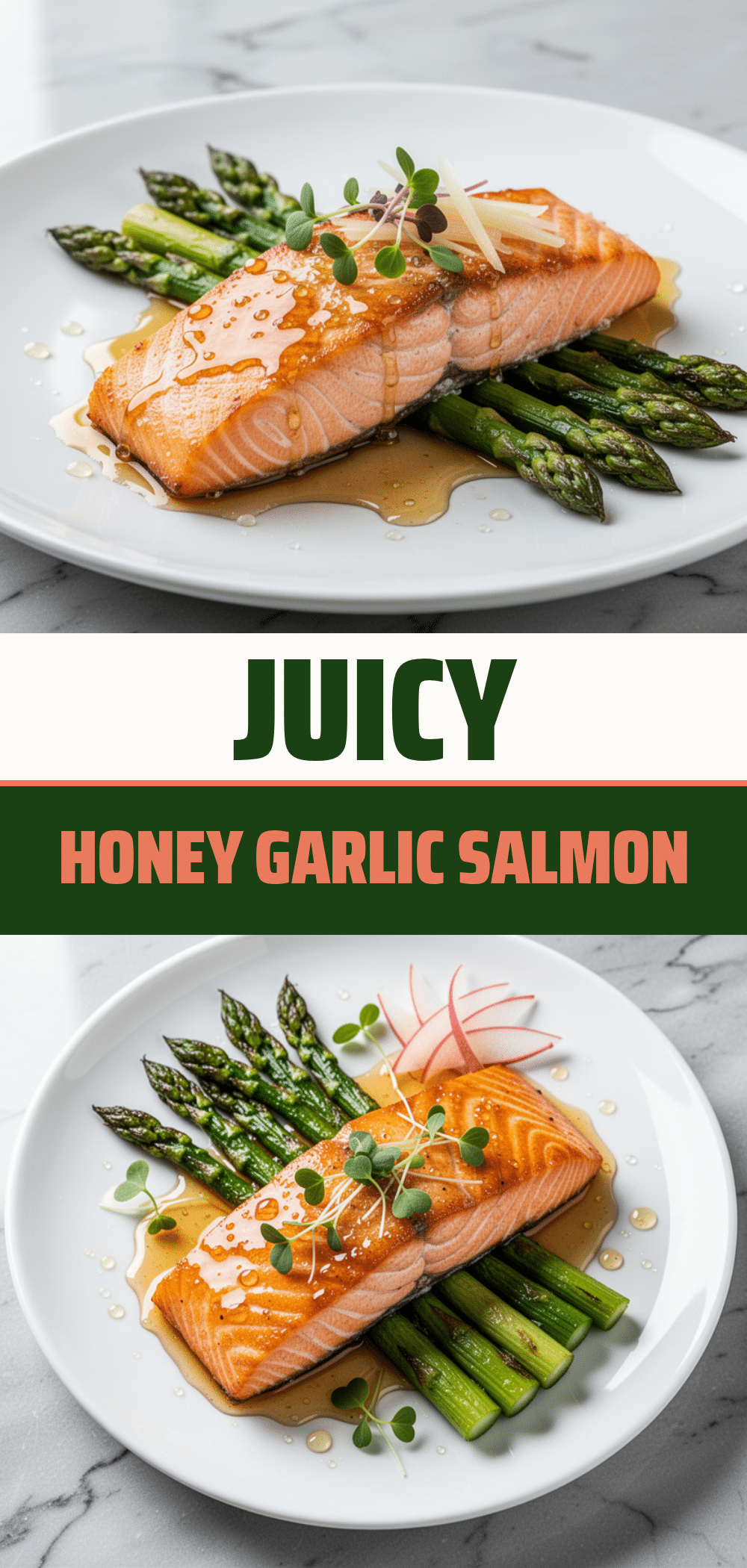
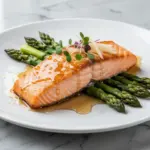
Honey Garlic Glazed Salmon: 15-Min Easy Weeknight Meal
- Total Time: 15 minutes
- Yield: 4 servings 1x
Description
A quick and easy weeknight dinner featuring salmon fillets seared in a skillet with a sticky, sweet, and savory honey garlic glaze, served alongside roasted asparagus. Ready in just 15 minutes with minimal cleanup.
Ingredients
- 4 salmon fillets (about 6oz each / 680g total)
- 2 tablespoons neutral oil (avocado or vegetable oil)
- Salt and black pepper to taste
- 1/2 cup honey
- 3 tablespoons soy sauce (or tamari for gluten-free)
- 4 cloves garlic, minced
- 1 teaspoon fresh ginger, grated
- 1 tablespoon rice vinegar
- 1 teaspoon sriracha or chili flakes (optional)
- 1 bunch asparagus spears (about 300g)
- 1 tablespoon olive oil
- Pinch of salt for asparagus
Instructions
- Preheat oven to 400°F (200°C). Snap off the woody ends of the asparagus spears and toss them on a parchment-lined baking sheet with olive oil and a pinch of salt. Set aside.
- In a small bowl, whisk together honey, soy sauce, minced garlic, grated ginger, rice vinegar, and sriracha (if using) until smooth.
- Pat salmon fillets dry with paper towels and season both sides with salt and pepper.
- Heat neutral oil in a 10-inch skillet over medium-high heat. Place salmon fillets skin-side down (if skin-on) and sear for 4-5 minutes without touching until the color changes halfway up the sides.
- Flip the salmon carefully. Pour the honey garlic glaze over the fillets. Reduce heat to medium-low and cook for 3-4 minutes, spooning glaze over the salmon occasionally, until it flakes easily and reaches an internal temperature of 145°F (63°C).
- While salmon cooks, roast asparagus in the preheated oven for 12-15 minutes, flipping halfway through, until tender but crisp-tender.
- Remove salmon from skillet and let rest for 1 minute. Spoon remaining glaze over the top. Serve alongside roasted asparagus.
Notes
Pat the fish dry before cooking to ensure a good sear. Reduce heat to medium-low when adding the glaze to prevent the honey from burning. Salmon continues to cook after removal from heat; remove at 140°F for medium doneness. Asparagus roasting time may vary based on thickness.
- Prep Time: 5 minutes
- Cook Time: 10 minutes
- Category: Main Course
- Cuisine: Asian Fusion
Nutrition
- Serving Size: 1 salmon fillet with
- Calories: 380
- Sugar: 18
- Sodium: 680
- Fat: 16
- Saturated Fat: 3
- Carbohydrates: 22
- Fiber: 3
- Protein: 34
Keywords: honey garlic salmon, quick weeknight dinner, easy salmon recipe, one pan meal, healthy dinner, gluten-free options, 15 minute meals