I still remember the first time I tried to make carbonara. I was twenty-two, living in a tiny apartment with a hot plate that either burned everything or left it raw, and I was convinced that cream was the secret to restaurant-quality pasta. I had watched some fancy cooking show where the chef drizzled heavy cream into a pan, and it looked so smooth and inviting. So, I did the same. I added cream to my egg yolks and parmesan. The result? It was… fine. It was creamy. It was safe. But it wasn’t carbonara. It was just cheesy pasta with bacon.
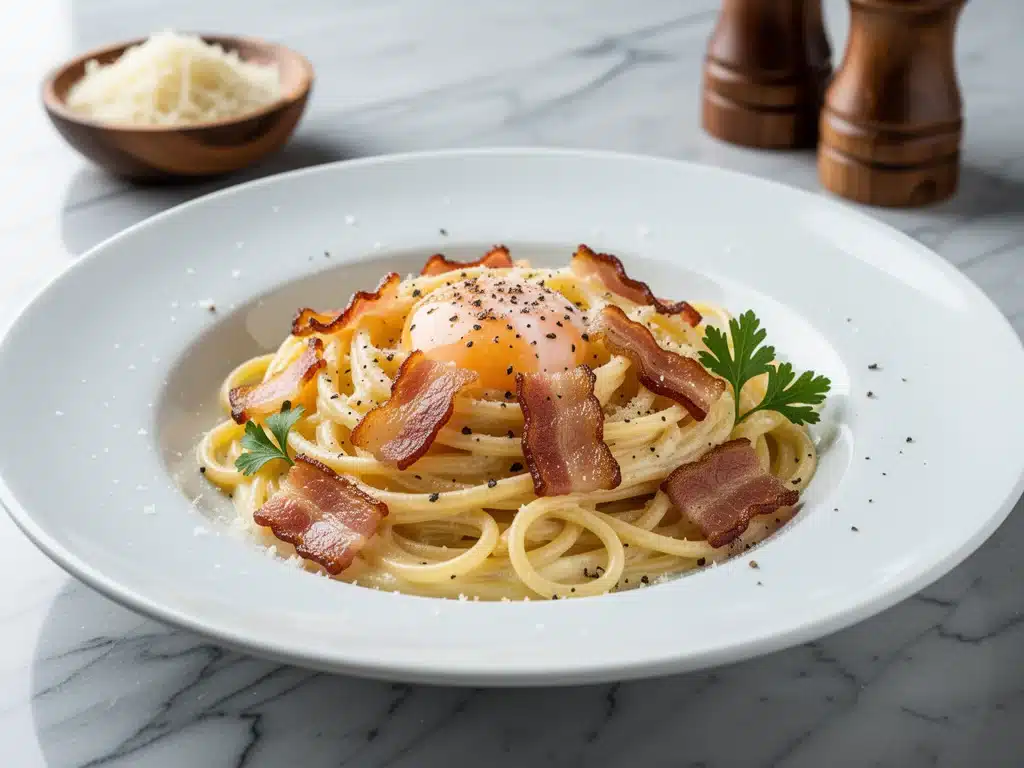
It wasn’t until I was in Rome, sitting at a wobbly table in a non-descript trattoria near Termini station, that I realized I’d been lied to. The waiter brought out a plate of spaghetti that looked almost plain. No green herbs. No red sauce. Just pale yellow strands glistening with oil. I took a bite, and it hit me. The texture was silkier than anything I’d ever made. The flavor was deep, salty, savory, and rich without being heavy. When I asked the waiter how they did it, he looked at me like I’d asked if they used glue. “No cream,” he said. “Just eggs, cheese, guanciale, and black pepper.” He laughed, but he wasn’t joking.
That was the day I stopped making cheesy pasta and started making authentic Italian carbonara with crispy pancetta. (Okay, technically traditionalists insist on guanciale, but let’s be real—finding good guanciale in a standard American grocery store is like finding a unicorn. Pancetta works beautifully, especially when you get it crispy, and it’s much more accessible for a busy weeknight.)
Here’s the thing about carbonara: it’s one of those recipes that sounds intimidating because it has only five ingredients. When you have so few components, there’s nowhere to hide. If your eggs scramble, you fail. If your pasta is soggy, you fail. But once you crack the code—the code being temperature control and timing—it becomes the fastest, most satisfying dinner you can make. I’ve made this authentic Italian carbonara with crispy pancetta at least once a week for the last three years. It’s my answer to “I’m tired, I don’t want to cook, but I want to eat something that feels like a hug.” And the best part? It takes less time than it takes to order Uber Eats.
Why You’ll Love This Authentic Italian Carbonara with Crispy Pancetta
There are a million pasta recipes out there, but this one holds a special place in my kitchen rotation. It’s not just because it’s delicious (though it is insanely good). It’s because it teaches you a fundamental cooking skill that you’ll use forever. Here’s why this authentic Italian carbonara with crispy pancetta deserves a spot on your weekly menu:
- It’s Stupidly Fast — Seriously. From the moment you boil water to the moment you plate, you’re looking at about 20 minutes. I’ve made this on weeknights after getting home from work at 7 PM, and it’s always on the table by 7:20. If you can boil water and whisk an egg, you can make this.
- Pantry Staples Only — You probably have most of this already. Eggs, cheese, pasta, and pancetta are basics. If you don’t have pancetta, you can use bacon, but pancetta gives that authentic salty punch. This is the ultimate “clean out the fridge” meal.
- Texture Obsession — The magic here isn’t just flavor; it’s the contrast. You get the creamy, luxurious sauce, the soft bite of al dente pasta, and then—crunch. Those shards of crispy pancetta provide this incredible textural pop that keeps every bite interesting. It’s the difference between “meh” and “wow.”
- No Cream Required — I know, I know. People ask why there’s no cream. The answer is: the eggs and cheese create the creaminess naturally. It’s lighter, it doesn’t sit heavy in your stomach, and it tastes purer. Once you try it this way, you’ll never go back to the creamy version.
- Perfect Leftovers (Sort Of) — Okay, I need to be honest here. Carbonara is best fresh. It’s not a great freezer meal. But if you have leftovers, they’re still good cold or reheated gently. I usually just eat them straight from the fridge like a weird, savory pudding. It’s not a crime, I promise.
So basically, this authentic Italian carbonara with crispy pancetta is your ticket to feeling like a gourmet chef without the stress. It’s elegant enough for a date night but simple enough for a Tuesday after a long shift.
Ingredients You’ll Need for Authentic Italian Carbonara with Crispy Pancetta
Before we get to the cooking, let’s talk about what’s going into the pot. This recipe relies on quality over quantity. Since there are so few ingredients, you want to use the good stuff. Don’t buy the cheapest cheese or the rubbery bacon. Treat yourself.
The Stars of the Show
Pancetta (6 ounces / 170g) — This is the cured pork belly. Look for “pancetta tesa” (flat pancetta) if you can find it, as it’s easier to slice. If you’re in a pinch, thick-cut bacon works, but pancetta has a deeper, more herbal flavor. Cut it into small strips or cubes. You want those crispy bits.
Eggs (3 large yolks + 1 whole egg / about 150g total) — This is the sauce base. Yolks give richness; the whole egg adds structure. I use organic, free-range eggs when I can because the color is nicer and the flavor is richer. Room temperature eggs mix more easily, so take them out of the fridge 15 minutes before you start.
Pecorino Romano (1 cup / 100g, freshly grated) — This is the traditional cheese. It’s salty, sharp, and sheep’s milk-based. If you can’t find it or hate it, you can mix it 50/50 with Parmigiano-Reggiano. But for that true authentic Italian carbonara with crispy pancetta kick, Pecorino is the way to go. Grate it yourself. Pre-grated cheese has anti-caking agents that make the sauce grainy.
Spaghetti or Rigatoni (1 pound / 450g) — Spaghetti is classic, but I love rigatoni because the tubes catch the sauce and the crispy pancetta bits. Use any long pasta you like. The shape doesn’t change the flavor, just the experience.
The Flavor Builders
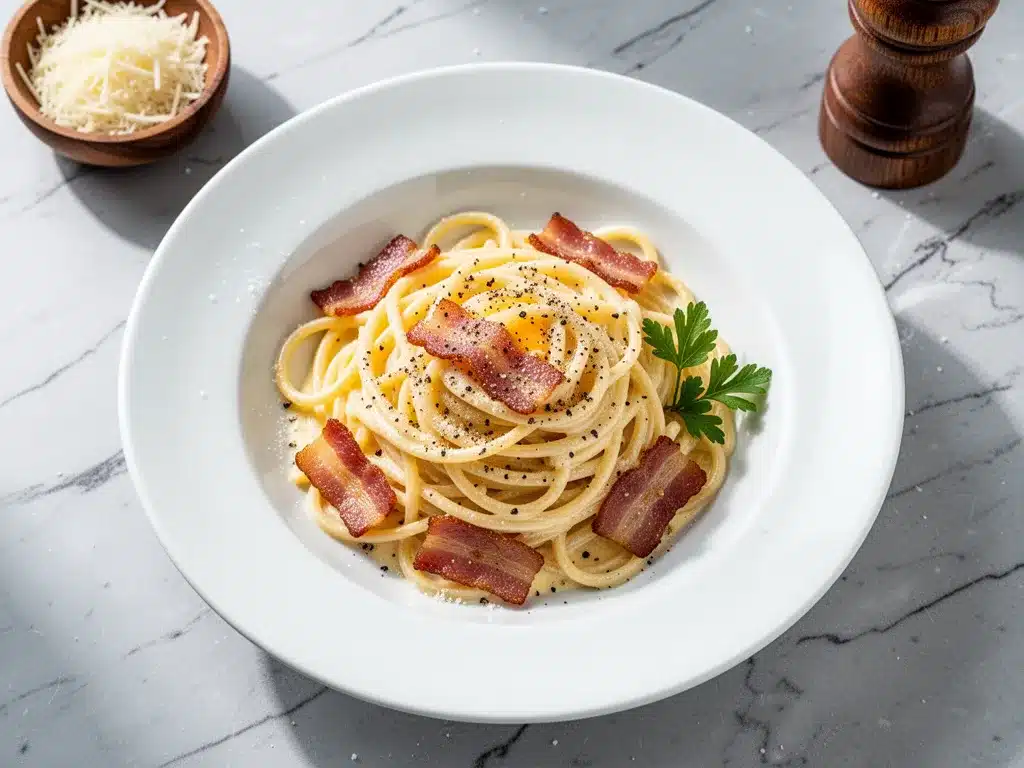
Black Pepper (1-2 teaspoons, freshly cracked) — This is non-negotiable. Carbonara means “coal miner style,” and the pepper is supposed to be bold and spicy. Use a mortar and pestle if you have one. Coarse cracks are better than fine powder here.
Salt (for the pasta water) — You’ll need a lot. The water should taste like the ocean. This seasons the pasta from the inside out.
Optional: White Wine (2 tablespoons) — Some people deglaze the pan with a splash of white wine after cooking the pancetta to pick up the fond. It adds acidity and brightness. I sometimes do this, but it’s not traditional. Skip it if you want pure simplicity.
What About Cream?
I see recipes that add cream, garlic, or parsley. I’m going to be honest: I don’t like them. They dilute the flavor. This authentic Italian carbonara with crispy pancetta is about the interplay of pork, egg, cheese, and pepper. Keep it pure. If you want garlic, add it to the oil when cooking the pancetta, but don’t make it a garlic pasta. That’s a different dish.
Equipment Needed for Authentic Italian Carbonara with Crispy Pancetta
You don’t need fancy gadgets for this. Here’s what I actually use in my kitchen:
- Large Skillet or Pan — 12-inch is ideal. You need enough surface area to cook the pancetta in a single layer so it gets crispy. If your pan is too small, the pancetta steams instead of frying.
- Mixing Bowl — Medium-sized. For whisking the eggs and cheese. A glass or ceramic bowl is nice because it doesn’t retain heat, which helps prevent scrambling.
- Tongs — Essential for tossing the pasta. Forks are okay, but tongs give you better control.
- Colander — For draining pasta. Or just use the lid trick if you’re feeling old-school.
- Whisk — For the egg mixture. A small whisk works best.
- Grater — Box grater or microplane for the cheese. Microplane makes finer shreds that melt faster.
That’s it. No food processor, no special pans. Just basic tools. If you have these, you’re ready.
How to Make It: Step-by-Step
Alright, let’s make this. I’m walking you through exactly how I do it, including the little tricks I’ve picked up over the years. Pay attention to the temperatures—this is where people mess up.
Step 1: Prep the Egg Mixture (2 minutes)
In your mixing bowl, whisk the 3 egg yolks and 1 whole egg until smooth. Add the grated Pecorino Romano and a generous amount of freshly cracked black pepper. Whisk until it forms a thick, paste-like consistency. It should look like a thick yellow dough. Set this aside. Don’t worry, it’ll loosen up later.
Step 2: Cook the Pancetta (5-7 minutes)
Heat your large skillet over medium heat. Do not add oil. The pancetta has plenty of fat. Add the diced pancetta in a single layer. Let it cook undisturbed for 2 minutes to get a sear. Then, stir occasionally. You want it to render its fat and become crispy and golden brown. This takes about 5-7 minutes. Once it’s crispy, turn off the heat. Remove the pancetta with a slotted spoon and set it aside on a paper towel, leaving the rendered fat in the pan. This fat is liquid gold. Don’t throw it away.
Step 3: Start the Pasta (10-12 minutes)
While the pancetta cooks, bring a large pot of salted water to a boil. Add the spaghetti or rigatoni. Cook according to package directions until al dente (usually 1-2 minutes less than the package says). IMPORTANT: Before you drain the pasta, scoop out 1 cup of the starchy pasta water and set it aside. This water is the secret to a silky sauce. Drain the pasta and set it aside. Do not rinse it.
Step 4: Temper the Eggs (Critical Step)
This is the part that scares people. We need to warm the egg mixture so it doesn’t scramble when it hits the hot pasta. Take your skillet with the pancetta fat (still warm, but off the heat). If the pan is too hot, wipe it with a paper towel to cool it down slightly. Add 2-3 tablespoons of the hot pasta water to the egg/cheese mixture. Whisk vigorously. This tempers the eggs, raising their temperature slowly. It should look like a thin, creamy soup.
Step 5: Combine and Create the Sauce
Add the drained hot pasta directly into the skillet with the remaining pancetta fat. Toss the pasta in the fat for 30 seconds. Now, remove the skillet from the heat entirely. This is crucial. Wait 10 seconds for the pan to cool slightly. Pour the tempered egg mixture over the pasta. Add the crispy pancetta back in. Toss vigorously and continuously. The residual heat of the pasta and the pan will cook the eggs gently, creating a creamy sauce. If it looks too thick or clumpy, add a splash more of the reserved pasta water. Keep tossing until the sauce is glossy and coats every strand.
Step 6: Serve Immediately
Plate the pasta while it’s steaming hot. Top with extra black pepper and a few more shreds of Pecorino. Eat immediately. Carbonara waits for no one.
Expert Tips & Tricks for Perfect Carbonara
I’ve made this dish dozens of times, and I’ve made every mistake in the book. Here’s how to avoid them:
- Temperature is Everything — The biggest mistake is adding eggs to a hot pan. If the pan is too hot, you get scrambled eggs. Always remove the pan from the heat source before adding the egg mixture. If your pan is cast iron, it holds heat longer, so wait a bit longer before adding eggs.
- Reserve That Pasta Water — I can’t stress this enough. The starchy water is what emulsifies the sauce. Without it, you get a clumpy, oily mess. Keep it warm and add it gradually.
- Don’t Skimp on Pepper — The pepper should be visible in the final dish. It’s supposed to have a bite. Use freshly cracked pepper. Pre-ground pepper tastes dusty and flat.
- Use Room Temperature Eggs — Cold eggs shock the hot pasta and can lead to uneven cooking. Take them out of the fridge early.
- Work Fast — Once you combine the eggs and pasta, you have about 60 seconds before the sauce sets. Have everything prepped and ready to go. Mise en place is your friend here.
Variations & Substitutions
Once you’ve nailed the basic version, here’s how you can mix it up. I’ve tried all of these:
- Bacon Version — If you can’t find pancetta, use thick-cut bacon. Cook it until crispy, then chop it. It’s slightly smokier but still delicious.
- Guanciale Version — If you can find guanciale (cured pork jowl), use it. It’s the most authentic option. It’s fattier and has a more complex flavor. Fry it slowly to render the fat.
- Vegetarian Twist — Swap the pancetta for sautéed mushrooms or roasted zucchini. Add a splash of truffle oil for depth. It’s not traditional, but it’s tasty.
- Gluten-Free — Use gluten-free pasta. The technique is the same. Just be careful—GF pasta can be more delicate, so toss gently.
- Egg-Free Option — This is tricky. Some people use a roux (butter and flour) to mimic the creaminess, but it’s not the same. I’d suggest trying a cashew cream sauce for a vegan version, though it’s a completely different dish.
Serving & Storage
How to Serve: I usually serve this straight from the skillet at the dinner table—it looks rustic and stays warm. But here are other ways I’ve enjoyed it:
- Sides: A simple arugula salad with lemon vinaigrette cuts through the richness. Roasted asparagus is also great.
- Wine Pairing: A crisp Pinot Grigio or a light Chianti. Avoid heavy reds; they’ll clash with the pork and eggs.
Storage: Honestly, carbonara doesn’t store well. The eggs can separate, and the pasta gets soggy. If you must store it, put it in an airtight container in the fridge for up to 2 days. Reheat gently in a skillet with a splash of water or milk. Do not microwave it, or you will get rubbery eggs. It’s best made fresh.
Nutrition Information
I’m not a nutritionist, but here’s the breakdown if you’re tracking. Keep in mind this is a rich dish, so portions matter.
Per Serving (based on 4 servings):
- Calories: 550
- Protein: 22g
- Carbs: 65g
- Fat: 24g
- Sodium: 600mg
It’s higher in sodium due to the pancetta and cheese, but the protein is decent. If you’re watching carbs, use zucchini noodles, but the texture will be very different. This is comfort food, so enjoy it mindfully.
Final Thoughts
So that’s my take on authentic Italian carbonara with crispy pancetta. It’s not just a recipe; it’s a lesson in simplicity and technique. When you master this, you’ll feel like you’ve unlocked a secret language of cooking. It’s the kind of dish that makes people stop and stare at their plates, wondering how something so simple tastes so complex.
I hope you try it. I hope you get the timing right. I hope you enjoy every creamy, peppery bite. And if you mess up? Don’t worry. I’ve had my share of scrambled egg pasta disasters. We’ve all been there. Just try again. It’s worth it.
If you make this, drop a comment and let me know what you think! I love hearing how recipes turn out in your kitchen. And if something doesn’t work, tell me that too—I’m here to help troubleshoot.
Frequently Asked Questions
Why did my sauce get scrambled?
This happens when the pan is too hot. Always remove the skillet from the heat before adding the egg mixture. If the pan is cast iron, it holds heat longer, so wait a full minute after turning off the burner. Also, tempering the eggs with hot pasta water helps prevent this.
Can I use cream in carbonara?
Technically, no. Authentic Italian carbonara does not use cream. The creaminess comes from the emulsion of eggs, cheese, and pasta water. Adding cream is a common non-Italian adaptation, but it changes the flavor profile. If you want the real deal, skip the cream.
What if I don’t have Pecorino Romano?
You can use Parmigiano-Reggiano, but it’s milder and less salty. I recommend mixing them 50/50 to get the right balance of sharpness and nuttiness. If you only have Parmesan, add a pinch of extra salt to compensate.
Can I make this ahead of time?
No. Carbonara is best served immediately. The sauce continues to thicken and the eggs can congeal as it cools. Prep your ingredients (grate cheese, dice pancetta, whisk eggs) ahead of time, but cook and serve right away.
Is pancetta the same as bacon?
Not exactly. Bacon is usually smoked, while pancetta is cured but not smoked. Pancetta has a more subtle, pork-forward flavor. If you use bacon, you’ll get a smokier taste, which some people love, but it’s not traditional.
How do I know when the pasta is al dente?
Al dente means “to the tooth.” The pasta should be cooked through but still have a slight firmness in the center. Taste it! If it’s mushy, it’s overcooked. For carbonara, undercook it by 1 minute because it will finish cooking in the hot pan.
Can I freeze leftovers?
I don’t recommend it. The eggs and cheese will separate and become grainy when frozen and thawed. It’s much better to make a fresh batch. If you have leftovers, eat them within 24 hours from the fridge.
Pin This Recipe!
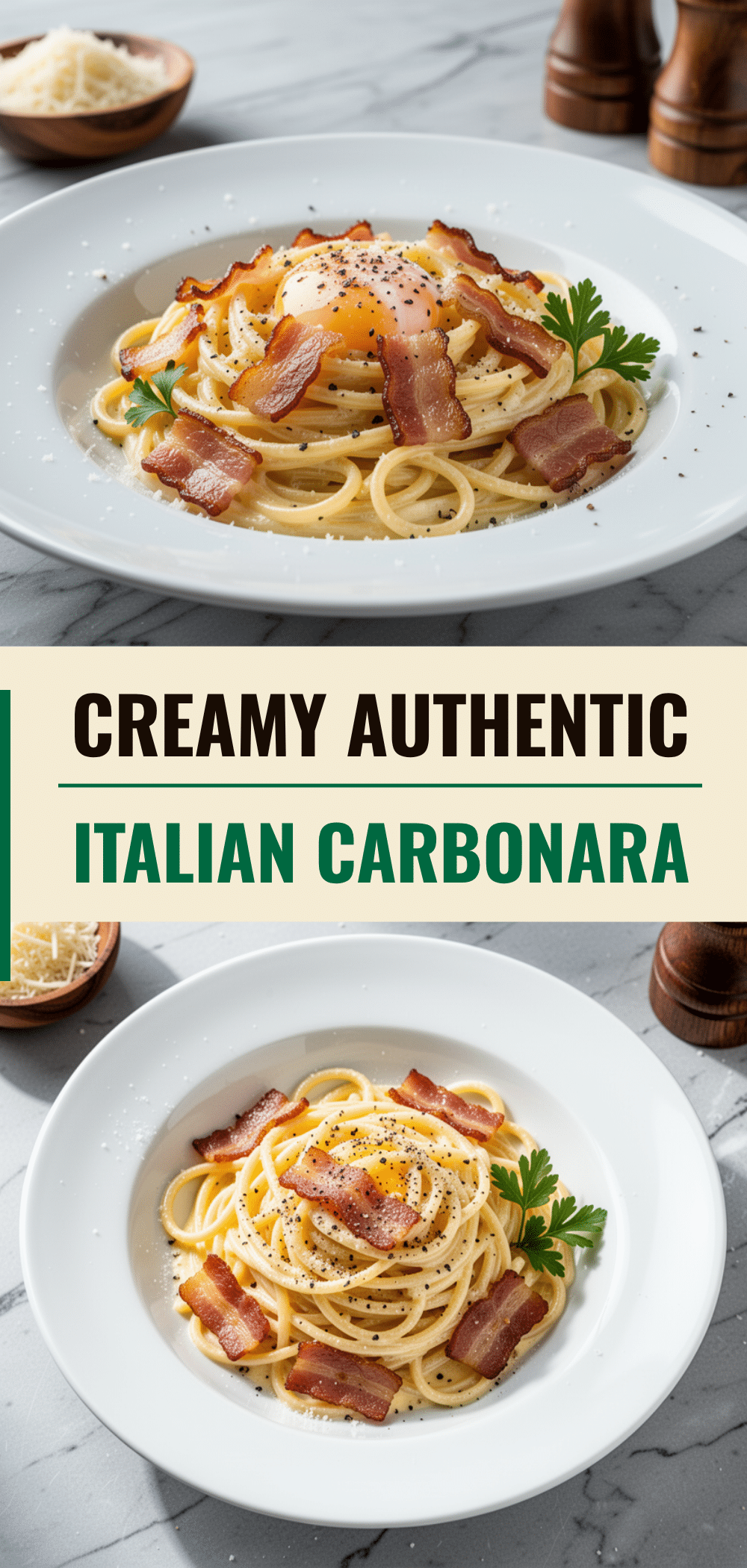
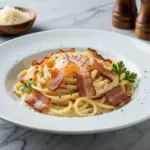
Authentic Italian Carbonara with Crispy Pancetta
- Total Time: 20 minutes
- Yield: 4 servings 1x
Description
A fast, authentic Italian pasta dish featuring crispy pancetta, a creamy egg and Pecorino Romano sauce, and freshly cracked black pepper. No cream is used, relying instead on technique for a silky texture.
Ingredients
- 6 ounces (170g) pancetta, cut into small strips or cubes
- 3 large egg yolks
- 1 whole large egg
- 1 cup (100g) freshly grated Pecorino Romano cheese
- 1 pound (450g) spaghetti or rigatoni
- 1–2 teaspoons freshly cracked black pepper
- Salt for pasta water
- 2 tablespoons white wine (optional)
Instructions
- In a mixing bowl, whisk the 3 egg yolks and 1 whole egg until smooth. Add the grated Pecorino Romano and black pepper. Whisk until a thick, paste-like consistency forms. Set aside.
- Heat a large skillet over medium heat. Add the diced pancetta in a single layer without oil. Cook undisturbed for 2 minutes to sear, then stir occasionally for 5-7 minutes until crispy and golden brown.
- Turn off the heat. Remove the crispy pancetta with a slotted spoon and set aside on a paper towel, leaving the rendered fat in the pan.
- While pancetta cooks, bring a large pot of salted water to a boil. Cook pasta until al dente (1-2 minutes less than package directions). Reserve 1 cup of starchy pasta water before draining.
- Temper the eggs: Add 2-3 tablespoons of hot pasta water to the egg/cheese mixture and whisk vigorously until it resembles a thin, creamy soup.
- Add the drained hot pasta to the skillet with the remaining pancetta fat. Toss for 30 seconds.
- Remove the skillet from the heat entirely and wait 10 seconds for it to cool slightly. Pour the tempered egg mixture over the pasta. Add the crispy pancetta back in.
- Toss vigorously and continuously. The residual heat will cook the eggs gently into a creamy sauce. Add more pasta water if needed to reach desired consistency.
- Serve immediately, topped with extra black pepper and Pecorino Romano.
Notes
Do not use cream for authentic carbonara; the creaminess comes from the emulsion of eggs, cheese, and pasta water. Ensure the pan is removed from heat before adding the egg mixture to prevent scrambling. Use room temperature eggs for better mixing. This dish is best eaten immediately and does not store or freeze well.
- Prep Time: 5 minutes
- Cook Time: 15 minutes
- Category: Main Course
- Cuisine: Italian
Nutrition
- Serving Size: 1 plate
- Calories: 550
- Sugar: 2
- Sodium: 600
- Fat: 24
- Saturated Fat: 10
- Carbohydrates: 65
- Fiber: 3
- Protein: 22
Keywords: Italian, Carbonara, Pasta, Pancetta, Egg Sauce, Weeknight Dinner, Quick Meals, Comfort Food, Authentic Recipe