It was a Tuesday in November, the kind where the sky is already dark by 5:30 PM and the wind is rattling the windowpanes. I was standing in my kitchen, staring into the fridge, feeling that specific brand of exhaustion that comes from a long day at work. My kids were arguing over who got the last cookie, my husband was asking “what’s for dinner?” for the third time, and I had zero energy to cook anything complicated.
Normally, I’d just order pizza. But that night, I had this one thing left in the meat drawer: two thick-cut pork chops. And on the counter, a bag of apples from the farmer’s market that were starting to get a little soft. I didn’t have a recipe. I just had instinct.
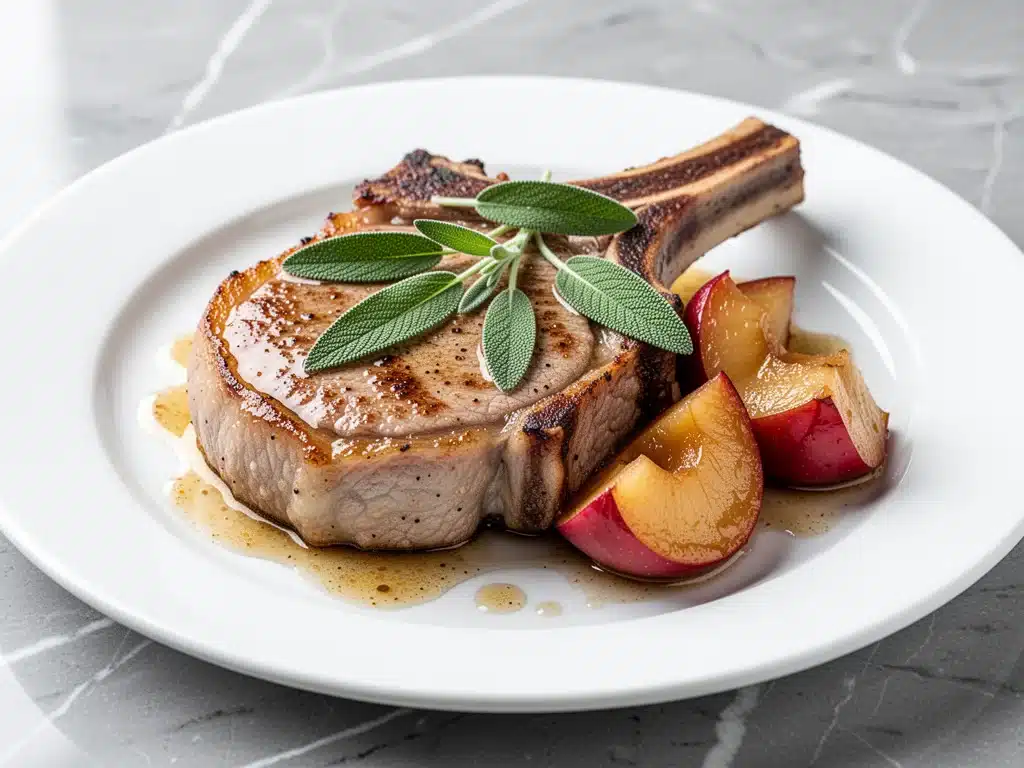
I melted butter until it turned that deep, nutty brown color. I threw in some sage leaves from the garden—well, the frozen ones I’d been hoarding since last summer. I seared the chops, pulled them out, and then tossed the apples into that same brown butter. The smell that hit me was incredible. It smelled like fall. It smelled like comfort. It smelled like a restaurant meal, not a Tuesday night disaster.
When I plated it, the kids actually stopped arguing long enough to take a bite. My husband looked at me like I’d performed a magic trick. “This is really good,” he said. That’s the highest praise I get. And honestly? It’s become our go-to weeknight dinner. I’ve made this brown butter sage pork chops with caramelized apples recipe at least a dozen times since that rainy night. It’s fast, it’s fancy, and it makes your kitchen smell amazing.
Why You’ll Love This Recipe
There are about ten reasons I keep making this, but here are the big ones. This isn’t just another pork chop recipe; it’s a complete meal in one pan that feels elegant but requires zero effort.
Stupid Simple — Seriously, if you can melt butter and chop an apple, you can make this. I’ve walked my teenage son through it over FaceTime. There’s no complex technique, just browning butter and searing meat.
Lightning Fast — 10 to 15 minutes from start to finish, and only 5 of those are active cooking. I make this on weeknights when I get home at 7 PM and don’t want to spend an hour in the kitchen.
Pantry-Friendly — You probably have most of these ingredients already. I keep butter, sage (dried or fresh), and apples stocked just so I can make this on a whim. Pork chops are usually on sale, too.
Crowd-Pleaser — I’ve served this to my vegetarian sister (she just ate the apples and said they were delicious), my gluten-free neighbor, and my dad who thinks “fancy” means ketchup on everything. Everyone loved it.
Makes Amazing Leftovers — Actually tastes better the next day. The apples get even softer and sweeter. I deliberately make extra for lunch throughout the week, though they rarely last that long.
Budget-Smart — Feeds 4 people for under $20. That’s less than one meal at a mid-range restaurant. Pork chops are affordable, and apples are cheap in season.
This is my go-to when I need dinner to just work. No complicated techniques, no weird ingredients, just reliable, delicious food that makes everyone happy. It’s the kind of meal that makes you feel like a great cook without the stress.
Ingredients You’ll Need
Here’s the best part: you probably have most of this already. This looks like a simple list, but the quality of three ingredients really matters here. I’m particular about them, and I’ll tell you exactly why.
For the Pork
Pork chops (4 chops, about 1 inch thick / 600-700g) — I use bone-in, center-cut chops. Bone-in keeps them juicy and adds flavor. Boneless works, but they cook faster and dry out easier. If you use boneless, reduce cooking time by 1-2 minutes. Look for chops that are pink, not pale.
Salt and pepper — Coarse kosher salt is best for seasoning meat. It sticks better and seasons more evenly. Black pepper should be freshly cracked. Pre-ground pepper tastes dusty and weak.
Neutral oil (2 tablespoons / 30ml) — I use avocado oil or canola oil. Olive oil burns at high heat, which we need for searing. Don’t use extra virgin olive oil here. It’s not worth the risk of bitter, burnt flavor.
For the Brown Butter Sage Sauce
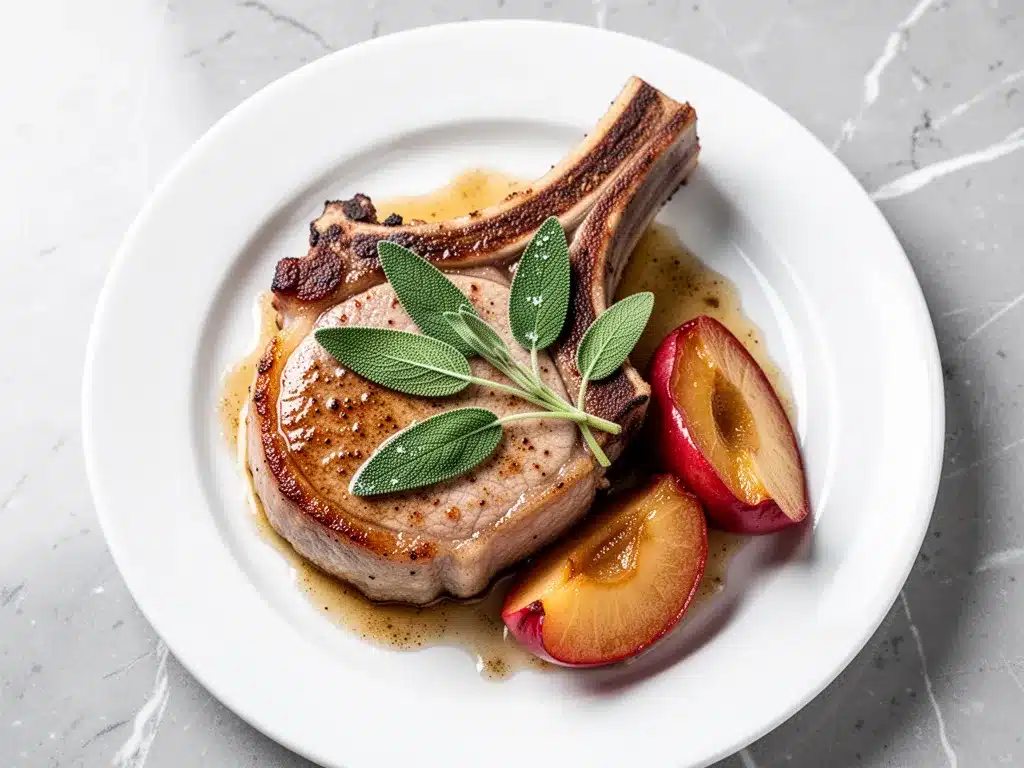
Unsalted butter (4 tablespoons / 57g) — This is the star. Use good quality butter. I don’t buy the cheapest stuff, but I don’t need fancy cultured butter either. Just real butter. Salted butter will make the sauce too salty, so stick with unsalted.
Fresh sage leaves (12-15 leaves) — Fresh sage is non-negotiable. Dried sage is too powdery and lacks that piney, aromatic punch. If you absolutely must use dried, use 1 teaspoon, but fresh tastes way better. I freeze sage leaves from my garden all summer long specifically for this.
Garlic (2 cloves, minced / about 1 tablespoon) — Yes, two cloves. Not one. Not three. Two. Fresh only—no jarred garlic in this recipe. It has a metallic aftertaste that clashes with the sweet apples.
For the Caramelized Apples
Apples (3 medium, sliced / about 450g) — This is crucial. Use firm, tart-sweet apples. Honeycrisp, Fuji, or Gala work well. Avoid Red Delicious—they turn mushy and taste like nothing. Avoid Granny Smith unless you like very sour apples; they’re too sharp for this balance. I like a mix of Honeycrisp and Fuji for the perfect sweet-tart balance.
Brown sugar (2 tablespoons / 25g) — Adds depth and helps caramelize. White sugar works, but brown sugar has molasses that gives it that rich, fall flavor. I always have brown sugar in my pantry.
Cinnamon (½ teaspoon) — Ground cinnamon. Not cinnamon sticks. You want it evenly distributed. If you have pumpkin pie spice, you can use that too, but plain cinnamon is classic.
Lemon juice (1 teaspoon / 5ml) — Just a splash. It brightens up the sweet apples and keeps them from turning brown. You won’t taste the lemon, I promise.
Optional Add-ins: I sometimes add a pinch of nutmeg if I’m feeling fancy. Or a splash of apple cider for extra depth. But the basic version is perfect.
Shopping Tips
Pork chops: I always buy from the local butcher when possible. They cut thicker chops that are more forgiving. If you’re at a supermarket, look for chops that are at least ¾ inch thick. Thin chops will overcook in minutes.
Sage: If you don’t have a garden, fresh sage is usually near the herbs in the produce section. It’s in small plastic clamshells. If you can’t find fresh, buy a bigger pack and freeze the rest. It keeps for months.
Apples: In fall, I buy a whole bushel. In spring, I buy what’s on sale. Honeycrisp is usually consistent year-round. Avoid apples that are soft or bruised—they won’t hold up in the pan.
Equipment Needed
You don’t need fancy equipment for this. Here’s what I actually use.
Cast iron skillet — I use a 12-inch cast iron skillet. It holds heat beautifully and gives the best sear. My cast iron is well-seasoned and non-stick. Stainless steel works too, but you need to be careful not to burn the butter. Non-stick is okay, but you won’t get the same nice crust on the pork.
Chef’s knife — For slicing apples. Sharp knives are safer and make cleaner cuts. Dull knives slip and mash the apples. I learned this the hard way with a mashed apple mess.
Cutting board — Any size works. I use a large plastic one for easy cleanup. Wood is nice but requires more maintenance.
Wooden spoon — For stirring the butter and apples. Silicone works too. Don’t use metal on non-stick pans.
Tongs — For flipping the pork chops. Much easier than a fork, which pierces the meat and lets juices escape. I use tongs for everything meat-related.
Measuring spoons — Pretty standard stuff. Dollar store versions work fine.
Plate — For resting the pork chops. I use a large dinner plate. You’ll need this to hold the chops while you cook the apples.
Optional but nice: A meat thermometer. I’m obsessed with my instant-read thermometer. It takes the guesswork out. Pork is safe at 145°F (63°C), which means it’s still pink and juicy. If you don’t have one, cut into the thickest part to check.
How to Make It: Step-by-Step
Alright, let’s make this! I’m walking you through exactly how I do it, including the little tricks I’ve picked up.
Step 1: Prep the Pork and Apples (5 minutes)
Before you start cooking, pat the pork chops completely dry with paper towels. This seems minor, but dry meat sears better. Wet meat steams. Season both sides generously with salt and pepper. Slice the apples into ¼-inch wedges. Toss them with a little lemon juice to prevent browning. Have everything measured and ready—this moves fast.
Step 2: Sear the Pork Chops (4-5 minutes)
Heat the neutral oil in your cast iron skillet over medium-high heat. Wait until the oil shimmers and just starts to smoke. Add the pork chops. Don’t crowd the pan—if you have small skillet, cook in batches. Sear for 2-3 minutes on the first side without moving them. You want a golden-brown crust. Flip and cook for another 2-3 minutes on the other side. The internal temperature should reach 145°F (63°C). Remove chops to a plate and tent loosely with foil. Don’t cover tightly, or they’ll steam and get soggy.
Step 3: Make the Brown Butter (2-3 minutes)
Reduce heat to medium. Add the butter to the same skillet. Watch it closely. It will melt, foam, and then the foam will start to subside. You’ll see brown bits form at the bottom. The butter will smell nutty, like toasted hazelnuts. This is the key moment. It takes about 2-3 minutes. If it smells burnt, start over. Burnt butter tastes bitter and ruins the dish. Swirl the pan to keep it moving.
Step 4: Add Sage and Garlic (30 seconds)
Once the butter is brown, immediately add the sage leaves. They’ll crisp up in seconds. Add the minced garlic. Stir constantly for 30 seconds. The garlic should be fragrant but not brown. If the butter is too hot, the garlic will burn instantly. Remove from heat if it looks like it’s getting too dark.
Step 5: Caramelize the Apples (5-6 minutes)
Add the sliced apples to the skillet. Sprinkle with brown sugar and cinnamon. Toss to coat in the brown butter. Cook for 5-6 minutes, stirring occasionally, until the apples are tender and caramelized. They should be golden brown and soft. The sauce will thicken as the sugar melts. Taste and adjust cinnamon if needed.
Step 6: Combine and Serve (1 minute)
Return the pork chops to the skillet, nestling them into the apples. Spoon the brown butter and apple mixture over the chops. Let them sit for 1 minute to warm through. Serve immediately, with extra sauce spooned over the top.
Total Time: About 15 minutes (5 minutes active, 10 minutes mostly hands-off)
Expert Tips & Tricks
Here’s everything I’ve learned from making this dozens of times. These tips will save you from my mistakes.
Pat the Pork Dry — This is the #1 tip. Wet pork chops steam instead of sear. Paper towels are your friend. I keep a roll specifically for meat prep. If you skip this, you’ll get gray, steamed pork instead of golden, crispy chops.
Don’t Move the Meat
When you put the chops in the pan, don’t touch them for 2-3 minutes. Let the crust form. If you keep flipping them, you won’t get that nice browning. Patience pays off. I used to flip constantly, and my chops looked boiled. Now I let them be.
Watch the Butter Like a Hawk
Brown butter goes from perfect to burnt in 10 seconds. I stand right there and watch it. If you smell smoke, it’s too late. The nutty aroma is your cue. It should smell like toasted nuts, not burnt toast.
Use a Meat Thermometer
Pork is easy to overcook. 145°F is the target. After resting, it’ll rise a few degrees. If you cook to 160°F, the chops will be dry and tough. I learned this the hard way with a dry, chalky chop that I couldn’t even chew. Now I trust the thermometer.
Room Temperature Butter
If your butter is straight from the fridge, it takes longer to brown and can splatter. I take it out 10 minutes before cooking. If I forget, I let it sit on the counter while I prep the meat.
Common Mistakes (and how to avoid them)
Mistake: Chops are dry — Fix: Cook to 145°F, not higher. Use a thermometer. Also, don’t skip the resting step. Let them sit for 3-5 minutes before cutting.
Mistake: Butter is burnt — Fix: Lower the heat. If it’s already burnt, discard it and start over. You can’t fix burnt butter. It’s bitter and ruins the whole dish.
Mistake: Apples are mushy — Fix: Use firm apples. Don’t overcook them. They should be tender but still hold their shape.
Mistake: Sauce is too sweet — Fix: Balance with salt and acid. A pinch of salt and a splash of lemon juice cuts the sweetness. Taste as you go.
Variations & Substitutions
Once you’ve nailed the basic version, here’s how you can mix it up. I’ve tried all of these.
Maple Bourbon Version
Add 2 tablespoons of maple syrup and 1 tablespoon of bourbon to the apples. It’s richer and more decadent. My husband loves this version for special occasions. The bourbon cooks off, leaving just the flavor.
Honey Garlic Version
Swap brown sugar for honey and add 1 teaspoon of honey to the butter. Adds a floral sweetness. Great with Asian-inspired sides like stir-fried vegetables.
Herb Garden Version
Add fresh thyme or rosemary along with the sage. I like a mix of sage and thyme—it’s earthy and complex. Just don’t use too much rosemary; it’s strong.
Dietary Modifications
Gluten-Free — This recipe is naturally gluten-free. Just make sure your butter and sage are certified gluten-free if you’re sensitive. Cross-contamination is rare but possible.
Dairy-Free — Replace butter with olive oil or dairy-free butter. The sage and apples still work, but you lose the nutty brown butter flavor. It’s still good, just different. I use Miyoko’s butter for this.
Lower-Sugar — Skip the brown sugar. The apples caramelize on their own with just the butter. It’s less sweet but more authentic to the fruit’s natural flavor. I do this when I’m watching sugar intake.
Different Proteins:
– Chicken thighs (cook 6-7 minutes per side, internal temp 165°F)
– Duck breast (cook 4-5 minutes per side, skin side down first)
– Turkey chops (cook to 165°F, but they’re leaner so watch carefully)
Serving & Storage
How to Serve: I usually serve this straight from the skillet at the dinner table—it looks rustic and stays warm. But here are other ways I’ve enjoyed it:
Side Dishes:
– Mashed potatoes (the sauce is perfect over potatoes)
– Roasted Brussels sprouts
– Wild rice or quinoa
– Green beans with almonds
– Coleslaw (for a crunchy contrast)
Toppings Bar:
When I have guests, I put out: extra sage leaves, chopped pecans, a drizzle of honey, fresh cracked pepper. Everyone customizes their bowl.
Wine Pairing:
Not a wine expert, but my wine-snob friend says Pinot Noir or Chardonnay works great with this. The acidity cuts through the richness.
Storage Instructions:
Refrigerator:
Store in an airtight container for up to 3 days. The sauce will thicken in the fridge—totally normal.
Reheating:
Best method: Add to a skillet with a splash of water or broth over low heat. Stir until heated through.
Microwave method: Heat in 30-second intervals, stirring between. Add a splash of water if it’s too thick.
Never works: Trying to reheat in the pot you cooked it in. It always burns on the bottom. Ask me how I know.
Freezing:
Honestly, this doesn’t freeze well because of the butter sauce. The sauce separates when thawed. Make it fresh or store in the fridge for up to 3 days.
Pro tip: If leftovers are drying out, stir in a tablespoon of butter when reheating. Brings back that creamy texture.
Nutrition Information
I’m not a nutritionist, but here’s the breakdown if you’re tracking.
Per Serving (based on 4 servings):
– Calories: 480
– Protein: 35g
– Carbs: 22g
– Fiber: 3g
– Sugar: 18g
– Fat: 28g
– Saturated Fat: 12g
– Cholesterol: 110mg
– Sodium: 320mg
– Calcium: 60mg
What’s Good:
– High protein from pork
– Fiber from apples
– Vitamins A and C from apples
– More filling than it looks
What to Know:
– Higher in calories from butter and sugar
– Contains dairy
– Moderate sodium (use low-sodium broth if adding)
My Take:
Look, this is comfort food with butter and sugar. It’s not a diet recipe. But it’s way better than takeout, costs less, and I know exactly what’s in it. When I want to make it lighter, I use less butter and no added sugar. But usually? I just eat a reasonable portion and enjoy it.
Final Thoughts
So that’s my go-to brown butter sage pork chops with caramelized apples! I’ve probably talked your ear off at this point, but when you make a recipe this often, you have a lot to say about it.
This has saved weeknight dinners more times than I can count. It’s my answer to “what’s for dinner” when I’m tired, don’t want takeout, and still want something that tastes really good. My kids are happy, my husband’s happy, and I’m happy because I’m not stressed about cooking.
Make it yours! Try different apples, swap in your favorite herbs, adjust the sweetness. The best recipes are the ones you adapt to your family’s tastes.
If you make this, drop a comment and let me know what you think! I love hearing how recipes turn out in your kitchen. And if something doesn’t work, tell me that too—I’m here to help troubleshoot.
Happy cooking! And I hope your kitchen smells half as good as mine does right now.
Frequently Asked Questions
Can I use boneless pork chops?
You can, but they cook faster and dry out easier. Reduce cooking time by 1-2 minutes per side. Keep a close eye on them. Bone-in chops are more forgiving and stay juicier. If you use boneless, I recommend brining them first for 30 minutes to add moisture.
What kind of apples are best for this?
Use firm, tart-sweet apples. Honeycrisp, Fuji, Gala, or Braeburn work well. Avoid Red Delicious—they turn mushy. Avoid Granny Smith unless you like very sour apples. I like a mix of Honeycrisp and Fuji for the perfect balance. The apples should hold their shape when cooked.
Can I make this ahead for a dinner party?
Sort of. Prep the apples and chop the pork ahead of time. Cook the pork and apples fresh right before serving (takes 15 minutes). It’s better to cook it fresh because the pork chops are best hot and juicy. I do this all the time for parties.
Why did my butter burn?
The heat was too high. Brown butter requires medium heat and constant watching. If you walk away, it burns. Also, if the pan was too hot when you added the butter, it burned instantly. Start with a cool pan and medium heat.
Can I use dried sage?
You can, but fresh tastes so much better. Dried sage is too powdery and lacks that aromatic punch. If you must use dried, use 1 teaspoon. But honestly, fresh sage is worth the trip to the store. It’s usually cheap and lasts a while in the fridge.
How do I reheat leftovers without it getting dry?
Add a splash of water or broth to a skillet, add your leftovers, and heat gently over low heat, stirring frequently. The extra liquid brings back the sauce. Microwave sort of works but tends to dry it out. If you do microwave, definitely add a splash of water first and heat in short bursts, stirring between.
Can I double this recipe?
Absolutely! Double everything and use your biggest skillet. The cooking times stay the same. I do this when I’m meal-prepping or feeding a crowd. Just make sure your skillet is big enough for all the pork chops—you might need to cook in batches.
Pin This Recipe!
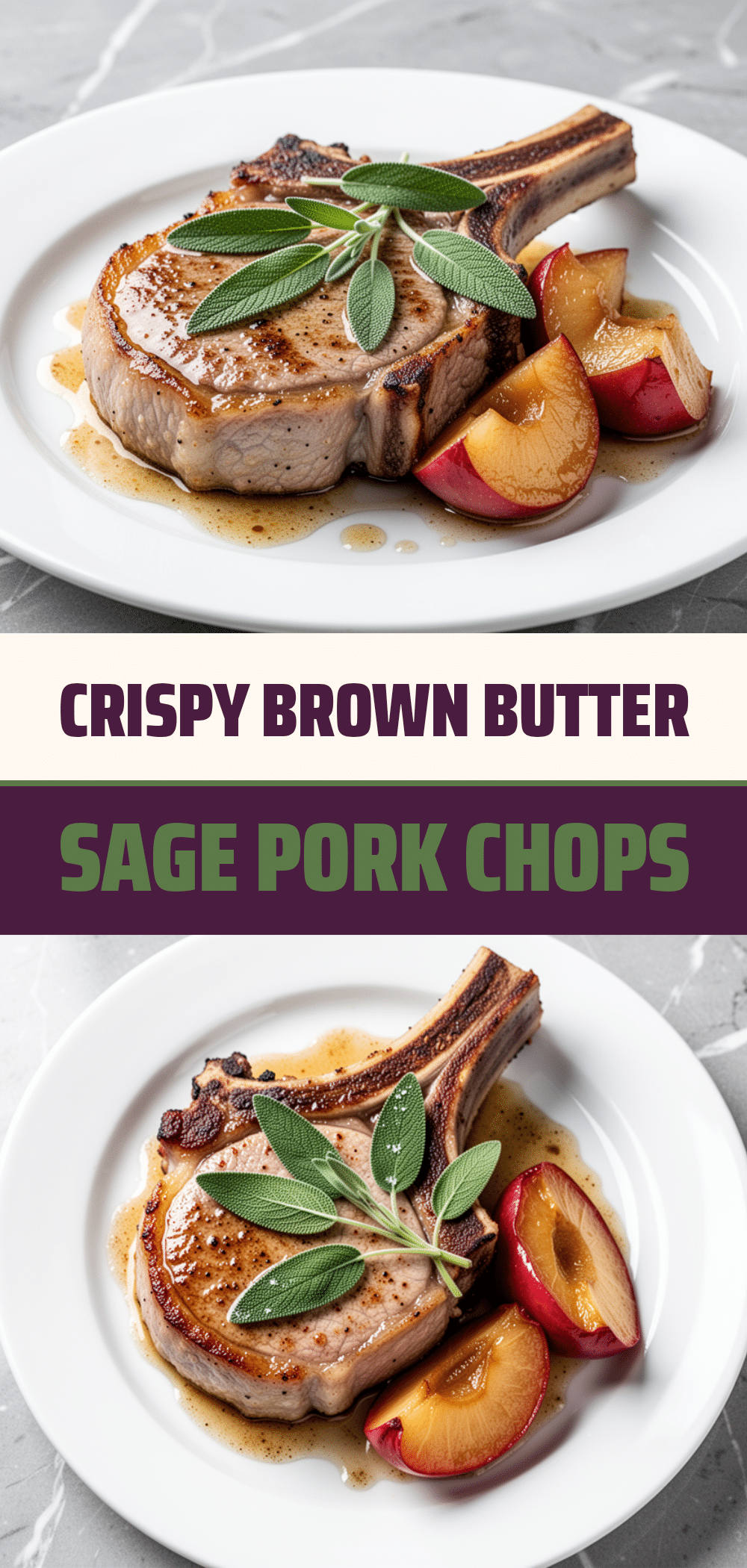

Brown Butter Sage Pork Chops with Caramelized Apples
- Total Time: 15 minutes
- Yield: 4 servings 1x
Description
A fast, elegant weeknight dinner featuring seared pork chops served with apples caramelized in nutty brown butter and fresh sage. Ready in just 15 minutes.
Ingredients
- 4 pork chops (bone-in, center-cut, about 1 inch thick / 600-700g)
- Salt and freshly cracked black pepper
- 2 tablespoons neutral oil (avocado or canola)
- 4 tablespoons unsalted butter
- 12–15 fresh sage leaves
- 2 cloves garlic, minced
- 3 medium firm apples (Honeycrisp, Fuji, or Gala), sliced into ¼-inch wedges
- 2 tablespoons brown sugar
- ½ teaspoon ground cinnamon
- 1 teaspoon lemon juice
Instructions
- Pat pork chops dry with paper towels and season generously with salt and pepper. Slice apples and toss with lemon juice.
- Heat neutral oil in a 12-inch cast iron skillet over medium-high heat until shimmering. Sear pork chops for 2-3 minutes per side until golden brown and internal temperature reaches 145°F. Remove to a plate and tent loosely with foil.
- Reduce heat to medium. Add butter to the same skillet. Watch closely as it melts, foams, and turns nutty brown (about 2-3 minutes). Swirl pan to prevent burning.
- Immediately add sage leaves and minced garlic to the brown butter. Stir constantly for 30 seconds until fragrant but not burnt. Remove from heat if necessary.
- Add sliced apples, brown sugar, and cinnamon to the skillet. Toss to coat in the butter mixture. Cook for 5-6 minutes, stirring occasionally, until apples are tender and caramelized.
- Return pork chops to the skillet, nestling them into the apples. Spoon the sauce over the chops and let sit for 1 minute to warm through. Serve immediately.
Notes
Pat the pork chops completely dry before searing to ensure a good crust. Watch the butter closely as it goes from perfect to burnt quickly. Pork is safe to eat at 145°F. Leftovers can be stored in the refrigerator for up to 3 days. This recipe is naturally gluten-free.
- Prep Time: 5 minutes
- Cook Time: 10 minutes
- Category: Main Course
- Cuisine: American
Nutrition
- Serving Size: 1 pork chop and 1/4
- Calories: 480
- Sugar: 18
- Sodium: 320
- Fat: 28
- Saturated Fat: 12
- Carbohydrates: 22
- Fiber: 3
- Protein: 35
Keywords: pork chops, brown butter, sage, caramelized apples, weeknight dinner, easy recipes, fall recipes, one pan meal