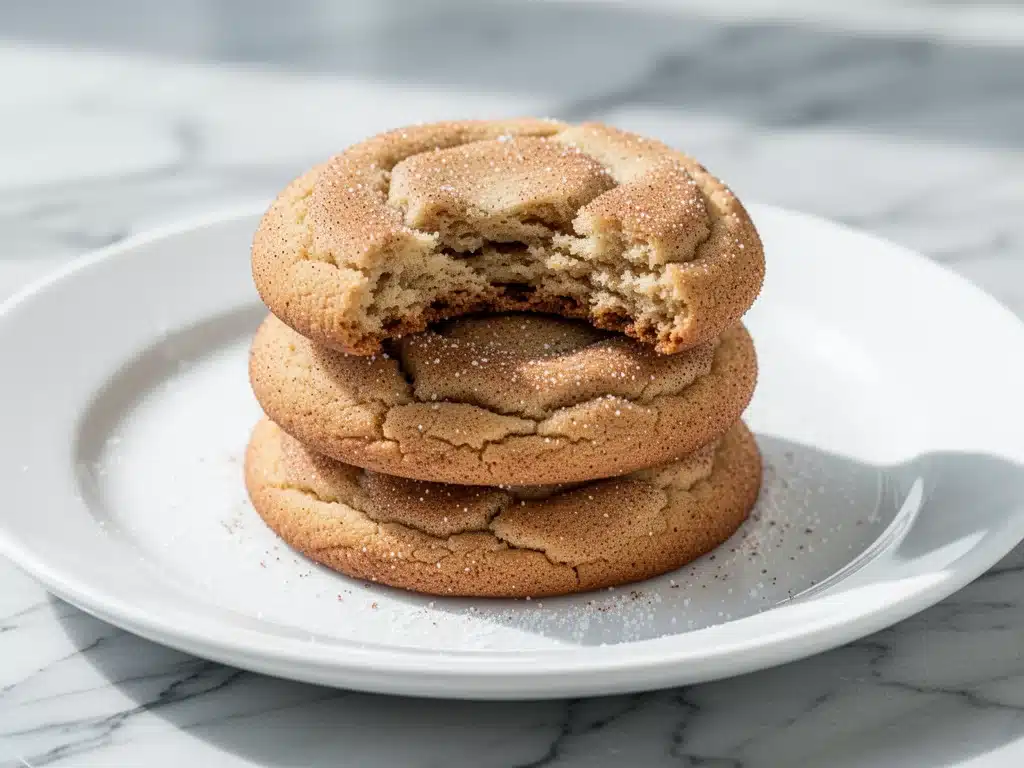
It was a Tuesday afternoon, the kind where the sun is streaming through the kitchen window and the house is quiet except for the hum of the refrigerator. I had just pulled a tray of cookies from the oven, and before I could even let them cool on the rack, my three-year-old marched in with sticky hands and a demand: “More. Now.” It wasn’t just hunger; it was obsession. That’s when I knew I had finally cracked the code on the perfect snickerdoodle.
For years, I treated snickerdoodles like the boring cousin of the chocolate chip cookie. They were soft, yes, but often too cakey, or they spread into flat, dry discs that lacked any real character. I wanted that specific texture that defines a great snickerdoodle: a crisp, sugary, cinnamon-crusted exterior that gives way to a center so soft and chewy it practically melts on your tongue. I wanted cookies that looked rustic and homemade but tasted like a hug from your grandma.
After testing this chewy snickerdoodle cookie recipe at least a dozen times (yes, I counted), I finally got it right. The secret isn’t just in the ingredients; it’s in the technique. It’s about the cream of tartar, the chilling time, and the generous roll in cinnamon sugar that creates those signature cracks. These aren’t just cookies; they are the kind of treat that gets requested at birthday parties, holiday potlucks, and random Wednesday night cravings. They are the best easy snickerdoodle recipe because they balance simplicity with serious flavor, delivering results that are consistently chewy, tangy, and sweet.
What started as a desperate attempt to satisfy a toddler’s sweet tooth has become my go-to baking project. There is something deeply satisfying about watching the dough balls transform in the oven, spreading just enough to keep their shape while the sugar coating caramelizes into a delicate crunch. If you’ve ever been disappointed by a dry snickerdoodle, trust me, this is the one that will change your mind. It’s simple, it’s reliable, and it tastes incredible.
Why You’ll Love This Chewy Snickerdoodle Cookie Recipe
There are plenty of cookie recipes out there, but this chewy snickerdoodle cookie version has earned a permanent spot in my rotation for some very specific reasons. It’s not just about taste; it’s about the experience of making and eating them.
- Perfectly Chewy Texture — Seriously, the texture is everything. Most snickerdoodles are cakey or crumbly. These have a chew that rivals a brownie but with a lighter, airy bite. I’ve compared them side-by-side with bakery versions, and mine hold up better. The center stays soft and pillowy even after they’ve cooled.
- Tangy Cinnamon Kick — The cream of tartar isn’t just for show. It gives that classic snickerdoodle tang that cuts through the sweetness. It’s a subtle flavor profile that makes the cinnamon pop in a way plain sugar cookies never could. It’s complex but familiar.
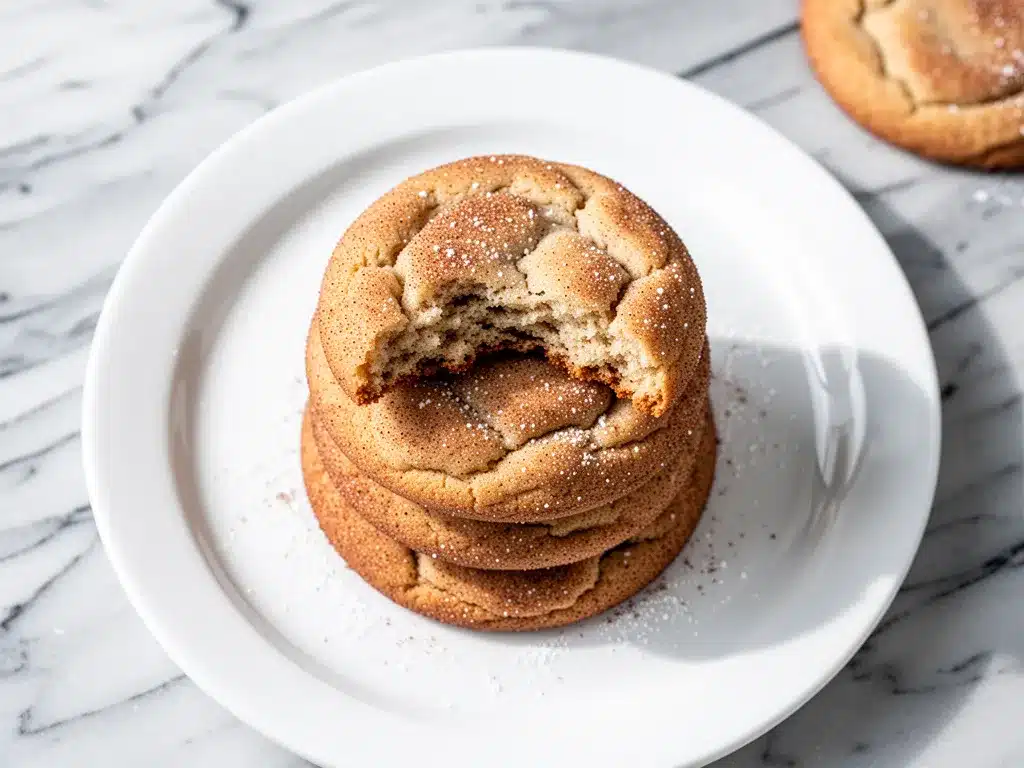
- Stunning Visuals — Let’s be honest, we eat with our eyes first. The way the cinnamon-sugar coating cracks as the cookies spread creates these beautiful, rustic patterns. They look like they came from a high-end bakery, but you made them in your pajamas. Perfect for Instagram or Pinterest boards.
- Minimal Cleanup — You only need one bowl for the dry ingredients and one for the wet. No fancy mixer attachments to wash if you use a hand mixer or even a strong whisk. It’s a low-effort, high-reward recipe that doesn’t leave your kitchen looking like a war zone.
- Freezer Friendly — I love making the dough balls and freezing them. When I have a sudden craving or need last-minute dessert for guests, I just pull a bag out of the freezer. They bake straight from frozen, which actually helps them keep their chewy shape better.
- Universal Crowd-Pleaser — I’ve served these to picky eaters who usually only like chocolate chip cookies, and they devoured these. The cinnamon flavor is comforting without being overpowering. They are safe enough for traditionalists but interesting enough for foodies.
This recipe has saved me more times than I can count. It’s my answer when someone asks, “What can I bring to the party?” or “I need a comfort food dessert.” It’s reliable, delicious, and always a hit.
Ingredients You’ll Need for Chewy Snickerdoodles
One of the best things about this chewy snickerdoodle cookie recipe is that it uses pantry staples you likely already have. But there are a few key ingredients that make all the difference. I’m particular about quality here because it’s a simple recipe, so the ingredients shine.
For the Cookie Dough
Unsalted Butter (1 cup / 226g) — You need room temperature butter. Softened, but not melted. If it’s too cold, it won’t cream properly with the sugar. If it’s melted, your cookies will spread too thin and lose that chewy texture. I take my butter out about an hour before baking. If I’m in a rush, I microwave it in 5-second bursts, but check frequently.
Granulated Sugar (1 ½ cups / 300g) — For the dough itself, regular white sugar works best. It provides the structure and sweetness. Don’t substitute with brown sugar here; we want that clean, sweet base so the cinnamon sugar coating can take center stage.
Light Brown Sugar (1 cup / 200g) — Packed. This adds moisture and a hint of molasses flavor, which contributes to the chewiness. Light brown sugar is milder than dark, which keeps the flavor profile balanced.
Eggs (2 large) — Room temperature eggs incorporate better into the butter mixture. I usually let them sit on the counter while the butter softens. They provide the structure and richness.
Vanilla Extract (1 tablespoon) — Use real vanilla extract, not imitation. The flavor is subtle but essential for rounding out the cinnamon. I use a good quality pure vanilla bean paste sometimes for extra specks and flavor, but regular extract works perfectly fine.
All-Purpose Flour (2 ½ cups / 315g) — Spoon and level your flour. Do not scoop directly from the bag, as this packs it down and leads to dry cookies. I use King Arthur All-Purpose Flour because it has a slightly higher protein content, which helps with that chewy texture.
Baking Soda (1 teaspoon) — This is your leavening agent. It helps the cookies spread and rise. Make sure it’s fresh; old baking soda won’t give you the lift you need.
Cream of Tartar (2 teaspoons) — This is the star ingredient for snickerdoodles. It provides the tangy flavor and helps create the chewy texture. It also reacts with the baking soda to help the cookies rise slightly. Do not skip this.
Salt (½ teaspoon) — Just a pinch to balance the sweetness. It enhances the other flavors without making the cookies taste salty.
For the Cinnamon Sugar Coating
Granulated Sugar (½ cup / 100g) — This is for rolling the dough balls. Make sure it’s fine granulated sugar so it adheres well to the dough.
Ground Cinnamon (1 ½ teaspoons) — Use fresh, high-quality cinnamon. Old cinnamon loses its potency. I buy mine in small quantities to ensure freshness. The smell of cinnamon filling your kitchen while these bake is worth it alone.
Optional Pinch of Cream of Tartar — Some recipes add a tiny bit of cream of tartar to the coating for extra tang, but I find the cinnamon and sugar combo is perfect on its own.
Pro Tip: I always measure my cinnamon sugar mixture into a shallow bowl before I start rolling the dough. It makes the process so much faster and mess-free. If you try to roll them in a bag, you’ll end up with cinnamon sugar stuck to your hands and the counter.
Equipment Needed
You don’t need any fancy gadgets to make these chewy snickerdoodle cookies. Here’s what I actually use in my kitchen.
- Large Mixing Bowl — I use a 4-quart stainless steel bowl. It’s big enough to mix everything without splashing everywhere. Glass works too, but metal conducts heat better if you’re doing anything else in the kitchen.
- Hand Mixer or Stand Mixer — I prefer a stand mixer for this because creaming butter and sugar takes a few minutes. But a hand mixer works just as well if you have the arm strength. A whisk can do it, but it will take a lot of elbow grease.
- Rubber Spatula — Essential for scraping down the sides of the bowl and folding in the flour. I have a few, but I always use the same one for baking. It’s flexible and gets into the corners.
- Cooling Racks — Two wire racks are ideal. You need to cool the cookies on a rack so air circulates underneath. If you leave them on the hot baking sheet, they’ll continue to cook and become dry. This step is crucial for chewiness.
- Baking Sheets — I use half-sheet pans. Light-colored aluminum pans are best because they reflect heat and prevent the bottoms from burning. Dark pans absorb too much heat. I line them with parchment paper for easy cleanup and even baking.
- Mesh Strainer or Small Bowl — For mixing the cinnamon and sugar coating.
- Cookie Scoop — A 1.5-tablespoon scoop ensures uniform size. Uniform size means even baking. If you roll them by hand, try to make them all roughly the same size so they bake at the same rate.
Tool Tip: I swear by parchment paper. It’s a game-changer. No greasing required, and the cookies slide right off. I’ve tried silicone mats, but parchment gives me better browning and easier release. Plus, it’s disposable, which means less scrubbing.
How to Make Chewy Snickerdoodle Cookies: Step-by-Step
Alright, let’s make these beauties! I’m walking you through exactly how I do it, including the little tricks I’ve picked up over the years. This process is straightforward, but attention to detail makes the difference between good and great.
Step 1: Prep Your Ingredients (5 minutes)
Before you start, make sure your butter and eggs are at room temperature. This is non-negotiable for proper creaming. Preheat your oven to 350°F (175°C). Line your baking sheets with parchment paper. Mix the cinnamon and sugar for the coating in a small bowl and set it aside. Having everything ready before you mix the dough makes the process smooth and stress-free.
Step 2: Cream the Butter and Sugars (3-4 minutes)
In a large bowl, beat the room temperature butter, granulated sugar, and brown sugar together until light and fluffy. This step takes about 3-4 minutes with a mixer. You want to see the mixture lighten in color and increase in volume. This incorporates air into the dough, which helps with the texture. If you skip this or don’t do it long enough, your cookies will be dense.
Step 3: Add Eggs and Vanilla (2 minutes)
Add the eggs one at a time, beating well after each addition. Scrape down the sides of the bowl with a rubber spatula to ensure everything is incorporated. Mix in the vanilla extract. The mixture should look smooth and homogeneous. If it looks curdled, your eggs might have been too cold, but keep mixing; it usually comes together.
Step 4: Whisk Dry Ingredients (1 minute)
In a separate medium bowl, whisk together the flour, baking soda, cream of tartar, and salt. Whisking ensures that the leavening agents are evenly distributed. If you dump them all in at once, you might get pockets of baking soda that taste metallic or bitter.
Step 5: Combine Wet and Dry (2 minutes)
Gradually add the dry ingredients to the wet ingredients. Mix on low speed or stir by hand until just combined. Do not overmix! Overmixing develops gluten, which leads to tough cookies. As soon as you no longer see streaks of flour, stop. The dough will be soft and slightly sticky, which is perfect.
Step 6: Chill the Dough (30 minutes – 24 hours)
This is the step most people skip, but I highly recommend it. Cover the bowl with plastic wrap and refrigerate for at least 30 minutes, or up to 24 hours. Chilling the dough solidifies the fat, which prevents the cookies from spreading too much. It also allows the flour to hydrate, resulting in a deeper flavor and a chewier texture. If you’re in a hurry, 30 minutes is enough, but overnight is best for flavor development.
Step 7: Roll Dough in Cinnamon Sugar (10 minutes)
Take the chilled dough out of the fridge. Using a cookie scoop or your hands, roll the dough into balls about 1.5 inches in diameter. Roll each ball in the cinnamon-sugar mixture, ensuring it’s fully coated. Place the coated balls on the prepared baking sheets, leaving about 2 inches of space between them. They will spread, so don’t crowd the pan.
Step 8: Bake (10-12 minutes)
Bake in the preheated oven for 10-12 minutes. The cookies should look set on the edges but still soft and slightly undercooked in the center. They will continue to cook on the hot baking sheet after you remove them. Do not overbake! Overbaking is the number one cause of dry snickerdoodles. The centers should look slightly puffy and glossy.
Step 9: Cool Completely (15-20 minutes)
Let the cookies cool on the baking sheet for 5 minutes, then transfer them to a wire rack to cool completely. This is where the chewiness is finalized. If you eat them hot, they might seem soft, but as they cool, the structure sets, and you get that perfect chewy-crisp contrast. Enjoy them warm with a glass of milk, or store them for later.
Troubleshooting: If your cookies spread too much, your butter was too warm or your oven was too hot. If they are cakey, you might have overmixed the flour or used too much baking soda. If they are dry, you baked them too long. Keep these in mind for your next batch.
Expert Tips for the Best Chewy Snickerdoodles
Here’s everything I’ve learned from making this chewy snickerdoodle cookie recipe dozens of times. These tips will save you from my mistakes and ensure your cookies are perfect every time.
- Room Temperature is Key — I cannot stress this enough. Cold butter doesn’t cream properly. Melted butter makes greasy cookies. Aim for butter that yields to slight pressure but doesn’t leave a fingerprint. It should be cool to the touch but pliable.
- Don’t Skip the Chill — I know it’s tempting to bake them right away, but chilling the dough is crucial for texture. It prevents excessive spreading and concentrates the flavors. If you’re short on time, freeze the dough balls for 15 minutes instead of refrigerating.
- Scoop, Don’t Roll — Using a cookie scoop ensures uniform size. Uniform size means even baking. If you roll them by hand, vary the sizes slightly, but try to keep them consistent. Larger cookies might need a minute or two more in the oven.
- Underbake Slightly — The cookies should look soft in the center when you take them out. They will firm up as they cool. If they look fully set in the oven, they will be dry once cooled. Pull them when the edges are just starting to turn golden.
- Use Parchment Paper — It’s not just for cleanup. Parchment paper provides insulation, which helps the cookies bake evenly. It also prevents the bottoms from burning, which can happen on dark pans.
- Store Properly — To keep cookies chewy, store them in an airtight container with a slice of bread. The bread releases moisture, which keeps the cookies soft. They will stay fresh for up to 5 days at room temperature.
Pro Trick: For extra chewiness, add 1 tablespoon of cornstarch to the dry ingredients. It tenderizes the cookies and helps retain moisture. I add this to my dough now, and it makes a noticeable difference.
Variations and Substitutions
Once you’ve mastered the basic chewy snickerdoodle cookie recipe, here’s how you can mix it up. I’ve tried all of these, and they work well.
- Chocolate Chip Snickerdoodles — Fold in 1 cup of chocolate chips after the dough is mixed. The cinnamon and chocolate are a match made in heaven. This is my family’s favorite variation.
- White Chocolate Macadamia — Substitute chocolate chips with white chocolate chips and macadamia nuts. It’s richer and nuttier. The creaminess of the white chocolate pairs beautifully with the tangy dough.
- Pumpkin Spice — Add ½ cup of pumpkin puree and increase the cinnamon to 2 teaspoons. Reduce the flour by 2 tablespoons. This is perfect for fall. The pumpkin adds moisture and flavor.
- Gluten-Free — Use a 1:1 gluten-free flour blend. I’ve used Bob’s Red Mill and King Arthur Gluten-Free Flour, and both work well. Add ½ teaspoon of xanthan gum if your blend doesn’t include it, to help with texture.
- Dairy-Free — Use dairy-free butter sticks (not tub margarine) and ensure your vanilla is dairy-free. The rest of the ingredients are naturally dairy-free. The texture might be slightly different, but they are still delicious.
- Vegan — Use flax eggs (1 tablespoon ground flaxseed + 3 tablespoons water per egg) and dairy-free butter. The flavor will be slightly different, but the cinnamon sugar coating will still make them taste like snickerdoodles.
Different Flavors: Try adding a pinch of cardamom or nutmeg to the dough for a spicier kick. Or swirl in some cream cheese frosting after baking for a decadent treat.
Serving and Storage
How to Serve
I usually serve these chewy snickerdoodle cookies warm, straight out of the oven. They are best enjoyed with a cold glass of milk, which helps balance the sweetness. They are also great for gifting. Place them in a tin with parchment paper between layers, and tie it with a ribbon. Add a recipe card for a thoughtful homemade gift.
Storage Instructions
Room Temperature: Store in an airtight container at room temperature for up to 5 days. Add a slice of bread to the container to keep them chewy. The bread will harden, but the cookies will stay soft.
Refrigerator: Not recommended. Refrigeration can dry out cookies and make them stale faster. Only refrigerate if you live in a very humid climate and are worried about mold, which is rare for cookies.
Freezing Dough: You can freeze the dough balls for up to 3 months. Place them on a baking sheet, freeze until solid, then transfer to a freezer bag. Bake from frozen, adding 1-2 minutes to the baking time.
Freezing Baked Cookies: Freeze baked cookies in an airtight container for up to 2 months. Thaw at room temperature before serving. They might lose a little bit of their crispness, but they will still be tasty.
Pro Tip: If your cookies seem slightly dry after storage, microwave them for 10-15 seconds. This will soften them up and make them chewy again.
Nutrition Information
I’m not a nutritionist, but here’s the breakdown if you’re tracking. Please note that this is an estimate and can vary based on the specific brands and measurements you use.
Per Cookie (makes about 24 cookies):
| Nutrient | Amount |
|---|---|
| Calories | 180 |
| Total Fat | 8g |
| Saturated Fat | 5g |
| Cholesterol | 35mg |
| Sodium | 150mg |
| Total Carbohydrates | 26g |
| Dietary Fiber | 0.5g |
| Sugars | 18g |
| Protein | 2g |
What’s Good: They are a treat, so they are higher in sugar and fat, but they provide energy and comfort. The cinnamon has anti-inflammatory properties, which is a tiny bonus.
What to Know: These are indulgent cookies. Enjoy them in moderation. If you are watching your sugar intake, consider reducing the sugar in the dough by ¼ cup, though it may affect the texture.
Dietary Notes: Contains: gluten, dairy, eggs. Can be made: gluten-free, dairy-free, vegan (with substitutions). Not suitable for: nut-free (if using nut variations).
Final Thoughts
So, there you have it—my ultimate chewy snickerdoodle cookie recipe. I’ve probably talked your ear off at this point, but when you make a recipe this often, you have a lot to say about it. These cookies have become my go-to for any occasion, from casual weeknight snacks to special holiday gifts. They are simple, reliable, and always delicious.
I hope you try this recipe and find it as comforting and satisfying as I do. The smell of cinnamon and sugar baking in your kitchen is just the best. Make it yours! Try different add-ins, adjust the cinnamon to your liking, or experiment with different sugars. The best recipes are the ones you adapt to your family’s tastes.
If you make this, drop a comment and let me know what you think! I love hearing how recipes turn out in your kitchen. And if something doesn’t work, tell me that too—I’m here to help troubleshoot. Happy baking! And I hope your kitchen smells half as good as mine does right now.
Frequently Asked Questions
Q: Can I use brown sugar instead of granulated sugar in the dough?
A: You can, but it will change the texture. Brown sugar has more moisture, which can make the cookies cakier and less chewy. For the classic snickerdoodle texture, I recommend using granulated sugar in the dough and reserving the brown sugar for the coating if you like. If you must use brown sugar, reduce the amount slightly to account for the extra moisture.
Q: Why are my snickerdoodles flat?
A: Flat cookies usually mean the butter was too warm or melted when you mixed it, or you didn’t chill the dough. Make sure your butter is soft but not liquid. Also, chilling the dough is crucial for preventing excessive spreading. If you skipped the chill, try it next time; you’ll see a big difference.
Q: Can I double this recipe?
A: Absolutely! Just double all the ingredients. Make sure you have a large enough bowl to mix everything. You might need to mix in batches if your mixer is small. The baking time and temperature remain the same. I often double this recipe when I have guests coming over.
Q: How do I know when the cookies are done?
A: The edges should be set and lightly golden, but the centers should still look soft and slightly undercooked. They will firm up as they cool on the baking sheet. If they look fully set in the oven, they will be dry once cooled. It’s better to underbake slightly than overbake.
Q: Can I freeze the baked cookies?
A: Yes, you can freeze baked cookies for up to 2 months. Place them in an airtight container with parchment paper between layers. Thaw at room temperature before serving. They might lose a little bit of their crispness, but they will still be tasty. For best texture, freeze the dough balls and bake them fresh.
Q: What if I don’t have cream of tartar?
A: Cream of tartar is essential for the tangy flavor and chewy texture of snickerdoodles. Without it, you’re just making a cinnamon sugar cookie. If you absolutely don’t have it, you can try adding ½ teaspoon of lemon juice or white vinegar to the dough, but the flavor won’t be quite the same. It’s worth picking up a small container of cream of tartar; it’s cheap and lasts a long time.
Q: Can I make these cookies gluten-free?
A: Yes, use a 1:1 gluten-free flour blend. I’ve tested this with Bob’s Red Mill and King Arthur Gluten-Free Flour, and both work well. If your blend doesn’t include xanthan gum, add ½ teaspoon to help with texture. The cookies might be slightly more crumbly, but they will still be delicious.
Pin This Recipe!
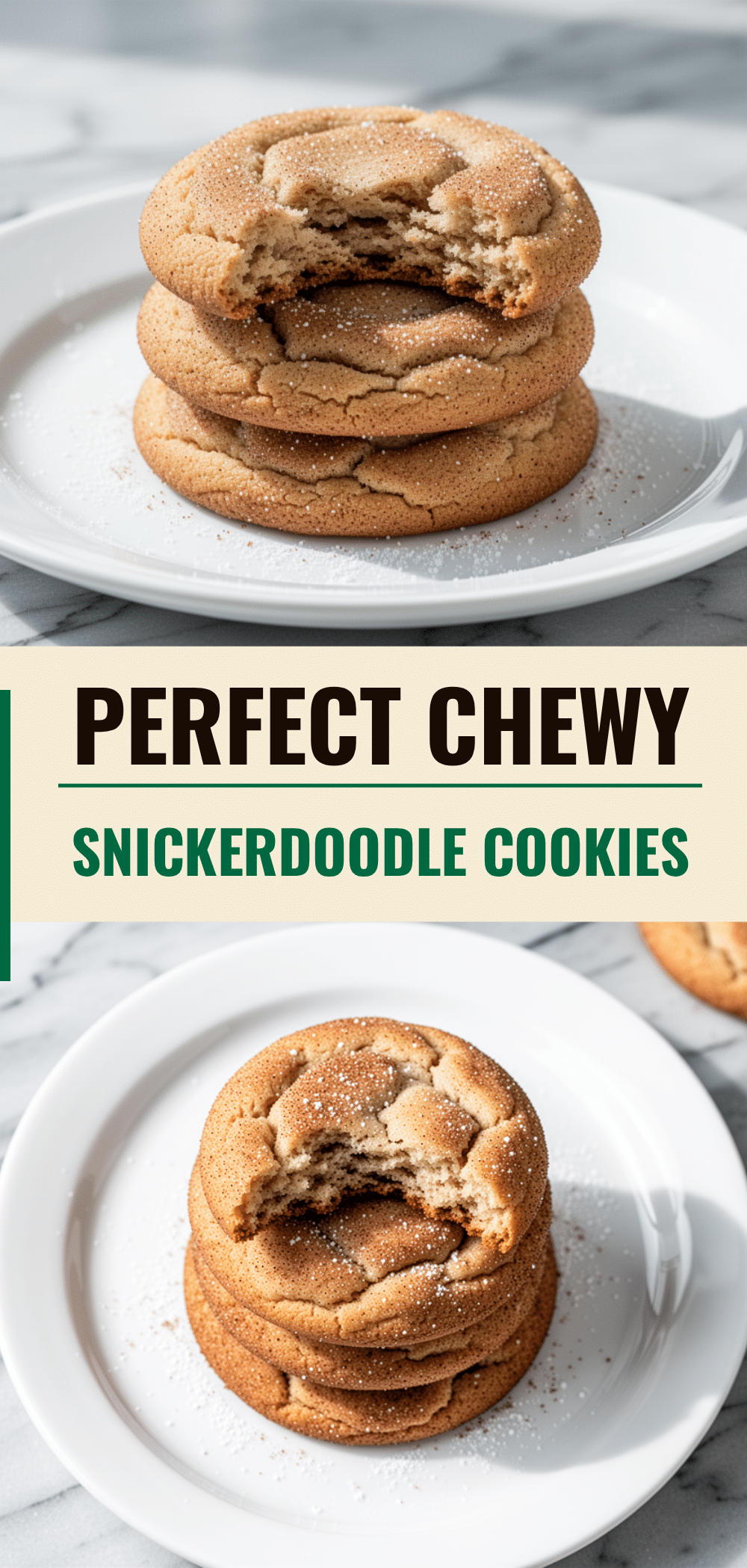
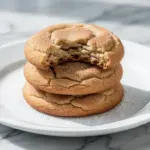
Chewy Snickerdoodle Cookies: Best Easy Recipe
- Total Time: 45 minutes
- Yield: 24 cookies 1x
Description
These chewy snickerdoodle cookies feature a crisp, sugary cinnamon crust and a soft, pillowy center. The secret lies in the cream of tartar, proper chilling time, and precise baking to ensure they are never dry or cakey.
Ingredients
- 1 cup (226g) unsalted butter, room temperature
- 1 ½ cups (300g) granulated sugar
- 1 cup (200g) light brown sugar, packed
- 2 large eggs, room temperature
- 1 tablespoon vanilla extract
- 2 ½ cups (315g) all-purpose flour
- 1 teaspoon baking soda
- 2 teaspoons cream of tartar
- ½ teaspoon salt
- ½ cup (100g) granulated sugar (for coating)
- 1 ½ teaspoons ground cinnamon (for coating)
Instructions
- Preheat oven to 350°F (175°C). Line baking sheets with parchment paper.
- In a large bowl, cream together the butter, granulated sugar, and brown sugar until light and fluffy (3-4 minutes).
- Add eggs one at a time, beating well after each addition. Mix in vanilla extract.
- In a separate bowl, whisk together flour, baking soda, cream of tartar, and salt.
- Gradually add dry ingredients to wet ingredients, mixing on low speed until just combined. Do not overmix.
- Cover dough and refrigerate for at least 30 minutes (or up to 24 hours).
- Mix the coating sugar and cinnamon in a shallow bowl.
- Roll dough into 1.5-inch balls and coat thoroughly in the cinnamon-sugar mixture.
- Place balls on prepared baking sheets, spacing them 2 inches apart.
- Bake for 10-12 minutes until edges are set but centers look soft and slightly undercooked.
- Let cookies cool on the baking sheet for 5 minutes, then transfer to a wire rack to cool completely.
Notes
Ensure butter and eggs are at room temperature for proper creaming. Do not overbake; cookies will firm up as they cool. Store in an airtight container with a slice of bread to maintain chewiness. Dough can be frozen for up to 3 months.
- Prep Time: 15 minutes
- Cook Time: 10-12 minutes
- Category: Dessert
- Cuisine: American
Nutrition
- Serving Size: 1 cookie
- Calories: 180
- Sugar: 18
- Sodium: 150
- Fat: 8
- Saturated Fat: 5
- Carbohydrates: 26
- Fiber: 0.5
- Protein: 2
Keywords: snickerdoodle cookies, chewy cookies, cinnamon sugar cookies, easy baking, holiday cookies, cream of tartar cookies