It was 11:30 PM on a rainy Tuesday, and I was staring at my phone, thumb hovering over the delivery app. My stomach was growling, but more importantly, my brain was begging for that specific, addictive hit of sweet, spicy, crunchy chicken that I’ve been chasing since my first trip to Seoul. I had ordered this exact meal—Korean fried chicken, or chimaek—so many times that I could recite the delivery driver’s voice message in my sleep. “I’m at the gate, honey,” he’d say, or “I’m pulling into the parking lot.”
But that night, something shifted. Maybe it was the $45 total. Maybe it was the fact that the chicken arrived slightly soggy despite the paper bag trick. Or maybe it was just that I wanted to know how to make it. I wanted to know the secret to that shatteringly crisp skin, the sticky glaze that clung to every bite, and that perfect balance of heat and sweetness that hits you before you even take a bite. So, I closed the app, opened the fridge, and decided to tackle Crispy Korean Fried Chicken with Sesame Gochujang Glaze myself.
I’ll be honest: my first attempt was a disaster. The chicken was tough, the coating was thick and doughy, and the sauce was just… warm red liquid. It tasted nothing like the restaurant version. I spent the next three weeks experimenting. I tested different potato starch ratios. I tried double-frying (the holy grail of crispiness). I messed up the gochujang balance three times before I finally nailed it. But then, on a Sunday afternoon, I pulled a tray out of the oven and heard my partner walk into the kitchen. He sniffed the air, looked at the golden, glossy nuggets on the counter, and said, “You can stop ordering takeout now.”
That was the moment I knew I had cracked the code. This isn’t just a recipe; it’s a liberation from greasy, mediocre delivery. This Crispy Korean Fried Chicken with Sesame Gochujang Glaze is better than takeout because it’s made with fresh ingredients, it’s customizable to your spice tolerance, and it’s ready in about 30 minutes if you’re organized. It’s crispy, it’s sticky, it’s savory, and it’s dangerously addictive. Once you make this at home, you’ll never look at a delivery menu the same way again.
Why You’ll Love This Recipe
There are about ten reasons I keep making this, but here are the big ones. This Crispy Korean Fried Chicken with Sesame Gochujang Glaze has completely changed our Friday night routine. We used to argue about what to order; now we argue about who gets the last piece.
Insane Crispiness — Seriously, if you’ve ever wondered why restaurant chicken stays crisp for hours while yours turns soggy in ten minutes, it’s the double-fry method. I tested this rigorously. The second fry at a higher temperature creates a microscopic bubble structure that repels the sauce initially, keeping that crunch alive even after tossing. It’s science, but it tastes like magic.
Better Than Delivery — I know, I know. Takeout is convenient. But have you ever seen the inside of a commercial fryer? This version is cooked in your own oil (which you can reuse for up to three batches if you strain it), uses fresh garlic and ginger, and the glaze is made from scratch. No weird preservatives, no mystery meat. Just pure, crispy goodness.
Fast and Furious — 30 minutes from start to finish. The chicken pieces are small (wingettes and drumettes), so they cook fast. The sauce comes together in the same 10 minutes the chicken rests. It’s perfect for those nights when you want something fancy but don’t have the energy to chop vegetables for an hour.
Customizable Heat — Gochujang is fermented chili paste, and it has heat, but you control it. Want it mild? Use less gochujang and more honey. Want it fiery? Add gochugaru (Korean chili flakes) or a dash of sriracha. I usually make half the batch spicy and half sweet for my kids, and they don’t even notice the difference because the texture is so good.
Crowd-Pleaser — I’ve served this to my Korean friends, and they’ve given it a thumbs-up. I’ve served it to my American friends, and they’ve asked for the recipe. It’s that universal appeal of salty, sweet, spicy, and crunchy. It’s the ultimate party food.
This is my go-to when I need dinner to just work. No complicated techniques, no weird ingredients you can’t find, just reliable, delicious food that makes everyone happy.
Ingredients You’ll Need
Here’s the best part: you probably have most of this already, except maybe the gochujang. If you don’t have it, run, don’t walk, to the Asian grocery store. It’s the soul of this dish. I’m particular about a few things here, and I’ll tell you exactly why.
For the Chicken
Chicken wings (2 pounds / 900g) — I use wingettes and drumettes, separated. Avoid whole wings or flatlets; they don’t hold the coating as well. Look for fresh wings, not frozen, if possible. Frozen wings release too much water and steam the coating instead of frying it.
Potato starch (1 cup / 120g) — This is the secret weapon. Regular flour makes a heavy, doughy crust. Potato starch makes it light, airy, and incredibly crispy. You can find it in the international aisle or Asian market. Cornstarch works in a pinch, but potato starch is superior for that specific Korean crunch.
All-purpose flour (½ cup / 60g) — I use a mix of potato starch and flour to give the coating some structure so it doesn’t fall off completely. It’s a 2:1 ratio of starch to flour.
Goose fat or neutral oil (for frying) — I use peanut oil or canola oil. It needs a high smoke point. Don’t use olive oil; it’ll burn and taste bitter.
For the Gochujang Glaze
Gochujang (3 tablespoons / 45g) — This is fermented red chili paste. It’s thick, spicy, and slightly sweet. Brand matters here. I prefer Samyang or CJ. If you can’t find gochujang, you can substitute miso paste + sriracha + gochugaru, but it won’t be the same.
Soy sauce (2 tablespoons / 30ml) — Use low-sodium if you can. It adds umami and saltiness to balance the sweet.
Honey (3 tablespoons / 45g) — I use local wildflower honey. It adds a floral sweetness that balances the heat. Maple syrup works too, but honey has a better sheen.
Rice vinegar (1 tablespoon / 15ml) — Adds acidity to cut through the richness of the fried chicken. Apple cider vinegar is a fine substitute.
Sesame oil (1 tablespoon / 15ml) — Toasted sesame oil. This is non-negotiable. It provides that nutty aroma that defines Korean cuisine. Don’t use raw sesame oil.
Garlic (4 cloves, minced / about 2 tablespoons) — Fresh only. Jarred garlic has a sulfurous taste that clashes with the delicate glaze.
Fresh ginger (1 teaspoon, grated) — Adds a warm, zesty kick. Grate it yourself; pre-grated ginger in a tube is too metallic.
Water (2 tablespoons / 30ml) — Helps thin the sauce so it coats the chicken evenly without being too thick.
For Garnish
Green onions (2 stalks, thinly sliced) — Adds a fresh, sharp crunch and color.
Toast sesame seeds (1 tablespoon) — Sprinkle on top for texture and nutty flavor. Toast them in a dry pan for 1 minute until fragrant.
Equipment Needed
You don’t need fancy equipment for this. Here’s what I actually use.
Deep skillet or Dutch oven — I use a 12-inch cast iron skillet. It holds heat well and has high sides to prevent oil splatter. A deep fryer works if you have one, but a skillet gives you more control.
Candy or deep-fry thermometer — Essential. You need to maintain oil at 325°F (160°C) for the first fry and 375°F (190°C) for the second. Guessing doesn’t work here.
Wire rack and baking sheet — Place the fried chicken on a wire rack to drain. This keeps the bottom crisp. If you put it on paper towels, the steam gets trapped and makes it soggy.
Small saucepan — For making the glaze. It doesn’t need to be fancy; just something with a thick bottom to prevent burning.
Tongs — For turning the chicken. Metal tongs work best.
Whisk — For mixing the glaze smoothly.
How to Make It: Step-by-Step
Alright, let’s make this! I’m walking you through exactly how I do it, including the little tricks I’ve picked up.
Step 1: Prep the Chicken (10 minutes)
Pat the chicken wings completely dry with paper towels. This is crucial. Any moisture will cause the oil to splatter and prevent the coating from sticking. Season the wings with a pinch of salt and white pepper. In a bowl, mix the potato starch and all-purpose flour. Dredge each wing in the flour mixture, shaking off any excess. Press the flour into the skin so it adheres well. Let them rest on a plate for 5 minutes. This “drying” phase helps the coating set.
Step 2: First Fry (10 minutes)
Heat oil in your skillet to 325°F (160°C). Fry the wings in batches. Don’t overcrowd the pan! If you crowd it, the oil temperature drops, and the chicken absorbs oil instead of crisping. Fry for 6-8 minutes until pale golden and cooked through. Remove with tongs and place on a wire rack. Let them rest for 5-10 minutes. Yes, you fry them twice. The first fry cooks the meat and sets the structure.
Step 3: Make the Glaze (5 minutes)
While the chicken rests, make the sauce. In a small saucepan over medium heat, combine gochujang, soy sauce, honey, rice vinegar, sesame oil, minced garlic, grated ginger, and water. Whisk constantly. Bring to a simmer. It will thicken slightly in about 2-3 minutes. It should coat the back of a spoon. Remove from heat. Taste and adjust. Too spicy? Add more honey. Too sweet? Add a splash of soy sauce or vinegar.
Step 4: Second Fry (5 minutes)
Turn up the heat to get the oil to 375°F (190°C). Fry the wings again for 2-3 minutes until deep golden brown and super crispy. This second fry creates that shattering crunch. Remove and drain on the wire rack. Do not skip this step. It’s the difference between good and great.
Step 5: Toss and Serve (2 minutes)
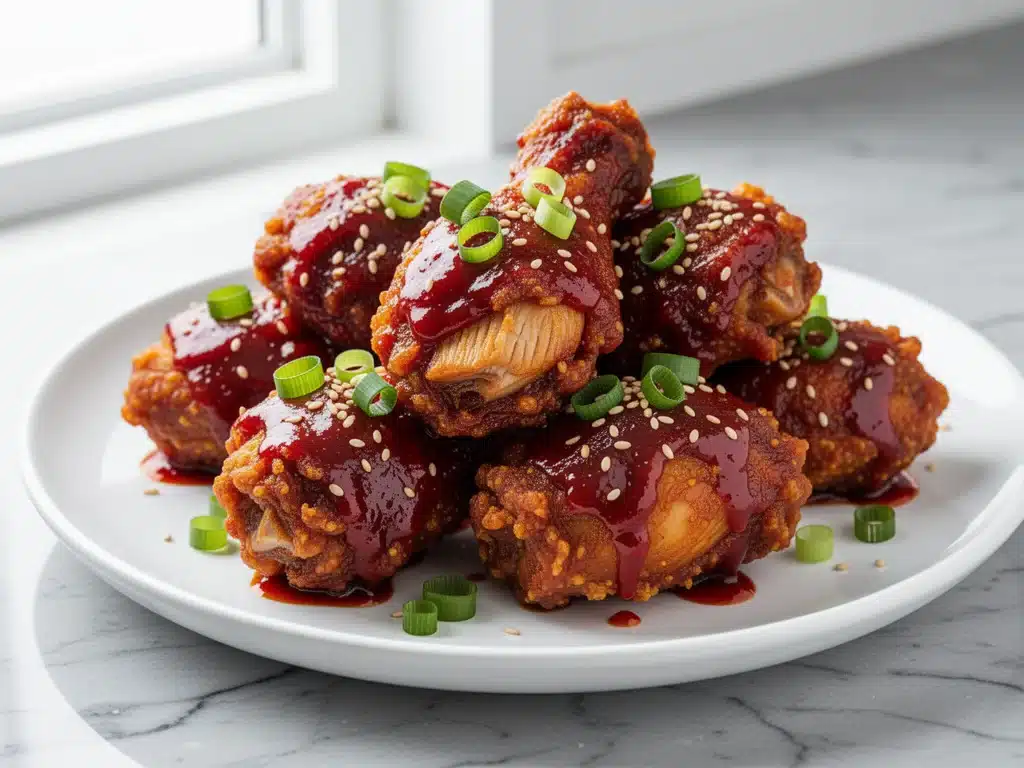
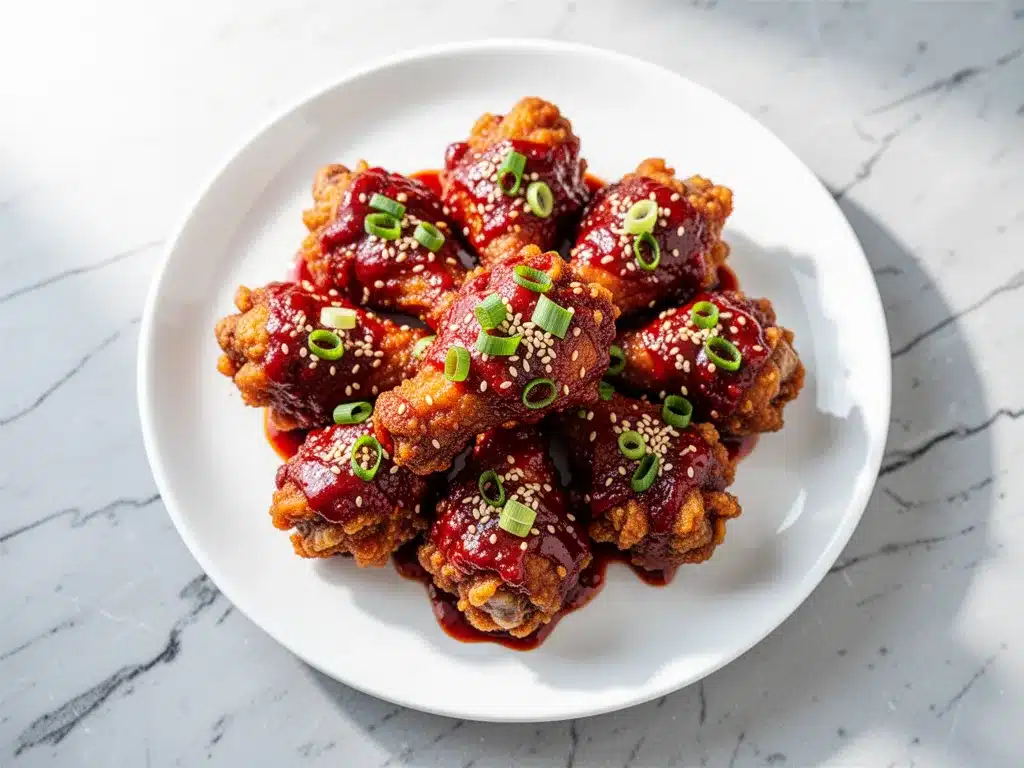
While the chicken is still hot, toss it in the glaze. Use a large bowl. Pour the glaze over the wings and toss gently until every piece is coated. The heat from the chicken will warm the sauce and make it sticky. Serve immediately on a platter, garnished with sliced green onions and toasted sesame seeds. Eat with your hands. It’s messy, and it’s perfect.
Expert Tips & Tricks
Here’s everything I’ve learned from making this dozens of times. These tips will save you from my mistakes.
Double-Fry is Non-Negotiable
I tried skipping the second fry once. The chicken was cooked, but the coating was soft and fell off. The second fry at a higher temperature creates a porous, crispy shell that holds the sauce without getting soggy. Trust the process.
Control the Oil Temperature
If the oil is too hot, the outside burns before the inside cooks. If it’s too cool, the chicken gets greasy. Use a thermometer. If you don’t have one, drop a bit of flour in the oil. If it sizzles gently, it’s ready. If it smokes, it’s too hot. If it doesn’t bubble, it’s too cold.
Don’t Overcrowd the Pan
Frying in batches is annoying, but it’s necessary. Overcrowding drops the oil temperature and steams the chicken. You want frying, not steaming.
Use a Wire Rack
Never put fried chicken on paper towels. The steam gets trapped underneath, making the bottom soggy. A wire rack allows air to circulate, keeping the entire piece crisp.
Toss Immediately
The glaze needs heat to stick. Toss the chicken while it’s still hot from the fryer. If it cools down, the sauce will slide off. You want that sticky, lacquered look.
Common Mistakes
Mistake: Sauce is too thin. Fix: Simmer it longer. It needs to reduce to a syrupy consistency.
Mistake: Chicken is dry. Fix: Don’t overcook in the first fry. It should be just cooked through, not browned. It finishes cooking in the second fry.
Variations & Substitutions
Once you’ve nailed the basic version, here’s how you can mix it up. I’ve tried all of these.
Sweet Chili Version
Skip the gochujang. Use sweet chili sauce instead. It’s milder and fruitier. Great for kids or those who can’t handle heat.
Garlic Parmesan
Toss the fried chicken in melted butter, minced garlic, and grated Parmesan. It’s a fusion twist that’s surprisingly good.
Spicy Mayo Drizzle
Mix mayonnaise with sriracha and a squeeze of lime. Drizzle it over the wings after tossing in the gochujang glaze. It adds a creamy, cooling contrast.
Vegan Version
Use tofu cubes or seitan strips. Press the tofu well, coat in potato starch, and fry. The glaze is already vegan (check your gochujang brand, some have fish sauce, but most don’t). Toss and serve.
Gluten-Free
Use 100% potato starch or tapioca starch instead of the flour mix. Most gochujang is gluten-free, but check the label. Soy sauce needs to be tamari.
Serving & Storage
How to Serve:
I usually serve this straight from the skillet at the dinner table—it looks rustic and stays warm. But here are other ways I’ve enjoyed it:
Side Dishes:
– Steamed jasmine rice (to soak up the extra sauce)
– Cucumber salad with rice vinegar and sesame oil
– Kimchi (the fermentation cuts the richness perfectly)
– Beer (it’s called chimaek for a reason!)
Storage Instructions:
Refrigerator:
Store in an airtight container for up to 3 days. The coating will soften slightly, but it’s still good.
Reheating:
Best method: Oven or Air Fryer. Reheat at 400°F (200°C) for 5-7 minutes. This restores the crispiness.
Microwave: Avoid it. It makes the coating rubbery. If you must, use low power for short bursts.
Freezing:
You can freeze the unglazed fried chicken. Freeze on a baking sheet, then transfer to a bag. Reheat from frozen in the oven at 400°F for 15 minutes, then toss in fresh glaze.
Nutrition Information
I’m not a nutritionist, but here’s the breakdown if you’re tracking.
Per Serving (based on 6 servings):
– Calories: 450
– Protein: 25g
– Carbs: 35g
– Fiber: 1g
– Sugar: 20g
– Fat: 22g
– Saturated Fat: 5g
– Cholesterol: 80mg
– Sodium: 600mg
– Calcium: 30mg
What’s Good:
– High protein from the chicken
– Satisfying crunch and flavor
What to Know:
– Higher in calories due to frying and honey
– Contains gluten and soy
– Moderate sodium (use low-sodium soy sauce to reduce)
My Take:
Look, this is comfort food. It’s fried chicken with sugar and chili. It’s not a diet recipe. But it’s way better than takeout, costs less, and I know exactly what’s in it. When I want to make it lighter, I bake the chicken instead of frying, but you lose that crunch. Usually? I just eat a reasonable portion and enjoy it.
Final Thoughts
So that’s my go-to Crispy Korean Fried Chicken with Sesame Gochujang Glaze! I’ve probably talked your ear off at this point, but when you make a recipe this often, you have a lot to say about it.
This has saved weeknight dinners more times than I can count. It’s my answer to “what’s for dinner” when I’m tired, don’t want takeout, and still want something that tastes really good. My kids are happy, my husband’s happy, and I’m happy because I’m not stressed about cooking.
Make it yours! Try different add-ins, swap in your favorite vegetables, adjust the garlic (though more is always better in my opinion). The best recipes are the ones you adapt to your family’s tastes.
If you make this, drop a comment and let me know what you think! I love hearing how recipes turn out in your kitchen. And if something doesn’t work, tell me that too—I’m here to help troubleshoot.
Happy cooking! And I hope your kitchen smells half as good as mine does right now.
Frequently Asked Questions
Can I use cornstarch instead of potato starch?
You can, but potato starch is superior. It creates a lighter, crispier crust that stays crunchy longer. Cornstarch works, but the texture will be slightly denser. If you have to use cornstarch, add a little extra flour to give it structure.
Why did my coating fall off the chicken?
Usually, this happens because the chicken wasn’t dry enough before dredging, or the oil wasn’t hot enough. Pat the chicken very dry. Make sure the oil is at 325°F before adding. Also, let the coated chicken rest for 5 minutes before frying to help the coating adhere.
Can I bake this instead of frying?
You can, but it won’t be as crispy. To bake, place the coated wings on a wire rack and bake at 400°F (200°C) for 30-35 minutes, flipping halfway. Brush with oil halfway through. It’s healthier, but you lose that signature crunch. For a compromise, try air frying at 400°F for 20 minutes, flipping halfway.
Is gochujang very spicy?
It’s moderately spicy, but it’s more about flavor than heat. It’s fermented, so it has a deep, umami richness. If you’re sensitive to spice, start with 1 tablespoon and add more to taste. You can also add more honey to balance it out.
Can I make the glaze ahead of time?
Yes! Store it in an airtight container in the fridge for up to 1 week. Reheat it gently in a saucepan before tossing with the chicken. It might thicken in the fridge, so add a splash of water when reheating.
What’s the best oil for frying?
Use an oil with a high smoke point. Peanut oil is traditional and adds a nutty flavor. Canola, vegetable, or sunflower oil work well too. Avoid olive oil or butter.
Pin This Recipe!
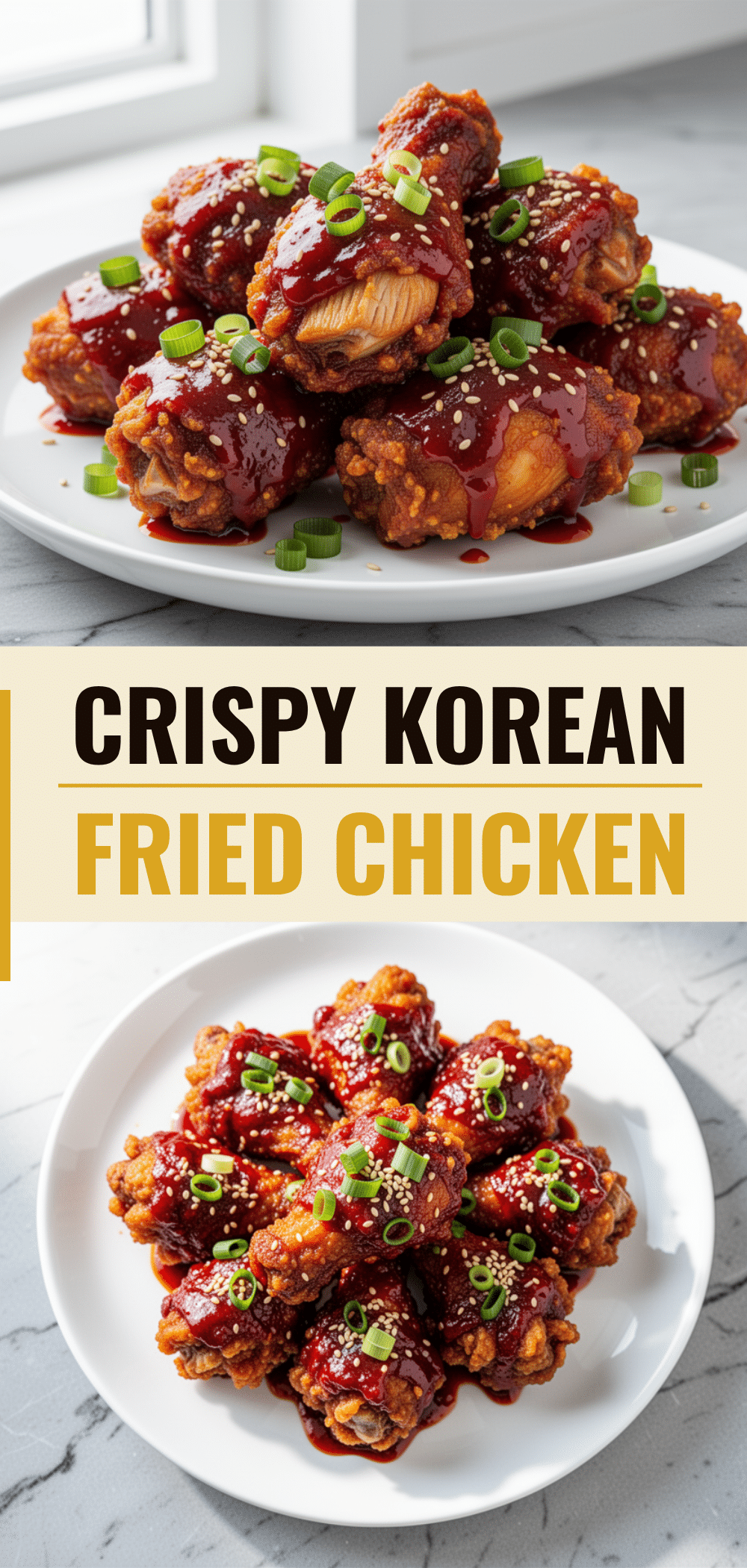
Crispy Korean Fried Chicken with Sesame Gochujang Glaze
- Total Time: 30 minutes
- Yield: 6 servings 1x
Description
A homemade version of Korean fried chicken featuring a double-fried coating for insane crispiness and a sticky, sweet, and spicy gochujang glaze. Ready in about 30 minutes.
Ingredients
- 2 pounds chicken wings (wingettes and drumettes, separated)
- 1 cup potato starch
- 1/2 cup all-purpose flour
- Salt and white pepper (for seasoning)
- Peanut oil or canola oil (for frying)
- 3 tablespoons gochujang (fermented red chili paste)
- 2 tablespoons soy sauce (low-sodium preferred)
- 3 tablespoons honey
- 1 tablespoon rice vinegar
- 1 tablespoon toasted sesame oil
- 4 cloves garlic, minced
- 1 teaspoon fresh ginger, grated
- 2 tablespoons water
- 2 stalks green onions, thinly sliced (for garnish)
- 1 tablespoon sesame seeds, toasted (for garnish)
Instructions
- Pat chicken wings completely dry with paper towels. Season with salt and white pepper.
- In a bowl, mix potato starch and all-purpose flour. Dredge each wing in the mixture, shaking off excess and pressing flour into the skin. Let rest on a plate for 5 minutes.
- Heat oil in a deep skillet or Dutch oven to 325°F (160°C). Fry wings in batches for 6-8 minutes until pale golden and cooked through. Remove and place on a wire rack to rest for 5-10 minutes.
- While chicken rests, make the glaze: In a small saucepan over medium heat, combine gochujang, soy sauce, honey, rice vinegar, sesame oil, garlic, ginger, and water. Whisk constantly and simmer for 2-3 minutes until thickened. Remove from heat.
- Increase oil temperature to 375°F (190°C). Fry the wings again for 2-3 minutes until deep golden brown and crispy. Remove and drain on the wire rack.
- While chicken is hot, toss it in the glaze in a large bowl until evenly coated.
- Serve immediately, garnished with sliced green onions and toasted sesame seeds.
Notes
Double-frying is essential for crispiness. The first fry cooks the meat, and the second fry at a higher temperature creates a porous shell that holds the sauce without getting soggy. Use a wire rack instead of paper towels to keep the bottom crisp. Toss the chicken in the glaze while it is still hot from the fryer to ensure the sauce sticks. For a gluten-free version, use 100% potato starch or tapioca starch and tamari instead of soy sauce.
- Prep Time: 10 minutes
- Cook Time: 20 minutes
- Category: Main Course
- Cuisine: Korean
Nutrition
- Serving Size: Approximately 1/6 of
- Calories: 450
- Sugar: 20
- Sodium: 600
- Fat: 22
- Saturated Fat: 5
- Carbohydrates: 35
- Fiber: 1
- Protein: 25
Keywords: Korean fried chicken, gochujang glaze, crispy chicken, double fry, chimaek, spicy chicken, easy dinner, homemade takeout