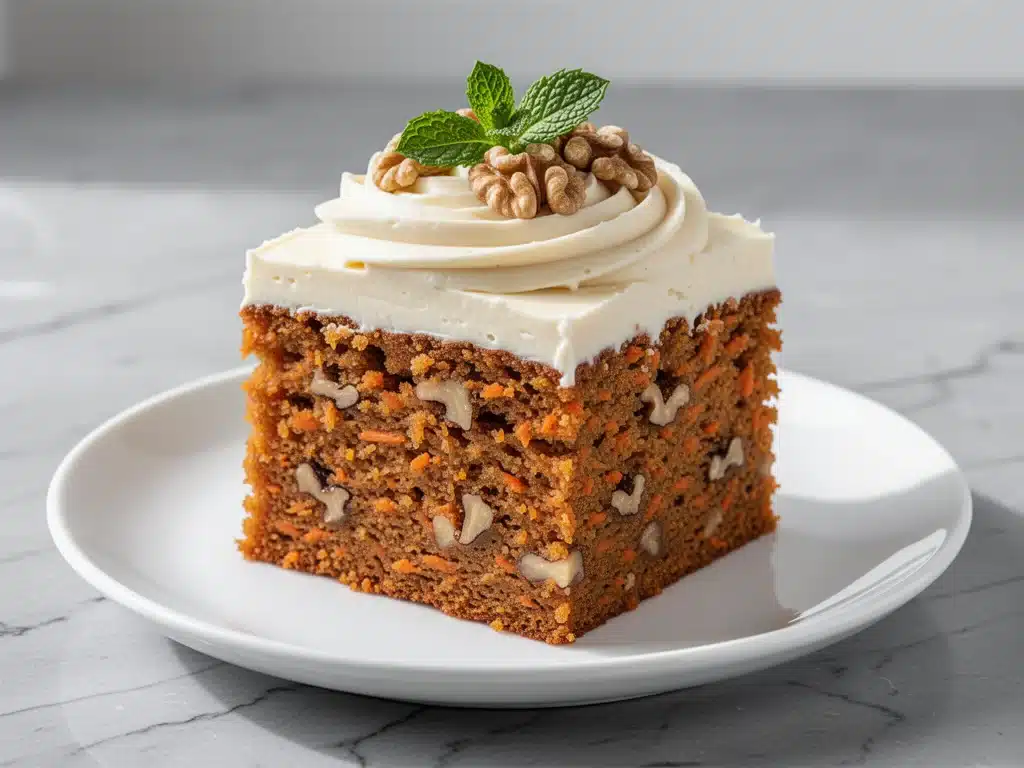
I still remember the exact moment I realized I had to share this recipe. It was a rainy Tuesday in November, the kind of day where the gray sky seems to press down on the roof, and my kitchen felt like the only warm, safe place in the world. I pulled this cake out of the oven, the smell of cinnamon and brown sugar drifting through every room, and my teenager—who generally considers food a necessary evil to be consumed quickly and without enthusiasm—stopped mid-scroll. He took one bite, closed his eyes, and said, “Okay, I get it now.”
That was six months ago. Since then, this moist carrot cake has become the unofficial host of every gathering I’ve thrown. Birthdays, potlucks, random Tuesday nights when I just need to feel useful—it’s always there. And every single time, the same thing happens. People don’t just eat a slice; they take a photo, they ask for the recipe, and they promise to make it themselves (they never do, so they keep coming back to my kitchen). It’s become my signature dish, the one that says, “I care about you enough to bake something from scratch.”
But here’s the thing about carrot cake. Most versions are dry. They’re dense, overly sweet, and taste like they’re trying too hard to hide the fact that they’re mostly flour and sugar. I’ve spent years tweaking this recipe—adjusting the oil, testing different flours, fighting with the frosting to get that perfect tangy balance—and I think I finally nailed it. This isn’t just a carrot cake; it’s a texture experience. It’s moist enough that you don’t need milk with it, but structured enough that it holds up on a plate. And that tangy cream cheese frosting? It’s not just sweet. It cuts through the richness of the cake with a brightness that keeps you coming back for one more bite.
I’m going to walk you through exactly how I make it, including the little secrets that keep it moist for days and the tricks to get a frosting that’s smooth, stable, and absolutely irresistible. If you’ve ever been intimidated by baking from scratch, this is the recipe to start with. It’s forgiving, it’s forgiving, and it smells like heaven while it bakes.
Why You’ll Love This Moist Carrot Cake
There are a lot of carrot cake recipes out there. I’ve tried dozens. Some are too sweet, some are too dense, and some just taste like they’re missing the point of what carrot cake should be. This one works because it balances three things that usually fight each other: moisture, flavor, and texture. Here’s why it keeps people coming back:
It Stays Moist for Days — Seriously. I’ve made this cake and eaten the leftovers on day four, and it’s still soft. Most cakes turn into cardboard by day two. This one? It actually gets better as the flavors meld overnight. I keep a loaf pan version in the fridge for quick snacks, and it’s just as good as fresh.
The Frosting Isn’t Just Sweet — A lot of carrot cakes drown their cake in sugar. This frosting is tangy. The cream cheese provides a sharp, creamy counterpoint to the sweet, spiced cake. It’s not a blanket of sugar; it’s a complement. You taste the cream cheese first, then the sweetness, then the spice.
It’s Actually Healthy(ish) — Okay, let’s be real. It’s still cake. But because it’s packed with grated carrots, it has some actual nutrition in it. The carrots add natural sweetness, which means I don’t have to overload it with sugar. Plus, the oil-based batter keeps it moist without feeling heavy.
It’s a Crowd-Pleaser — I’ve served this to my picky eater brother, my health-conscious friend who avoids refined sugar, and my non-baker husband who thinks store-bought is fine. Everyone loves it. The spice blend is warm but not overwhelming, and the texture is universally liked.
It’s Surprisingly Easy — No fancy techniques. No separating eggs. No whipping egg whites. Just mix, pour, bake, frost. If you can whisk, you can make this. I’ve made it while talking on the phone, while watching a movie, and while stressed about work. It always turns out.
This is my go-to when I want to impress without stressing. It’s reliable, it’s delicious, and it makes people happy. And honestly? That’s what cooking is all about.
Ingredients You’ll Need
Here’s the best part: you probably have most of this already in your pantry. Carrot cake is one of those recipes that uses simple, humble ingredients, but the way you combine them makes all the difference. I’m particular about a few things, and I’ll tell you exactly why.
For the Cake
Vegetable Oil (1 cup / 240ml) — I use vegetable oil because it keeps the cake moist longer than butter. Butter can make cake dense and dry if it sits too long. Oil stays liquid at room temperature, so the cake stays soft. I use a neutral oil like canola or grapeseed. Olive oil is too strong for this.
Granulated Sugar (1 cup / 200g) — Standard white sugar. I don’t use brown sugar here because I want the spice to shine, not the molasses flavor. White sugar keeps the cake light.
Dark Brown Sugar (1 cup / 200g, packed) — This adds depth and moisture. It’s what gives the cake its rich, caramel-like undertones. Don’t skip it. It’s not optional.
Eggs (4 large) — Room temperature eggs are best. They emulsify better with the oil and sugar, creating a smoother batter. If you’re in a hurry, just drop them in warm water for 5 minutes.
Vanilla Extract (2 teaspoons) — Use real vanilla, not imitation. It makes a huge difference in the flavor profile. I use a good-quality bourbon vanilla.
All-Purpose Flour (2 cups / 250g) — Standard flour. Don’t use cake flour; it’ll make the cake too tender. You want some structure here.
Baking Soda (2 teaspoons) — This reacts with the brown sugar and buttermilk to create lift. It’s what makes the cake light and airy.
Baking Powder (1 teaspoon) — Just a little extra lift. Don’t double the baking soda; it’ll taste metallic.
Salt (1 teaspoon) — Essential. It balances the sweetness. Don’t skip it.
Cinnamon (2 teaspoons) — Ground cinnamon. Freshly ground is best, but ground is fine. Don’t use stale cinnamon; it’ll taste flat.
Ginger (1 teaspoon) — Ground ginger. Adds a warm, spicy kick. If you don’t like ginger, you can skip it, but I recommend keeping it.
Nutmeg (½ teaspoon) — Ground nutmeg. Just a little. It adds warmth without overpowering.
Grated Carrots (3 cups / 300g) — Fresh carrots, grated. Do not use pre-shredded carrots. They’re coated in potato starch and won’t release moisture the same way. Grate your own on the medium side of a box grater. I use about 4-5 medium carrots.
Walnuts or Pecans (1 cup / 120g, chopped) — Optional, but I recommend them. They add crunch and richness. Toast them first for extra flavor.
For the Tangy Cream Cheese Frosting
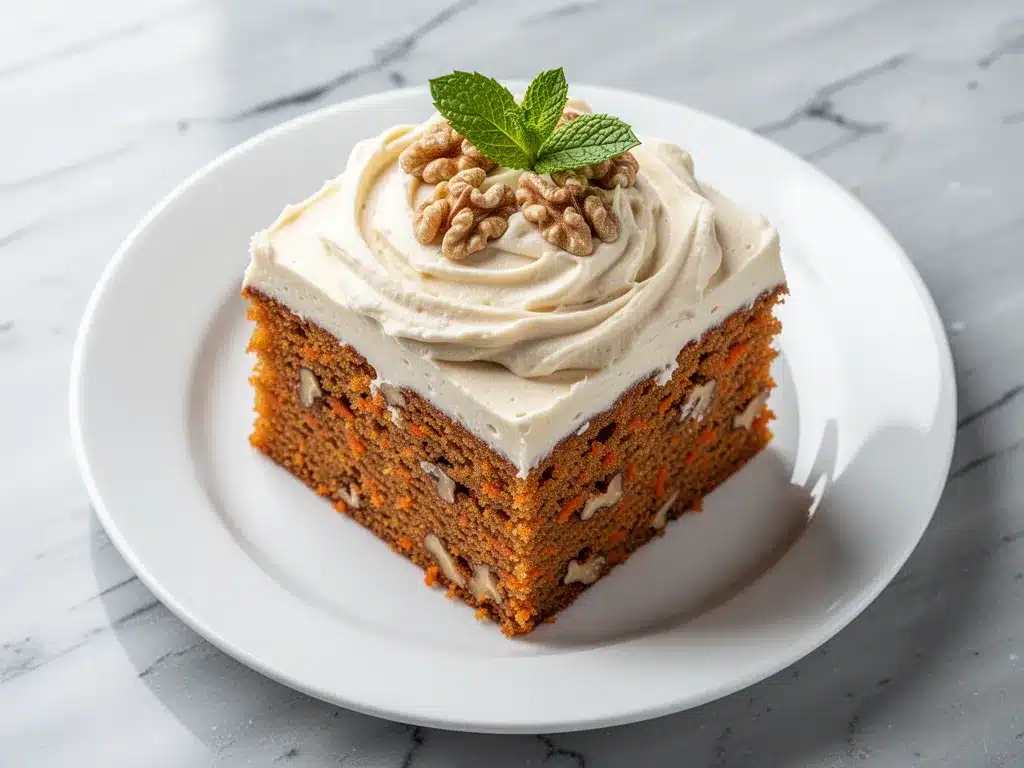
Cream Cheese (16 oz / 450g, full-fat) — Block cream cheese, not the spreadable kind in a tub. The tub kind has too much water and air, and your frosting will be runny. Use Philadelphia or a similar brand. Let it come to room temperature.
Butter (½ cup / 115g, softened) — Unsalted butter. Softened, not melted. It needs to be pliable so it creams with the cream cheese.
Powdered Sugar (4 cups / 480g) — Sifted. I sift mine to avoid lumps. If you don’t sift, you’ll get little white bits in your frosting.
Vanilla Extract (1 teaspoon) — Just a little. The cream cheese is the star.
Lemon Juice (1 teaspoon) — This is the secret. A splash of lemon juice cuts the richness and adds that tangy brightness. Don’t skip it.
Equipment Needed
You don’t need fancy equipment for this. Here’s what I actually use:
Two 9-inch Round Cake Pans — I use round pans because they bake evenly and look nice for layering. You can use a 9×13 pan if you prefer, but the baking time will be longer. Grease and flour your pans, or line them with parchment paper.
Box Grater — For grating the carrots. I use the medium side. If you have a food processor, you can pulse the carrots, but be careful not to over-process them into mush.
Mixing Bowls — One large bowl for wet ingredients, one medium for dry. I use glass bowls because they’re easy to clean.
Electric Mixer — Hand mixer or stand mixer. I use a stand mixer because it’s less tiring, but a hand mixer works fine. You need to cream the butter and cream cheese thoroughly.
Spatula — A silicone spatula for scraping the bowl and folding in the carrots. Essential for getting all the batter out of the bowl.
Cooling Rack — For cooling the cakes. Don’t frost warm cake; the frosting will melt. Let them cool completely.
Offset Spatula — For spreading the frosting smoothly. A regular spatula works, but an offset gives you better control.
How to Make It: Step-by-Step
Alright, let’s make this! I’m walking you through exactly how I do it, including the little tricks I’ve picked up.
Step 1: Prep Your Pans and Oven (5 minutes)
Preheat your oven to 350°F (175°C). Grease two 9-inch round cake pans with butter or cooking spray, then dust with flour. Tap out the excess. Or, line the bottoms with parchment paper for easy removal. I always use parchment because I’ve lost cakes before when the pans weren’t greased well enough. Trust me, it’s worth the extra minute.
Step 2: Mix the Wet Ingredients (5 minutes)
In a large bowl, whisk together the vegetable oil, granulated sugar, brown sugar, eggs, and vanilla extract. Whisk until the mixture is smooth and slightly thickened. This step is crucial for creating a smooth batter. Don’t rush it. If you’re using a hand mixer, beat on medium speed for 2-3 minutes. If you’re whisking by hand, it’ll take about 3 minutes. The sugar should dissolve into the oil.
Step 3: Combine the Dry Ingredients (2 minutes)
In a separate bowl, whisk together the flour, baking soda, baking powder, salt, cinnamon, ginger, and nutmeg. Make sure there are no lumps of baking soda or cinnamon. This ensures even distribution of leavening agents.
Step 4: Combine Wet and Dry (3 minutes)
Gradually add the dry ingredients to the wet ingredients, mixing on low speed until just combined. Do not overmix. Overmixing develops gluten, which makes the cake tough. Stop mixing as soon as you no longer see streaks of flour. The batter will be thick.
Step 5: Fold in the Carrots and Nuts (2 minutes)
Using a spatula, gently fold in the grated carrots and chopped nuts. Fold until just combined. Be gentle so you don’t break the nuts or overwork the batter. The batter should be uniform, with carrots distributed evenly.
Step 6: Bake the Cakes (30-35 minutes)
Pour the batter evenly into the prepared pans. Bake at 350°F (175°C) for 30-35 minutes, or until a toothpick inserted into the center comes out clean or with a few moist crumbs. Rotate the pans halfway through baking for even browning. Don’t open the oven door too early; it can cause the cakes to sink.
Step 7: Cool the Cakes (1 hour)
Let the cakes cool in the pans for 10 minutes, then turn them out onto a wire rack to cool completely. This is the hardest part. You want to frost them while they’re cool, but not cold. If you frost warm cake, the frosting will melt. If you frost cold cake, the frosting will be hard. Room temperature is perfect.
Step 8: Make the Frosting (10 minutes)
In a large bowl, beat the softened cream cheese and butter on medium speed until smooth and creamy. Gradually add the powdered sugar, one cup at a time, beating on low speed to avoid a sugar cloud. Once all the sugar is added, beat on high speed for 2-3 minutes until fluffy. Add the vanilla and lemon juice, and beat until combined. The frosting should be smooth, thick, and spreadable.
Step 9: Assemble the Cake (5 minutes)
Place one cake layer on a serving plate or cake stand. Spread a thick layer of frosting over the top. Place the second cake layer on top, then frost the top and sides of the cake. Use an offset spatula to create a smooth finish, or leave it rustic. I like a rustic finish because it looks homemade.
Step 10: Serve
Refrigerate the cake for at least 30 minutes to set the frosting. Slice and serve. Store leftovers in the refrigerator.
Expert Tips & Tricks
Here’s everything I’ve learned from making this dozens of times. These tips will save you from my mistakes.
Grate Your Own Carrots — Pre-shredded carrots are coated in anti-caking agents and don’t release moisture the same way. Grate your own on the medium side of a box grater. It takes 5 minutes, but it makes a huge difference in texture.
Room Temperature Ingredients — Cream cheese and butter must be room temperature. If they’re cold, you’ll get lumps in your frosting. If you forget, microwave the cream cheese for 15 seconds and the butter for 10 seconds. They should be soft but not melted.
Don’t Overmix the Batter — Once you add the flour, mix until just combined. Overmixing makes the cake dense. It’s better to have a few streaks of flour than to overmix.
Toast Your Nuts — If you’re using walnuts or pecans, toast them in a dry skillet for 2-3 minutes before chopping. It brings out their flavor and adds crunch.
Sift Your Powdered Sugar — Powdered sugar has lumps. Sift it before adding to the frosting to ensure a smooth, creamy texture. If you don’t sift, you’ll get lumps in your frosting.
Chill the Cake — After frosting, chill the cake for at least 30 minutes before slicing. This sets the frosting and makes it easier to slice cleanly.
Use a Turntable — If you have a cake turntable, use it. It makes frosting the sides much easier. If you don’t, just rotate the plate with your hands.
Variations & Substitutions
Once you’ve nailed the basic version, here’s how you can mix it up. I’ve tried all of these.
Pineapple Carrot Cake — Add 1 cup of crushed pineapple, drained, to the batter. It adds moisture and a tropical twist. My kids love this version.
Coconut Carrot Cake — Add 1 cup of shredded coconut to the batter. Top with toasted coconut flakes. It’s a Hawaiian-inspired twist.
Spiced Latte Carrot Cake — Add 1 tablespoon of instant espresso powder to the dry ingredients. It enhances the cinnamon flavor without tasting like coffee.
Gluten-Free — Use a 1:1 gluten-free flour blend. The texture will be slightly different, but it still works. I’ve used Bob’s Red Mill and it’s good.
Dairy-Free — Use dairy-free cream cheese and butter. The frosting will be slightly less rich, but still tasty. I’ve used Kite Hill cream cheese and it works well.
Vegan — Replace eggs with flax eggs (4 tablespoons ground flaxseed + 12 tablespoons water). Use oil instead of butter in the frosting, and vegan cream cheese. It’s not the same, but it’s edible.
Serving & Storage
How to Serve: I usually serve this straight from the fridge, sliced with a serrated knife. The cold frosting contrasts nicely with the soft cake. But here are other ways I’ve enjoyed it:
Side Dishes: This cake is rich, so it doesn’t need much. A cup of hot coffee or tea is perfect. If you want something savory, serve with a simple green salad.
Toppings Bar: When I have guests, I put out extra toasted nuts, a drizzle of caramel sauce, and a sprinkle of cinnamon. Everyone customizes their slice.
Storage Instructions:
Refrigerator: Store in an airtight container for up to 5 days. The cake actually gets better after day one as the flavors meld.
Freezing: This cake freezes well. Wrap the unfrosted cake layers in plastic wrap and foil, and freeze for up to 3 months. Thaw overnight in the fridge before frosting.
Pro Tip: If you’re meal-prepping, make the cake layers ahead and freeze them. When you need the cake, thaw, make the frosting, and assemble. It saves so much time.
Nutrition Information
I’m not a nutritionist, but here’s the breakdown if you’re tracking. This is per slice (based on 12 slices).
- Calories: 450
- Protein: 5g
- Carbs: 55g
- Fiber: 2g
- Sugar: 40g
- Fat: 25g
- Saturated Fat: 12g
- Cholesterol: 60mg
- Sodium: 350mg
What’s Good: Decent fiber from the carrots. Can be made gluten-free.
What to Know: Higher in sugar and calories from the frosting. It’s a treat, so enjoy it in moderation.
Final Thoughts
So that’s my go-to moist carrot cake with tangy cream cheese frosting! I’ve probably talked your ear off at this point, but when you make a recipe this often, you have a lot to say about it.
This has saved weeknight desserts more times than I can count. It’s my answer to “what’s for dessert” when I want something homemade but don’t have hours to spend. My kids are happy, my husband’s happy, and I’m happy because I’m not stressed about baking.
Make it yours! Try different nuts, add pineapple, or skip the frosting entirely (though I don’t recommend it). The best recipes are the ones you adapt to your family’s tastes.
If you make this, drop a comment and let me know what you think! I love hearing how recipes turn out in your kitchen. And if something doesn’t work, tell me that too—I’m here to help troubleshoot.
Happy baking! And I hope your kitchen smells half as good as mine does right now.
Frequently Asked Questions
Can I use butter instead of oil?
You can, but the cake will be denser and dry out faster. Oil keeps the cake moist for days, which is why I prefer it. If you must use butter, melt it and let it cool before adding. The texture will be different, but it’ll still taste good.
Why did my cake sink in the middle?
Usually means the oven door was opened too early, or the cake wasn’t baked long enough. Check the cake with a toothpick 5 minutes before the timer goes off. If it comes out clean, it’s done. Don’t open the oven door until the end of baking.
Can I make this ahead for a party?
Yes! Make the cake layers up to 3 days ahead and store them wrapped in the fridge. Make the frosting the day of. Assemble the cake 2 hours before serving. It saves so much stress on the day of the party.
Why is my frosting runny?
The cream cheese or butter was too warm, or you didn’t use enough powdered sugar. Make sure your cream cheese and butter are room temperature, not melted. If the frosting is still runny, chill it in the fridge for 15 minutes, then beat it again. It should firm up.
Can I use a box mix?
You can, but homemade is so much better. If you’re in a hurry, you can use a box mix as a base and add grated carrots and spices. But I recommend making it from scratch. It’s not that hard.
How do I store leftover cake?
Store in an airtight container in the fridge for up to 5 days. The frosting will firm up in the fridge, so let it sit at room temperature for 15 minutes before serving.
Can I freeze this cake?
Yes. Freeze the unfrosted cake layers for up to 3 months. Thaw overnight in the fridge before frosting. The frosting doesn’t freeze well; it can become grainy. Make fresh frosting when you thaw the cake.
Pin This Recipe!
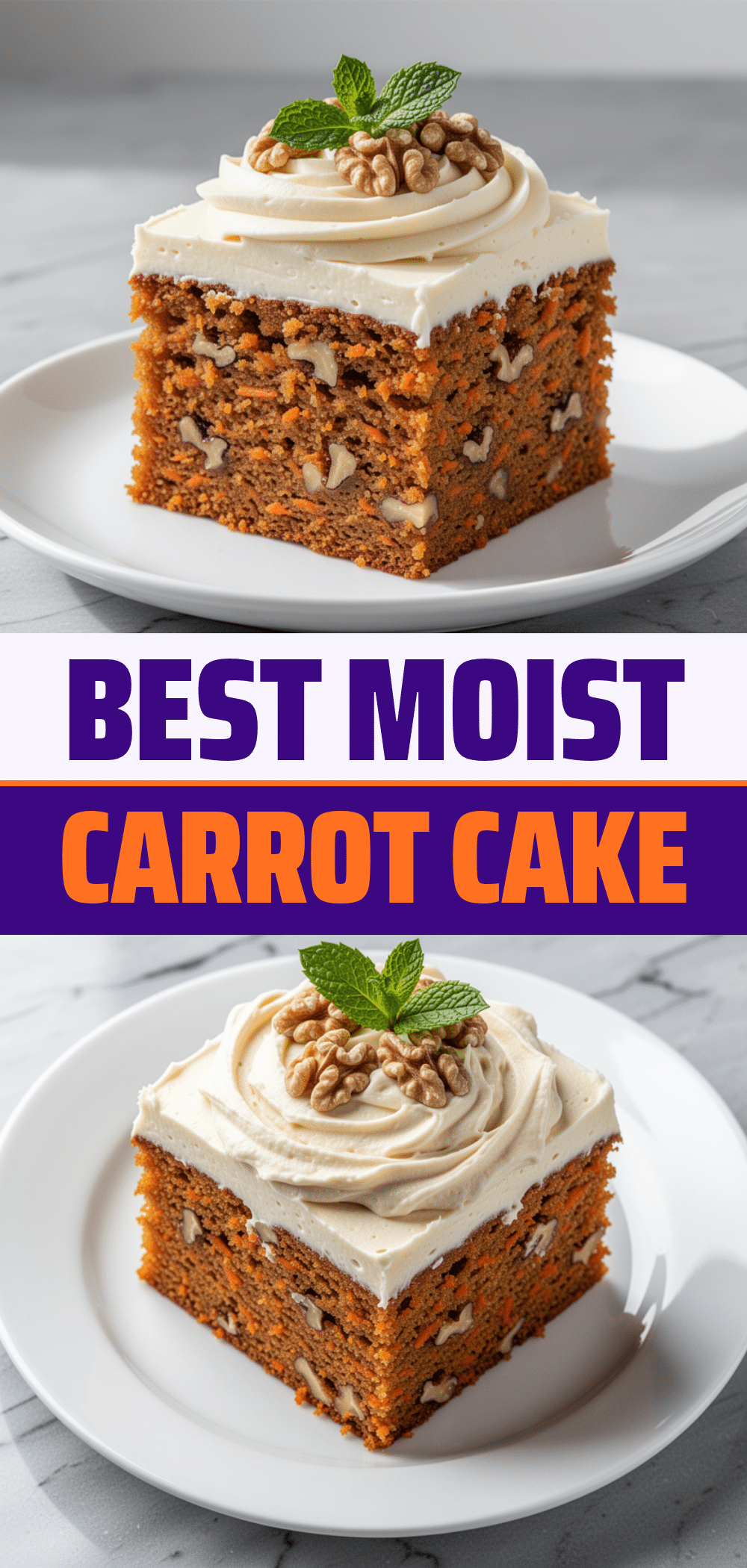
Moist Carrot Cake: Best Homemade Recipe with Tangy Cream Cheese Frosting
- Total Time: 1 hour 5 minutes
- Yield: 12 servings 1x
Description
A deeply moist, spiced carrot cake with a tangy cream cheese frosting that stays soft for days. This forgiving recipe balances texture and flavor for a crowd-pleasing dessert.
Ingredients
- 1 cup (240ml) vegetable oil
- 1 cup (200g) granulated sugar
- 1 cup (200g) dark brown sugar, packed
- 4 large eggs, room temperature
- 2 teaspoons vanilla extract
- 2 cups (250g) all-purpose flour
- 2 teaspoons baking soda
- 1 teaspoon baking powder
- 1 teaspoon salt
- 2 teaspoons ground cinnamon
- 1 teaspoon ground ginger
- 1/2 teaspoon ground nutmeg
- 3 cups (300g) fresh grated carrots
- 1 cup (120g) chopped walnuts or pecans, toasted
- 16 oz (450g) full-fat block cream cheese, room temperature
- 1/2 cup (115g) unsalted butter, softened
- 4 cups (480g) powdered sugar, sifted
- 1 teaspoon vanilla extract
- 1 teaspoon lemon juice
Instructions
- Preheat oven to 350°F (175°C). Grease and flour two 9-inch round cake pans, or line bottoms with parchment paper.
- In a large bowl, whisk together vegetable oil, granulated sugar, brown sugar, eggs, and vanilla extract until smooth and slightly thickened.
- In a separate bowl, whisk together flour, baking soda, baking powder, salt, cinnamon, ginger, and nutmeg.
- Gradually add dry ingredients to wet ingredients, mixing on low speed until just combined. Do not overmix.
- Gently fold in grated carrots and chopped nuts using a spatula.
- Pour batter evenly into prepared pans. Bake for 30-35 minutes, rotating pans halfway through, until a toothpick inserted in the center comes out clean.
- Cool cakes in pans for 10 minutes, then turn out onto a wire rack to cool completely.
- In a large bowl, beat cream cheese and softened butter until smooth. Gradually add powdered sugar, beating on low then high speed until fluffy.
- Add vanilla and lemon juice to frosting, beating until combined.
- Place one cake layer on a stand, spread frosting on top, add second layer, and frost top and sides.
- Refrigerate for at least 30 minutes to set before slicing.
Notes
Grate your own carrots for best texture; avoid pre-shredded. Ensure cream cheese and butter are at room temperature for smooth frosting. Do not overmix the batter to prevent a dense cake. Toast nuts for extra flavor. Sift powdered sugar to avoid lumps.
- Prep Time: 30 minutes
- Cook Time: 35 minutes
- Category: Dessert
- Cuisine: American
Nutrition
- Serving Size: 1 slice
- Calories: 450
- Sugar: 40
- Sodium: 350
- Fat: 25
- Saturated Fat: 12
- Carbohydrates: 55
- Fiber: 2
- Protein: 5
Keywords: carrot cake, cream cheese frosting, moist cake, homemade dessert, baking from scratch, tangy frosting