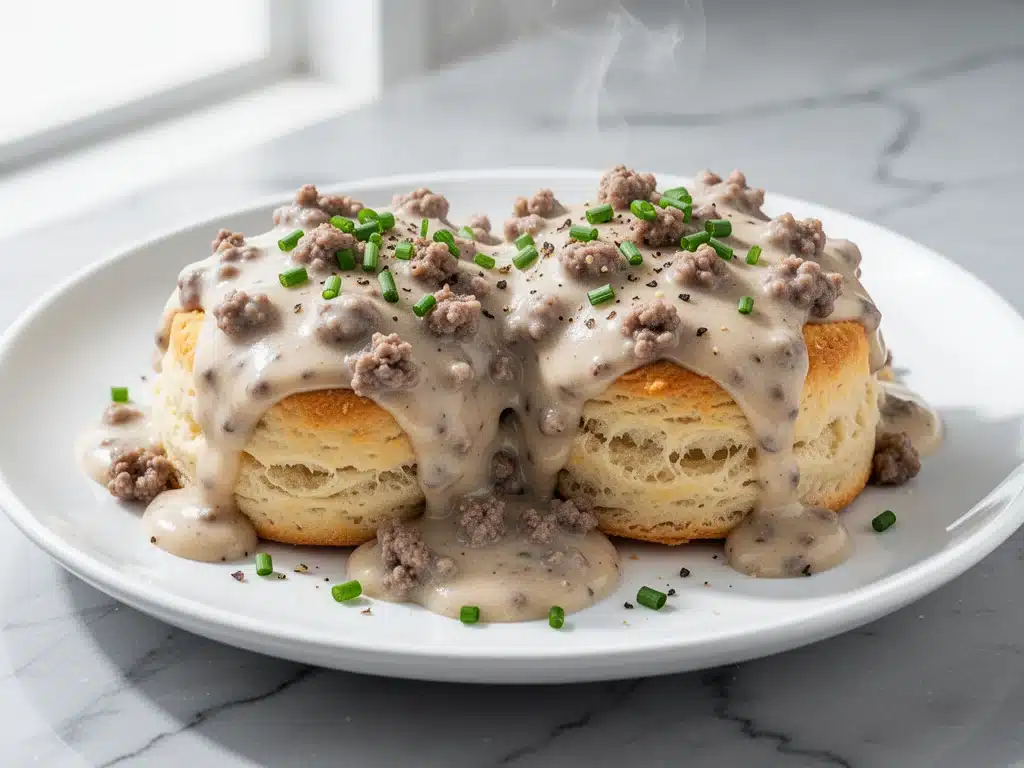
It was 6:00 AM on a Saturday, and I was standing in my kitchen wearing pajamas that had seen better days, staring at a bag of frozen biscuits like they owed me money. My partner had just announced he was craving “country breakfast” but had no idea what that actually meant in culinary terms. He wanted eggs, he wanted hash browns, he wanted… gravy? Real gravy? Not that stuff from a jar that tastes like salty cardboard, but the real deal. The kind that makes you close your eyes when you take the first bite.
I panicked. I’ve made biscuits before. I’ve even made gravy. But I had never successfully combined them into one cohesive, glorious meal without ending up with a dry biscuit and a gravy that tasted like burnt roux. I burned the first batch of gravy because I walked away to check my phone (big mistake, never walk away from a roux). I overworked the second batch of biscuits because I was nervous, turning them into dense hockey pucks.
But by 7:30 AM, something clicked. I stopped trying to be perfect and started cooking with instinct. I crumbled the sausage until it was crispy. I whisked the flour and fat until it turned that beautiful golden peanut-butter color. I poured in the milk slowly, watching the magic happen. When I broke open that first fluffy, steaming biscuit and poured the hot, savory gravy over it, my partner didn’t even speak. He just pointed at the plate, took a bite, and gave me that look. You know the one. The “I would marry you for this” look.
That morning changed everything. It wasn’t just breakfast anymore; it was comfort food at its finest. Since then, I’ve made this savory sausage gravy over fluffy buttermilk biscuits probably fifty times. It’s become our weekend ritual, my go-to brunch for guests, and my secret weapon when I need to feel like a grown-up chef without actually leaving the house. And honestly? It’s easier than you think.
If you’ve ever been intimidated by making gravy from scratch or worried your biscuits will come out like rocks, this recipe is your answer. It’s forgiving, it’s fast, and it’s absolutely delicious. Let me walk you through exactly how to make the best savory sausage gravy you’ve ever tasted, paired with biscuits so tender they melt in your mouth.
Why You’ll Love This Recipe
There’s a reason this dish has stuck around in Southern kitchens for generations. It’s not just about the flavor—though that’s definitely the main event—it’s about the experience. This recipe has completely transformed my weekend mornings from stressful to serene. Here’s why you’re going to want to keep this one close to your heart (and your fridge).
It’s Faster Than Takeout — Seriously. From the moment you start crumbling the sausage to the moment you’re licking the gravy off your fingers, it takes about 30 minutes. That’s less time than it takes to order, wait for, and drive to pick up breakfast. And unlike takeout, this is made with real ingredients you actually recognize.
The Gravy is Silky, Not Gluey — One of the biggest fears people have with homemade gravy is that it’ll turn into a thick, lumpy paste. I’ve cracked the code on getting it perfectly smooth and pourable every single time. It coats the spoon, it coats the biscuit, and it doesn’t separate. It’s liquid gold.
Biscuits That Actually Flake — Most homemade biscuit recipes fail because the dough gets overworked. I use a simple technique that ensures your biscuits rise high and stay tender. No rolling pins required. Just drop, bake, and enjoy. They’re fluffy clouds of doughy goodness.
It’s a Blank Canvas for Flavor — This is my favorite part. While the base recipe is classic, you can tweak it to your heart’s content. Add hot sauce? Go for it. Throw in some cheddar cheese? Yes. Use spicy breakfast sausage or mild Italian sausage? Absolutely. This recipe bends to your will.
It Feeds a Crowd (and a Hangover) — This is the ultimate comfort food for any occasion. Brunch with friends? Make this. Sunday morning hangover cure? This. Cold rainy day? This. It’s budget-friendly, filling, and universally loved. Even my picky eater cousin who claims he “doesn’t like breakfast food” asks for seconds.
This isn’t just a recipe; it’s a hug on a plate. And once you make it, you’ll understand why I say you’ll make it on repeat.
Ingredients You’ll Need
Here’s the best part: you probably have most of this already in your pantry and fridge. This isn’t a recipe that requires a special trip to three different specialty stores. It’s built on simple, accessible ingredients that work together to create something magical.
For the Sausage Gravy:
Breakfast Sausage (1 pound / 450g) — I always go with pork breakfast sausage. It has the perfect fat content and seasoning. You can use mild or hot, depending on your spice tolerance. If you want to keep it traditional, look for links that say “country breakfast sausage.” If you’re in a rush, bulk sausage works just as well—just make sure it’s seasoned.
Butter (2 tablespoons) — I use unsalted butter to control the saltiness. If you’re using salted sausage, you might not even need salt later. Butter adds that rich, creamy mouthfeel that oil just can’t match.
All-Purpose Flour (¼ cup / 30g) — This is what thickens the gravy. Don’t try to substitute this with cornstarch unless you’re gluten-free; the texture will be completely different. All-purpose flour gives you that classic, hearty gravy consistency.
Whole Milk (3 to 4 cups / 720ml to 960ml) — Use cold milk straight from the fridge. This helps prevent lumps when you whisk it into the roux. Whole milk gives you the richest, creamiest result. If you’re watching dairy, you can try oat milk, but the flavor will be lighter.
Black Pepper (1 teaspoon, freshly cracked) — Freshly cracked pepper is non-negotiable. Pre-ground pepper lacks that punch. You want visible flecks of pepper in your gravy. It adds heat and aroma.
Salt (to taste) — Start with half a teaspoon. Taste your gravy before adding more because the sausage and butter already have salt in them. You can always add more, but you can’t take it away.
For the Fluffy Buttermilk Biscuits:
All-Purpose Flour (2 cups / 250g) — Spoon it into the measuring cup and level it off. Don’t scoop and pack, or you’ll end up with dense biscuits. I use Bob’s Red Mill or King Arthur Flour—they’re consistent and reliable.
Baking Powder (1 tablespoon) — This is what makes them rise. Make sure your baking powder is fresh! If it’s older than six months, it might not work properly. I keep a fresh canister in my pantry specifically for baking.
Baking Soda (½ teaspoon) — This reacts with the buttermilk to create lift. Don’t skip it. It’s essential for that tender crumb.
Salt (1 teaspoon) — Enhances all the flavors. Again, start here and adjust later if needed.
Cold Unsalted Butter (½ cup / 115g, cubed) — This is the secret weapon. The butter needs to be COLD. I actually put it in the freezer for 10 minutes before cutting it into the flour. Cold butter creates steam pockets in the oven, which leads to flaky layers. Trust me on this.
Buttermilk (1 cup / 240ml) — Yes, real buttermilk. If you can’t find it, make a substitute: add 1 tablespoon of lemon juice or white vinegar to a measuring cup, then fill the rest with whole milk. Let it sit for 5 minutes until it curdles. It works surprisingly well.
Heavy Cream (2 tablespoons) — Brushing the tops with cream before baking helps them brown beautifully and adds richness. I usually just pour a little extra buttermilk or cream into the measuring cup after I’ve poured out the rest for the dough.
Equipment Needed
You don’t need a fancy kitchen to make this. Here’s what I actually use, and what works just as well if you don’t have the “fancy” stuff.
Large Skillet or Cast Iron Pan — I use a 12-inch cast iron skillet for the sausage. It distributes heat evenly and keeps the sausage crispy. If you don’t have cast iron, a heavy-bottomed non-stick skillet works great. Avoid thin stainless steel if you can help it; the sausage might stick.
Whisk — A standard balloon whisk is perfect for the gravy. It breaks up lumps in the roux and helps incorporate the milk smoothly. I have a cheap one from the dollar store that works just fine.
Mixer or Food Processor (Optional) — For the biscuits, I usually use my hands or a pastry cutter. But if you have a food processor, you can pulse the flour and butter together in seconds. It’s faster and keeps the butter colder because your hands aren’t warming it up.
Biscuit Cutter or Glass — A 2.5-inch round biscuit cutter is ideal. If you don’t have one, use a drinking glass. Just make sure the rim is clean and sharp. Dip it in flour between cuts to prevent sticking.
Baking Sheet — Line it with parchment paper or a silicone baking mat. This prevents sticking and makes cleanup a breeze. I’ve burned biscuits on bare pans before—don’t make that mistake.
Measuring Cups and Spoons — Be precise with the leavening agents (baking powder/soda). Too much makes them taste metallic; too little means flat biscuits.
How to Make It: Step-by-Step
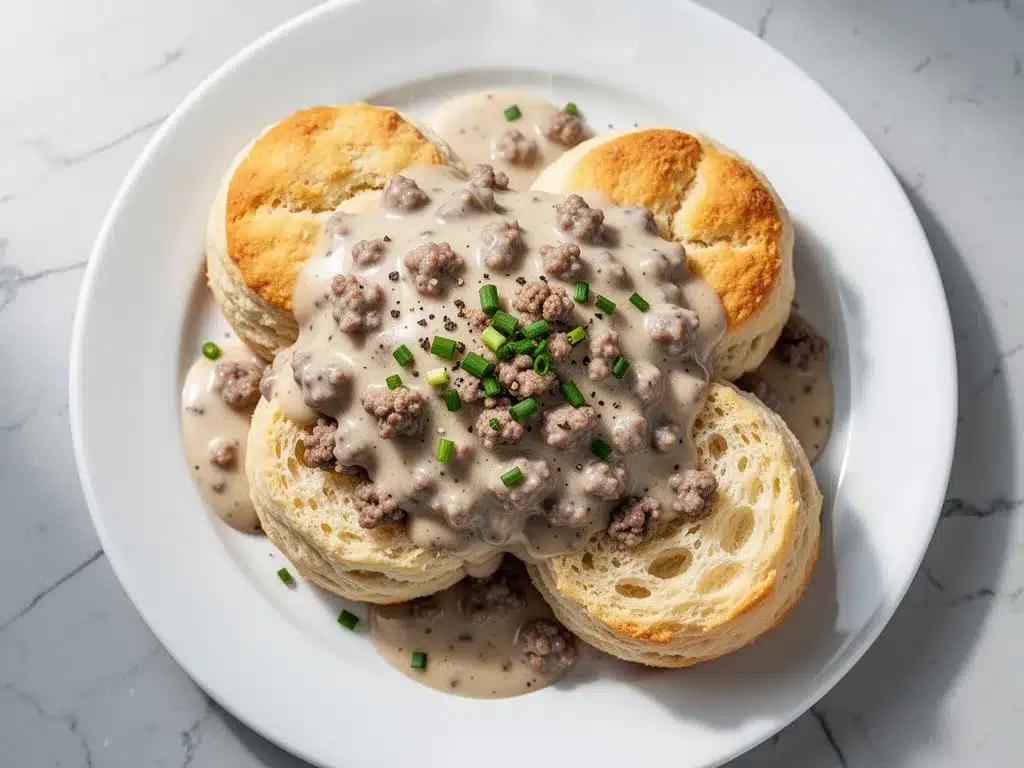
Alright, let’s get cooking! I’m walking you through exactly how I do it, including the little tricks I’ve picked up over the years. This might seem like two separate recipes, but they come together in under 30 minutes if you’re efficient.
Step 1: Prep Your Dough (10 minutes)
Start with the biscuits because they need to bake first. In a large bowl, whisk together the flour, baking powder, baking soda, and salt. Grab your cold butter and cut it into the flour mixture. Use a pastry cutter, two forks, or your fingers to work the butter in until it looks like coarse crumbs with some pea-sized pieces of butter remaining. Those big chunks of butter are what create the flaky layers.
Pour in the buttermilk (or your substitute) and mix gently with a fork or your hands. Stop as soon as the dough comes together. It will look shaggy and messy. That’s okay. Do not overmix! Overmixing develops gluten, which makes tough biscuits. Just bring it together.
Turn the dough onto a lightly floured surface. Pat it out into a rectangle about ¾-inch thick. Fold it in half, then pat it out again. Do this two or three times. This folding technique creates layers. Then, cut out your biscuits. Press straight down with the cutter—don’t twist. Twist seals the edges and prevents rising.
Place the biscuits on your prepared baking sheet, touching each other slightly. This helps them rise up instead of out. Brush the tops with heavy cream. Bake at 425°F (220°C) for 12-15 minutes until golden brown. Remove and set aside. They’ll stay warm in the turned-off oven.
Step 2: Cook the Sausage (5-7 minutes)
While the biscuits bake, heat your large skillet over medium-high heat. Add the sausage. Break it up with a wooden spoon as it cooks. You want it browned and crispy, with no pink bits left. This usually takes about 5-7 minutes. Once cooked, drain most of the excess grease, but leave about 2-3 tablespoons of fat in the pan. That fat is flavor gold.
If you’re using mild sausage and want more flavor, you can add a pinch of red pepper flakes or sage at this stage. Stir it in with the meat.
Step 3: Make the Roux (2 minutes)
Reduce the heat to medium. Sprinkle the flour over the hot sausage and fat. Stir constantly for about 1-2 minutes. You’re cooking the raw flour taste out. The mixture will turn a light golden brown and smell nutty. This is called a roux, and it’s the base of your gravy. Don’t rush this step—if the roux is pale, the gravy will taste like raw flour.
Step 4: Whisk in the Milk (5-7 minutes)
Pour in about 1 cup of the cold milk while whisking constantly. This is the crucial moment. Whisk vigorously to break up any lumps. Once that cup is fully incorporated and smooth, add another cup. Keep whisking. Repeat until all the milk is in.
Now, let it simmer. Reduce heat to medium-low. Let the gravy bubble gently, stirring frequently to prevent sticking to the bottom. It will start to thicken after about 3-4 minutes of simmering. Keep going until it coats the back of a spoon. This usually takes 5-7 minutes total after adding the milk.
Step 5: Season and Serve (2 minutes)
Remove from heat. Stir in the black pepper. Taste the gravy. Add salt if needed. Remember, the sausage is salty, so go easy. If it’s too thick, add a splash more milk. If it’s too thin, let it simmer for another minute.
Break open a hot biscuit. Spoon a generous amount of gravy over the top. Eat immediately while it’s hot. The contrast between the warm, fluffy biscuit and the rich, savory gravy is pure bliss.
Expert Tips & Tricks
Here’s everything I’ve learned from making this dozens of times. These tips will save you from my mistakes.
Keep Your Butter Cold
This is the #1 rule for biscuits. If your butter melts before it hits the oven, you lose your flaky layers. Cube it, freeze it for 10 minutes, and work quickly. If your kitchen is hot, put your bowl in the fridge for 10 minutes before baking.
Don’t Overmix the Dough
I know it’s tempting to smooth it out, but don’t. A shaggy, messy dough is better than a smooth, tough one. Mix just until combined. It’s okay if there are little streaks of flour.
Save That Sausage Fat
Don’t drain all the grease! You need that fat for the roux. It adds so much flavor to the gravy. If you used lean turkey sausage, you might need to add a tablespoon of butter or oil to make up for the lack of fat.
Whisk Constantly
When you add the milk, don’t stop whisking. Lumps are the enemy. If you do get lumps, just strain the gravy through a fine-mesh sieve. It’s a great backup plan.
Simmer for Texture
Many people stop the gravy too early. Let it simmer for a full 5 minutes after adding the milk. This cooks out the flour taste and allows the starches to fully swell, giving you that thick, creamy texture you want.
Reheating Leftovers
If you have leftover gravy (unlikely, but possible), store it in an airtight container in the fridge for up to 4 days. Reheat gently on the stove with a splash of milk to loosen it up. The biscuits are best fresh, but you can warm them in the oven at 350°F for 5 minutes.
Variations & Substitutions
Once you’ve nailed the basic version, here’s how you can mix it up. I’ve tried all of these.
Spicy Sausage Gravy
Use hot breakfast sausage and add ½ teaspoon of cayenne pepper or red pepper flakes to the roux. This adds a nice kick that cuts through the richness. My friend loves this version with a drizzle of hot sauce on top.
Vegetarian Version
Skip the sausage. Sauté 1 cup of chopped mushrooms and ½ cup of diced onions in the butter until browned. Then proceed with the roux. It’s earthy and savory, and surprisingly satisfying. Add a pinch of thyme for extra depth.
Gluten-Free Biscuits
Use a 1:1 gluten-free flour blend that includes xanthan gum. The rest of the recipe stays the same. The texture might be slightly denser, but it’s still delicious. I’ve used King Arthur’s measure-for-measure blend with great results.
Dairy-Free Option
Use vegan butter and oat milk. The flavor will be different, but it’s still comforting. I’ve made this for my lactose-intolerant brother, and he didn’t complain once.
Add Cheese
Stir ½ cup of shredded cheddar cheese into the gravy right before serving. It melts in and makes it even richer. Or put a slice of cheese on the biscuit before adding the gravy.
Herb-Infused
Add 1 teaspoon of dried sage or thyme to the roux. Sage pairs beautifully with sausage and buttermilk. It gives it a classic “breakfast” aroma.
Serving & Storage
How to Serve:
I usually serve this straight from the skillet at the dinner table—it looks rustic and stays warm. But here are other ways I’ve enjoyed it:
- Side Dishes: Crispy bacon, fresh fruit salad, or sautéed spinach. A simple green salad with vinaigrette cuts the richness nicely.
- Toppings Bar: When I have guests, I put out hot sauce, extra black pepper, and chopped chives. Everyone customizes their bowl.
- Drink Pairing: Coffee is obvious, but a mint julep or a mimosa makes it feel like a special brunch.
Storage Instructions:
Refrigerator:
Store the gravy in an airtight container for up to 4 days. The biscuits are best eaten the same day, but you can store them in a ziplock bag for 2 days. Reheat in the oven to keep them fluffy.
Reheating:
Best method: Add the gravy to a small saucepan with a splash of milk over low heat. Stir until heated through. Microwave works too, but add a splash of milk and cover it to prevent drying out.
Freezing:
Gravy freezes well for up to 3 months. Thaw in the fridge overnight and reheat with milk. Biscuits do not freeze well—they become crumbly. Make them fresh.
Nutrition Information
I’m not a nutritionist, but here’s the breakdown if you’re tracking. This is comfort food, so enjoy it in moderation!
Per Serving (based on 8 biscuits and 4 cups of gravy):
- Calories: 380
- Protein: 12g
- Carbs: 35g
- Fiber: 1g
- Sugar: 4g
- Fat: 22g
- Saturated Fat: 11g
- Cholesterol: 45mg
- Sodium: 650mg
What’s Good:
Decent protein from the sausage and biscuits. Calcium from the buttermilk and cheese (if added). It’s filling and satisfying.
What to Know:
Higher in calories and fat due to the sausage, butter, and cream. Contains dairy and gluten. Moderate sodium. Use low-sodium sausage and reduce added salt to lower sodium content.
My Take:
Look, this is a treat. It’s not a diet recipe. But it’s way better than fast food, costs less, and you know exactly what’s in it. When I want to make it lighter, I use turkey sausage and skim milk. But usually? I just eat a reasonable portion and enjoy it.
Final Thoughts
So that’s my go-to savory sausage gravy over fluffy buttermilk biscuits! I’ve probably talked your ear off at this point, but when you make a recipe this often, you have a lot to say about it.
This has saved weekend mornings more times than I can count. It’s my answer to “what’s for brunch” when I want to impress friends but don’t want to spend hours in the kitchen. My family is happy, my guests are happy, and I’m happy because I’m not stressed about cooking.
Make it yours! Try different sausages, add cheese, or swap in gluten-free flour. The best recipes are the ones you adapt to your family’s tastes. If you make this, drop a comment and let me know what you think! I love hearing how recipes turn out in your kitchen. And if something doesn’t work, tell me that too—I’m here to help troubleshoot.
Happy cooking! And I hope your kitchen smells half as good as mine does right now.
Frequently Asked Questions
Can I make the biscuits ahead of time?
You can prepare the dough, cut the biscuits, and freeze them on a baking sheet. Once frozen solid, transfer them to a bag. Bake them straight from the freezer, adding 2-3 minutes to the baking time. This is a great trick for busy mornings!
Why did my biscuits turn out flat?
Usually, this happens because the baking powder was old or expired, or the dough was overworked. Make sure your leavening agents are fresh. Also, don’t twist the biscuit cutter when cutting—just press straight down. Twisting seals the edges and stops them from rising.
Can I use turkey sausage instead of pork?
Yes, but turkey sausage is much leaner. You’ll need to add extra butter or oil to the pan to make the roux, otherwise, the gravy will be thin and lack flavor. I recommend adding a tablespoon of butter after cooking the turkey sausage.
How do I fix lumpy gravy?
If you get lumps, don’t panic. Just pour the gravy through a fine-mesh sieve into a clean pot. Whisk it while it’s passing through. It’ll be smooth as silk. To prevent this in the future, make sure your milk is cold and whisk constantly when adding it to the roux.
Can I freeze the sausage gravy?
Yes! Let it cool completely, then store it in an airtight container or freezer bag for up to 3 months. Thaw in the fridge overnight. When reheating, add a splash of milk or water because it will thicken up in the freezer.
What’s the best type of buttermilk substitute?
Whole milk plus lemon juice or white vinegar is the classic substitute. For every 1 cup of milk, add 1 tablespoon of acid. Let it sit for 5-10 minutes until it curdles. It works perfectly in this recipe.
Why is my gravy too salty?
If you used highly seasoned sausage, the gravy might be too salty. To fix it, add a splash of milk or cream to dilute the saltiness. You can also add a diced potato to the gravy while it simmers—it absorbs some salt. Remove the potato before serving.
Pin This Recipe!


Savory Sausage Gravy: Easy 30-Minute Biscuit Recipe
- Total Time: 30 minutes
- Yield: 8 servings 1x
Description
A comforting weekend breakfast featuring silky, savory sausage gravy poured over fluffy, flaky buttermilk biscuits. This forgiving recipe comes together in under 30 minutes for a perfect brunch or hangover cure.
Ingredients
- 1 pound pork breakfast sausage (mild or hot)
- 2 tablespoons unsalted butter
- 1/4 cup all-purpose flour
- 3 to 4 cups whole milk (cold)
- 1 teaspoon freshly cracked black pepper
- Salt to taste
- 2 cups all-purpose flour (for biscuits)
- 1 tablespoon baking powder
- 1/2 teaspoon baking soda
- 1 teaspoon salt (for biscuits)
- 1/2 cup cold unsalted butter, cubed (for biscuits)
- 1 cup buttermilk (for biscuits)
- 2 tablespoons heavy cream (for brushing biscuits)
Instructions
- Preheat oven to 425°F (220°C). Line a baking sheet with parchment paper.
- In a large bowl, whisk together 2 cups flour, baking powder, baking soda, and 1 teaspoon salt.
- Cut the cold cubed butter into the flour mixture using a pastry cutter or fingers until it resembles coarse crumbs with pea-sized butter pieces remaining.
- Pour in the buttermilk and mix gently until the dough just comes together. Do not overmix.
- Turn dough onto a lightly floured surface, pat to 3/4-inch thickness, fold in half, and pat again. Repeat 2-3 times to create layers.
- Cut biscuits with a 2.5-inch cutter, pressing straight down without twisting. Place biscuits on the baking sheet touching each other.
- Brush tops with heavy cream and bake for 12-15 minutes until golden brown. Keep warm in the turned-off oven.
- While biscuits bake, heat a large skillet over medium-high heat. Add sausage and break up with a wooden spoon until browned and crispy (5-7 minutes).
- Drain most excess grease, leaving 2-3 tablespoons of fat in the pan.
- Reduce heat to medium. Sprinkle 1/4 cup flour over the sausage fat and stir constantly for 1-2 minutes until golden and nutty (roux).
- Pour in 1 cup cold milk while whisking vigorously. Once smooth, add remaining milk, cup by cup, whisking constantly.
- Reduce heat to medium-low and simmer for 5-7 minutes, stirring frequently, until gravy thickens and coats the back of a spoon.
- Remove from heat. Stir in black pepper and salt to taste. Serve gravy immediately over hot biscuits.
Notes
Keep butter cold for flaky biscuits. Do not overmix the dough. Save sausage fat for the roux. Whisk constantly when adding milk to prevent lumps. If gravy is too thick, add splash of milk; if too thin, simmer longer.
- Prep Time: 10 minutes
- Cook Time: 20 minutes
- Category: Breakfast
- Cuisine: Southern
Nutrition
- Serving Size: 1 biscuit with gener
- Calories: 380
- Sugar: 4
- Sodium: 650
- Fat: 22
- Saturated Fat: 11
- Carbohydrates: 35
- Fiber: 1
- Protein: 12
Keywords: sausage gravy, buttermilk biscuits, southern breakfast, comfort food, easy brunch, homemade gravy, fluffy biscuits