It was 6:15 PM on a Tuesday. I was standing in front of my open fridge, staring into the abyss of a half-empty crisper drawer and a block of cheddar that was rapidly developing a fuzzy personality. My brain was fried. The kids had been loud all day, my inbox was screaming at me, and the smell of takeout grease was haunting my imagination. I really wanted pizza. Like, desperately.
But we were deep in our second month of Whole30, and I wasn’t about to let my hangry self order a pepperoni pie that would sabotage three weeks of clean eating. I needed dinner. I needed it fast. I needed it to taste like I cared, even though I had exactly zero energy to care.
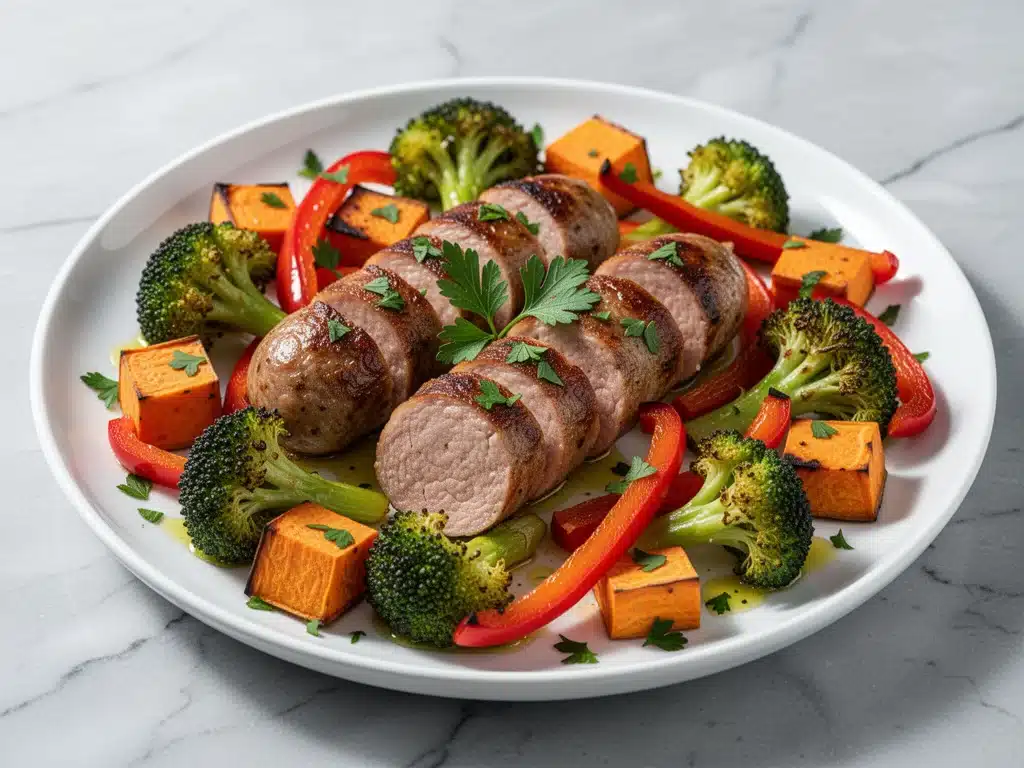
That night, I threw a handful of broccoli florets, some sliced bell peppers, and a few links of compliant sausage onto a single baking sheet. I tossed them in olive oil, threw them in the oven, and went to take a shower. Twenty minutes later, I walked into the kitchen to find my family actually sitting at the table, waiting for me. The house smelled like caramelized onions and roasted garlic, not like a fast-food drive-thru.
We ate in silence for the first five minutes because we were too full to talk. It wasn’t fancy. It wasn’t gourmet. But it was hot, it was compliant, and it was done with almost zero cleanup. That’s when I realized: this Whole30 Sheet Pan Sausage and Roasted Vegetables recipe wasn’t just a backup plan. It was a lifesaver. It became the anchor of our weeknight routine for months.
Here’s the thing about Whole30: it’s easy when you’re well-rested and have time to meal prep. It’s brutal when you’re tired, overwhelmed, and running on caffeine and sheer willpower. This recipe is for those nights. It’s for the days when you need to feed your family clean, protein-packed comfort food without spending hours in the kitchen or looking at a mountain of dirty dishes the next morning. I’ve made this at least a dozen times since that Tuesday, tweaking the veggies and sausage types until I found the perfect balance. And honestly? It’s the best thing I’ve made all month.
Why You’ll Love This Sheet Pan Dinner
There are about ten reasons I keep making this, but let’s be real—you don’t need a list of ten reasons. You need to know if it’s going to work when you’re stressed. Here’s why this Whole30 Sheet Pan Sausage and Roasted Vegetables has earned a permanent spot in my rotation:
- One Pan, Zero Stress — Seriously, if you can chop vegetables, you can make this. I’ve walked my teenage son through it over FaceTime while he was at college. There’s no sautéing, no stirring, no standing over a hot stove. You toss, you bake, you eat. The cleanup is just one sheet pan and maybe a cutting board.
- Lightning Fast — It takes about 15 minutes of active prep time, and then your oven does the heavy lifting. I make this on weeknights when I get home at 7 PM and need dinner on the table by 7:45. It’s faster than cooking rice, and it doesn’t require constant attention like braised short ribs does.
- Whole30 Friendly (But Not Just for That) — If you’re doing Whole30, Paleo, or just trying to cut back on processed foods, this hits all the marks. No sugar, no gluten, no weird additives. But honestly, even my non-diet-eating friends beg for this recipe. It’s just good food.
- Crowd-Pleaser — I’ve served this to my picky-eater nephew, who usually only eats bread and chicken nuggets. He ate three helpings of roasted broccoli and sausage. I don’t know how, but the caramelization works magic. The kids love the sausage, and the veggies get eaten because they’re sweet and tender, not mushy and bland.
- Budget-Smart — You can make this for under $20. Sausage is relatively cheap, and you can use whatever seasonal veggies are on sale. I usually buy the big family pack of sausage and freeze half for later. That’s less than the cost of two pizzas, and way healthier.
- Makes Amazing Leftovers — Actually tastes better the next day. The veggies absorb the sausage fat and seasoning, becoming even more flavorful. I deliberately make extra for lunch throughout the week. It’s the perfect cold-or-reheated meal.
This is my go-to when I need dinner to just work. No complicated techniques, no weird ingredients you have to hunt for at three different stores, just reliable, delicious food that makes everyone happy. It’s the kind of meal that reminds you that cooking doesn’t have to be a chore.
Ingredients You’ll Need
Here’s the best part: you probably have most of this already. I’m particular about two things here—the sausage quality and the veggies—but otherwise, it’s simple pantry and produce basics. This looks like a short list, but it packs a punch.
For the Sausage
Chicken or Turkey Sausage (1.5 pounds / 680g) — This is the star. You need compliant, sugar-free sausage. I always use Andouille for a spicy kick or Italian for something milder. Check the label! If it has sugar, corn syrup, or fillers, it’s not Whole30. I’ve been burned by “natural” sausages that sneak in dextrose. My go-to brand is usually Trader Joe’s or a local butcher, but read every label.
Olive Oil (3 tablespoons / 45ml) — Use good quality here. Extra virgin olive oil adds a nice fruity note, but if you’re worried about burning, use regular olive oil. The fat helps the veggies roast and crisp up.
Garlic Powder (1 teaspoon) — I use garlic powder because it distributes evenly and doesn’t burn on the high heat. Fresh garlic can sometimes char and turn bitter on a sheet pan. If you must use fresh, mince it super fine and add it in the last 10 minutes.
Onion Powder (1 teaspoon) — Adds that savory depth. If you have smoked paprika, swap half the onion powder for that. It adds a smoky flavor that mimics grilled sausage.
Dried Thyme (1 teaspoon) — Thyme and sausage are a classic pairing. It adds an earthy, herbal note that cuts through the richness. Fresh thyme works too, but it might burn. Dried is safer here.
For the Vegetables
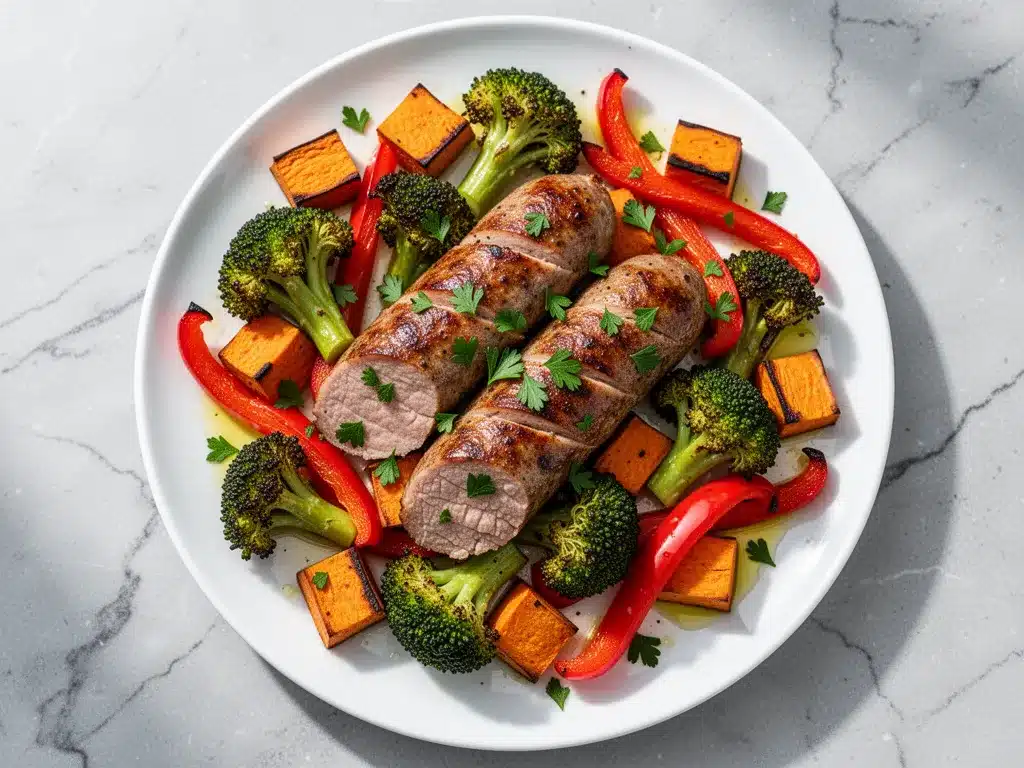
Broccoli Florets (2 large heads / about 600g) — Broccoli gets incredibly crispy on the edges when roasted. I chop the florets into bite-sized pieces. Don’t skip the stems! Peel the tough outer layer and chop the tender inside. Waste not, want not.
Red Bell Peppers (2 medium / about 300g) — Sweet peppers balance the savory sausage. I use red because they’re sweeter than green, but yellow or orange work too. Chop them into similar-sized pieces to the broccoli so they cook evenly.
Red Onion (1 large / about 200g) — Red onion holds its shape better than yellow onion on a sheet pan and doesn’t turn to mush. Slice it into wedges, keeping the layers somewhat intact. It gets sweet and jammy.
Zucchini (2 medium / about 400g) — Zucchini adds volume and moisture. I slice it into half-moons. If you’re using a lot of zucchini, make sure your pan isn’t overcrowded, or it’ll steam instead of roast.
Salt and Black Pepper — To taste. Since your sausage might already be salty, start with half a teaspoon of salt and adjust after roasting.
Optional Add-ins:
- Sweet Potatoes (1 large, diced) — If you want more carbs, add cubed sweet potatoes. They take longer to cook, so toss them in first or cut them very small.
- Cherry Tomatoes (1 cup) — Toss them in during the last 5 minutes of roasting. They burst and add a juicy, acidic contrast.
- Butternut Squash (2 cups, cubed) — Great in the fall. Like sweet potatoes, these need more time, so add them early.
Personal Tip: I keep a stash of compliant sausages in the freezer. When I’m having a “I don’t want to think” night, I grab a pack, chop some frozen broccoli (yes, frozen works, just pat it dry!), and I’m good to go. It’s not as good as fresh, but it’s a valid emergency strategy.
Equipment Needed
You don’t need fancy equipment for this. Here’s what I actually use. If you have these, you’re set. If not, you probably have alternatives.
Large Sheet Pans — I use two half-sheet pans (18×13 inches). If you only have one small pan, you’ll need to roast in two batches or crowd everything together. Crowding leads to steaming, not roasting. Two pans are ideal for even browning.
Parchment Paper — Or a silicone baking mat. I use parchment paper because cleanup is instant. Just crumple it up and toss it. It prevents the veggies from sticking and makes washing the pan a non-event.
Sharp Chef’s Knife — For chopping the veggies. Dull knives make you cry more—learned this the hard way with onions. A sharp knife makes quick work of bell peppers and zucchini.
Large Cutting Board — Any size works. I use a big plastic one for easier cleanup. If you’re chopping on the counter, be careful!
Mixing Bowls — Two medium bowls are helpful. One for tossing the veggies in oil and seasoning, one for slicing the sausage. Keeps things organized.
Tongs — For tossing the veggies in the bowl and flipping them on the pan. Tongs are much better than a fork for this.
Oven — Preheated to 400°F (200°C). A standard oven works fine. No air fryer needed, though you could use one for smaller batches!
Optional but nice:
- Vegetable Chopper — If you have one of those spring-loaded choppers, it speeds up the broccoli and peppers significantly. Not necessary, but nice.
- Instant-Read Thermometer — To check if the sausage is cooked through. I usually go by eye, but if you’re unsure, 165°F (74°C) is the safe temp for poultry sausage.
Tool Tip: Don’t have a second sheet pan? Use one large pan but leave plenty of space between the veggies. If they’re touching, they’ll steam. I’ve made this mistake before, and the result was soggy broccoli. Not the vibe.
How to Make It: Step-by-Step
Alright, let’s make this! I’m walking you through exactly how I do it, including the little tricks I’ve picked up over the years. It’s simple, but there are a few key moments that make the difference between good and amazing.
Step 1: Prep Your Oven and Pans (2 minutes)
Preheat your oven to 400°F (200°C). While it’s heating, line your sheet pans with parchment paper. This is non-negotiable for easy cleanup. If you’re using silicone mats, wipe them down first. The oven needs to be hot before the veggies go in, so start this step early.
Step 2: Chop Your Vegetables (8-10 minutes)
Wash and dry your veggies. Moisture is the enemy of roasting. If the broccoli is wet, it’ll steam. Pat it dry with a towel.
- Cut the broccoli into florets, aiming for bite-sized pieces. Chop the stems too.
- Slice the bell peppers into 1-inch strips.
- Cut the red onion into wedges, keeping the root end intact so they don’t fall apart.
- Slice the zucchini into half-moons.
Keep the pieces roughly the same size. This ensures they all cook at the same rate. I know it’s tempting to chop wildly, but uniformity matters for even roasting.
Step 3: Season the Veggies (2 minutes)
Place all the chopped veggies into a large mixing bowl. Drizzle with olive oil and sprinkle with garlic powder, onion powder, thyme, salt, and pepper. Toss everything together with your hands or tongs until every piece is coated. You want a light sheen of oil, not a pool of it. Too much oil makes them greasy; too little makes them dry.
Step 4: Prep the Sausage (3 minutes)
While the veggies are seasoning, slice the sausage links into ½-inch rounds or diagonal pieces. Diagonal pieces have more surface area, which means more browning and flavor. I prefer diagonal. Place the sausage slices on one of the prepared sheet pans. No oil needed for the sausage—the fat will render out.
Step 5: Roast the Veggies (15-20 minutes)
Spread the seasoned veggies in a single layer on the second sheet pan. Do not crowd them! If they’re piled on top of each other, they’ll steam. Put the pan in the oven.
Roast for 15 minutes. Then, pull the pan out and give the veggies a good stir or flip. This ensures even browning on all sides. You want some charred, crispy edges.
Step 6: Combine and Finish (5-10 minutes)
After 15 minutes, the veggies should be tender and starting to brown. Add the sheet pan with the sausage to the oven (if you’re using two pans). Roast for another 10-15 minutes, or until the sausage is cooked through and browned, and the veggies are tender-crisp.
Check the sausage halfway through. If it’s browning too fast, lower the heat to 375°F (190°C). You want the sausage to be juicy inside and crispy outside.
Step 7: Serve
Remove from the oven. Taste a piece of sausage and a veggie. Adjust salt if needed. Serve immediately while hot. The veggies are best when they’re still warm and the sausage is juicy.
Total Time: About 35-40 minutes (15 minutes active, 25 minutes roasting)
Built-in Troubleshooting:
- Veggies are soggy: Your pan was overcrowded, or the veggies were wet. Next time, pat them dry and give them space.
- Sausage is dry: It was overcooked. Sausage cooks fast. Check it at 10 minutes on the second roast.
- Garlic powder burned: If you see black bits, your oven might run hot. Lower the temp to 375°F next time.
Expert Tips & Tricks
Here’s everything I’ve learned from making this dozens of times. These tips will save you from my mistakes and help you get that restaurant-quality roast.
Dry Your Veggies Thoroughly
This is the #1 tip. Moisture is the enemy of crispiness. After washing your broccoli and peppers, use a salad spinner or paper towels to dry them completely. If they’re wet, they’ll steam in the oven. I learned this the hard way with a batch of soggy broccoli that tasted like boiled sadness. Now, I always dry my veggies. It’s an extra minute, but it’s worth it.
Don’t Crowd the Pan
If you’re using one pan, roast in batches. Two pans are ideal. Crowding the pan lowers the temperature and creates steam. You want hot, dry air circulating around each piece. If the veggies are touching, they’ll stick together and steam. Space them out! It’s okay if there are gaps. I’ve made this mistake before, and the result was mushy, not roasted.
Use High-Quality Sausage
Since the sausage is the main protein, its quality matters. Cheap sausages can be full of fillers and sugar, which ruins the Whole30 compliance and the flavor. Look for sausages with simple ingredients: meat, spices, maybe some natural casings. I’ve tried several brands, and the ones with visible chunks of pepper or garlic in the meat tend to be the most flavorful. Avoid anything with “natural flavors” or unpronounceable ingredients.
Flip the Veggies Midway
When you pull the pan out at the 15-minute mark, give the veggies a good stir. This exposes new surfaces to the heat, ensuring even browning. I usually use tongs to flip them over. It’s a small step, but it makes a big difference in texture.
Resist the Urge to Overcook
Vegetables continue to cook a bit after you remove them from the oven. Pull them when they’re tender-crisp, not mushy. Broccoli should still have a slight bite. Bell peppers should be soft but not falling apart. Overcooked veggies are sad, limp, and unappetizing.
Pro Trick: Add Acid at the End
Roasted veggies can sometimes taste heavy. A squeeze of lemon juice or a splash of apple cider vinegar right before serving brightens everything up. I keep a lemon on the counter for this. It adds a fresh, zesty contrast to the savory sausage. It’s a game-changer.
Variations & Substitutions
Once you’ve nailed the basic version, here’s how you can mix it up. I’ve tried all of these, and they’re all winners.
Spicy Italian Version
Swap the chicken sausage for spicy Italian sausage (check for Whole30 compliance). Add red pepper flakes to the veggies. It adds a nice kick. My husband prefers this version when he’s in the mood for something bold.
Asian-Inspired Twist
Use compliant chicken sausage (like lemongrass or ginger flavor). Swap the herbs for ginger powder and garlic powder. Toss the veggies in a little coconut aminos instead of salt. Serve with a side of steamed rice if you’re not strictly Paleo. It’s a different vibe but still easy.
Mediterranean Style
Add kalamata olives and feta cheese (if you’re doing Stage 2 or not strict Whole30) in the last 5 minutes. Use oregano instead of thyme. The olives add a salty, briny punch that pairs well with the sausage.
Vegetarian Boost
Add chickpeas or white beans to the veggies before roasting. They get crispy and add protein. I use canned beans, rinsed and dried. They roast beautifully alongside the peppers and onions.
Gluten-Free
This recipe is naturally gluten-free, but check your sausage label. Some sausages use wheat fillers. Stick to certified GF sausages if you’re sensitive.
Dairy-Free
This is naturally dairy-free. Just ensure your sausage doesn’t contain milk derivatives. Most compliant sausages are dairy-free.
Low-Carb
Skip the sweet potatoes or squash. Stick to low-carb veggies like broccoli, cauliflower, zucchini, and bell peppers. It’s perfect for keto or low-carb diets.
Different Proteins:
- Beef or Pork Sausage — Check for sugar-free labels. They’re often higher in fat, which adds flavor.
- Turkey Sausage — Leaner option, but can be dry. Add a little extra olive oil.
- Vegan Sausage — Some brands are compliant. Check labels carefully. They roast similarly.
Serving & Storage
How to Serve:
I usually serve this straight from the sheet pan at the dinner table—it looks rustic and stays warm. But here are other ways I’ve enjoyed it:
Side Dishes:
- Simple green salad with lemon vinaigrette
- Steamed rice or cauliflower rice
- Avocado slices on top
- A dollop of salsa or hot sauce
Toppings Bar:
When I have guests, I put out: hot sauce, lemon wedges, fresh herbs (parsley or cilantro), and maybe some crushed red pepper. Everyone customizes their bowl.
Wine Pairing:
I’m not a wine expert, but a crisp Pinot Grigio or a light red like Pinot Noir works great with this. The acidity cuts through the richness of the sausage.
Storage Instructions:
Refrigerator: Store in an airtight container for up to 4 days. The veggies will soften slightly, but they’re still good. The sausage stays juicy.
Reheating: Best method: Reheat in a skillet over medium heat with a splash of water to steam the veggies slightly. Or use the microwave in 30-second intervals, stirring between. The oven works too, but it takes longer. Avoid the microwave if you want crispy veggies—it’ll soften them.
Freezing: Honestly, this doesn’t freeze well. The veggies get mushy when thawed. I recommend eating it fresh or storing in the fridge for up to 4 days. If you must freeze, freeze the sausage separately from the veggies. It’s not ideal, but it’s possible.
Meal Prep: Make this on Sunday. Portion it into containers for the week. It’s perfect for lunch. I add a hard-boiled egg for extra protein. It’s a reliable, no-thought-needed meal.
Nutrition Information
I’m not a nutritionist, but here’s the breakdown if you’re tracking. This is an estimate based on standard ingredients.
Per Serving (based on 4 servings):
| Nutrient | Amount |
|---|---|
| Calories | 380 |
| Protein | 22g |
| Carbs | 18g |
| Fiber | 5g |
| Sugar | 8g |
| Fat | 24g |
| Sodium | 650mg |
What’s Good:
- High protein from the sausage
- Good fiber from the veggies
- Healthy fats from olive oil
- Low sugar (if you use compliant sausage)
What to Know:
- Sodium can be high depending on the sausage brand. Choose low-sodium options if possible.
- Calories are moderate. It’s a filling meal.
- Naturally gluten-free and dairy-free.
My Take:
Look, this is real food. It’s not a diet recipe, but it’s clean, whole, and satisfying. It’s way better than takeout, costs less, and I know exactly what’s in it. When I want to make it lighter, I use turkey sausage and extra veggies. But usually? I just eat a reasonable portion and enjoy it. It’s comfort food without the guilt.
Final Thoughts
So that’s my go-to Whole30 Sheet Pan Sausage and Roasted Vegetables! I’ve probably talked your ear off at this point, but when you make a recipe this often, you have a lot to say about it. This has saved weeknight dinners more times than I can count. It’s my answer to “what’s for dinner” when I’m tired, don’t want takeout, and still want something that tastes really good. My kids are happy, my husband’s happy, and I’m happy because I’m not stressed about cooking.
Make it yours! Try different veggies, swap the sausage, add some spice. The best recipes are the ones you adapt to your family’s tastes. If you make this, drop a comment and let me know what you think! I love hearing how recipes turn out in your kitchen. And if something doesn’t work, tell me that too—I’m here to help troubleshoot.
Happy cooking! And I hope your kitchen smells half as good as mine does right now. If you’re looking for more easy, clean-eating meals, check out my authentic Italian chicken piccata for another quick, flavorful dinner that’s Whole30-friendly.
Frequently Asked Questions
Q: Can I use frozen vegetables?
A: You can, but they’ll release more water and might not get as crispy. If you use frozen broccoli or peppers, thaw them first and pat them very dry. Or, roast them for an extra 5-10 minutes. Fresh veggies are better for texture, but frozen is a valid emergency option.
Q: How do I know if my sausage is Whole30 compliant?
A: Read the label! Look for simple ingredients: meat, spices, herbs, salt. Avoid any sausage with sugar, corn syrup, dextrose, maltodextrin, or soy. Brands like Al Fresco, Applegate, and Trader Joe’s often have compliant options. When in doubt, call the manufacturer.
Q: Can I cook this in an air fryer?
A: Yes! Air fry in batches. Don’t overcrowd the basket. Cook at 375°F (190°C) for 10-12 minutes, shaking the basket halfway through. It makes the veggies extra crispy. It’s great for small families or quick lunches.
Q: Why did my veggies turn out soggy?
A: Probably overcrowded pan or wet veggies. Make sure you dry them thoroughly and give them space on the pan. If they’re touching, they steam. Use two pans if needed. It’s the most common mistake, and it’s easy to fix next time.
Q: Can I add other vegetables?
A: Absolutely! Cauliflower, asparagus, green beans, and Brussels sprouts all work well. Just keep in mind cooking times. Harder veggies like carrots or potatoes need longer, so cut them small or roast them first. Softer veggies like zucchini cook faster.
Q: How do I reheat leftovers without them getting dry?
A: Reheat gently. A skillet with a splash of water works best. Or microwave with a damp paper towel over the top. Avoid high heat, which dries out the sausage and veggies. It’s best eaten fresh, but leftovers are still good.
Q: Can I meal prep this for the whole week?
A: Yes! This is perfect for meal prep. Store in airtight containers in the fridge for up to 4 days. It’s great for lunch. I add a hard-boiled egg or some avocado for extra nutrition. Just don’t freeze it—it doesn’t hold up well.
Pin This Recipe!
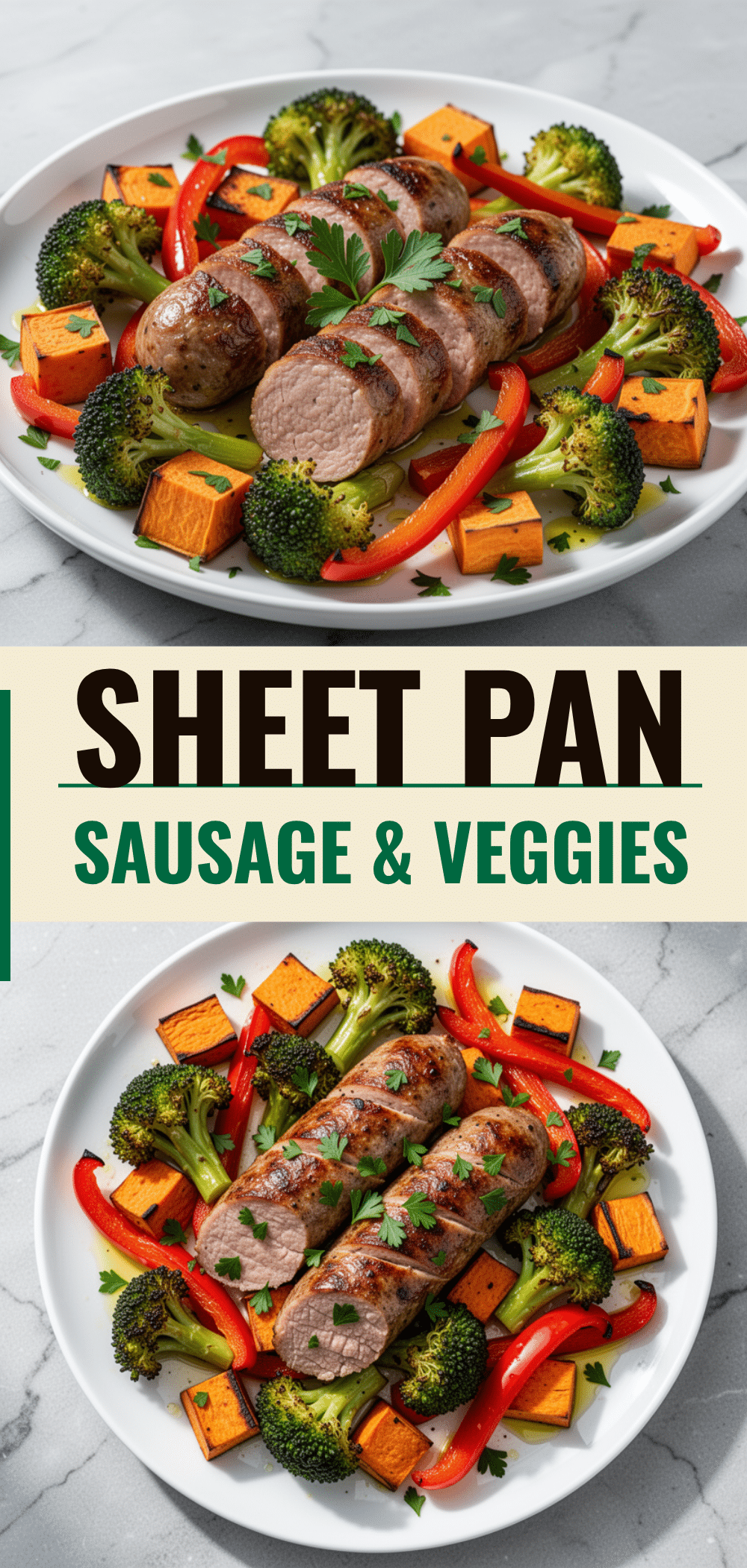

Whole30 Sheet Pan Sausage & Veggies
- Total Time: 40 minutes
- Yield: 4 servings 1x
Description
A quick, one-pan dinner featuring compliant sausage and roasted vegetables, perfect for busy weeknights and Whole30 diets.
Ingredients
- 1.5 pounds chicken or turkey sausage (sugar-free, compliant)
- 3 tablespoons olive oil
- 1 teaspoon garlic powder
- 1 teaspoon onion powder
- 1 teaspoon dried thyme
- 2 large heads broccoli florets (about 600g)
- 2 medium red bell peppers (about 300g)
- 1 large red onion (about 200g)
- 2 medium zucchini (about 400g)
- Salt and black pepper to taste
Instructions
- Preheat oven to 400°F (200°C). Line two half-sheet pans with parchment paper.
- Wash and thoroughly dry all vegetables. Moisture prevents proper roasting.
- Chop broccoli into bite-sized florets, slice bell peppers into 1-inch strips, cut red onion into wedges, and slice zucchini into half-moons.
- Place chopped vegetables in a large mixing bowl. Drizzle with olive oil and sprinkle with garlic powder, onion powder, thyme, salt, and pepper. Toss until evenly coated.
- Slice sausage links into ½-inch rounds or diagonal pieces.
- Spread seasoned vegetables in a single layer on one sheet pan, ensuring they are not crowded.
- Place sausage slices on the second sheet pan.
- Roast vegetables for 15 minutes. Remove pan and stir/flip vegetables to ensure even browning.
- Add the sausage pan to the oven. Roast for another 10-15 minutes, or until sausage is cooked through and browned, and vegetables are tender-crisp.
- Remove from oven, taste, and adjust salt if needed. Serve immediately.
Notes
Ensure vegetables are dry before roasting to prevent steaming. Do not overcrowd the pan; use two pans if necessary for even browning. Check sausage label for sugar or fillers to ensure Whole30 compliance. Leftovers store well in the fridge for up to 4 days but do not freeze well due to vegetable texture changes.
- Prep Time: 15 minutes
- Cook Time: 25 minutes
- Category: Main Course
- Cuisine: American
Nutrition
- Serving Size: Approximately 1/4 of
- Calories: 380
- Sugar: 8
- Sodium: 650
- Fat: 24
- Carbohydrates: 18
- Fiber: 5
- Protein: 22
Keywords: Whole30, Sheet Pan Dinner, Sausage, Roasted Vegetables, Quick Dinner, Gluten-Free, Dairy-Free, Paleo, Healthy Eating